
Tip Up, Rod Tip Up: Why Rod Tip Control Matters on the South Holston and Watauga
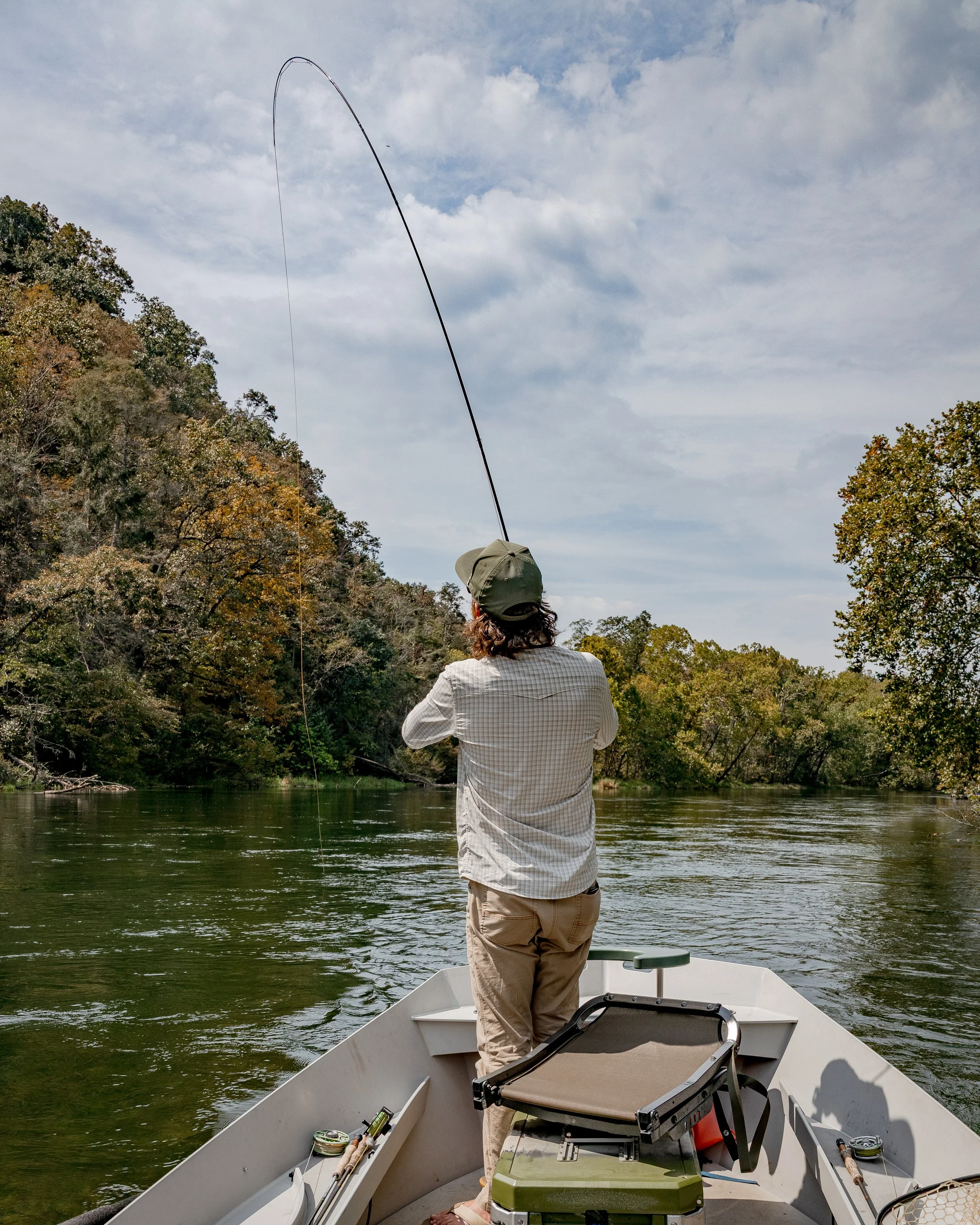
Head Guide Cy Neyman fighting a brown trout on the South Holston River, demonstrating proper rod tip control.
Tip Up, Rod Tip Up: Why Rod Tip Control Matters on the South Holston and Watauga
If you’ve ever taken a guided trip with us at The Fly Box—or spent much time around experienced trout anglers—you’ve heard it. Probably more than once.
“Tip up.”
“Rod tip up.”
“Keep that tip up.”
On our home waters in East Tennessee, especially the South Holston and Watauga tailwaters, this advice matters more than most anglers realize. Many assume it’s about leverage or control—or something guides say out of habit. In reality, rod tip control is one of the most important factors in landing trout when you’re fishing long leaders, small flies, and light tippet.
And it becomes even more critical when the fish on the other end is a good one.
Why Guides Emphasize Rod Tip Control
As guides on the South Holston and Watauga, Jonathan, Forrest, and Cy see the same scenario play out again and again. An angler hooks a solid trout. Adrenaline kicks in. The rod tip drops. The butt of the rod gets tucked into the waist.
Suddenly, the fish is being fought with the stiffest part of the rod.
That’s usually when things go wrong.
Keeping the rod tip up ensures that the softer sections of the rod stay engaged. Once the tip drops, the angler removes the rod’s built-in protection—and that’s when break-offs, pulled hooks, and heartbreak happen.
Your Fly Rod Is a Shock Absorber
Modern fly rods are designed with purpose. The tip section—and into the second section—is the softest, most flexible part of the rod. That softness isn’t accidental. It exists to protect light leaders and fine tippet.
When you’re fishing technical tailwaters like the South Holston or Watauga and trusting fine-diameter material—often down to 6X, 7X, or even 7.5X—you need every advantage you can get.
Keeping the rod tip up allows those softer sections to absorb:
Head shakes
Sudden directional changes
Short, explosive runs
All of that energy is managed by the rod before it ever reaches your knots or tippet.
Drop the tip, and that protection disappears. The mid and butt sections are powerful—but they don’t give much. When there’s no give, the stress goes straight into your tippet. That’s why landing bigger trout on light tippet suddenly gets much harder the moment rod tip control breaks down.
Fighting Trout on Light Tippet in Tailwater Fisheries
Tailwater trout don’t forgive mistakes.
On rivers like the South Holston and Watauga, fish live in steady current, feed selectively, and grow strong. When a heavy trout shakes its head or turns under tension, any flaw in rod angle or pressure gets exposed immediately.
Most break-offs on light tippet don’t happen because the tippet was “too light.” They happen because the angler took the rod out of the equation.
Good fly rod tip control keeps steady pressure without overpowering the fish. It allows the angler to apply side pressure when needed while still letting the rod absorb the stress. Yes, the fight may take a little longer—but that patience is usually the difference between landing the fish and watching your fly come back alone.
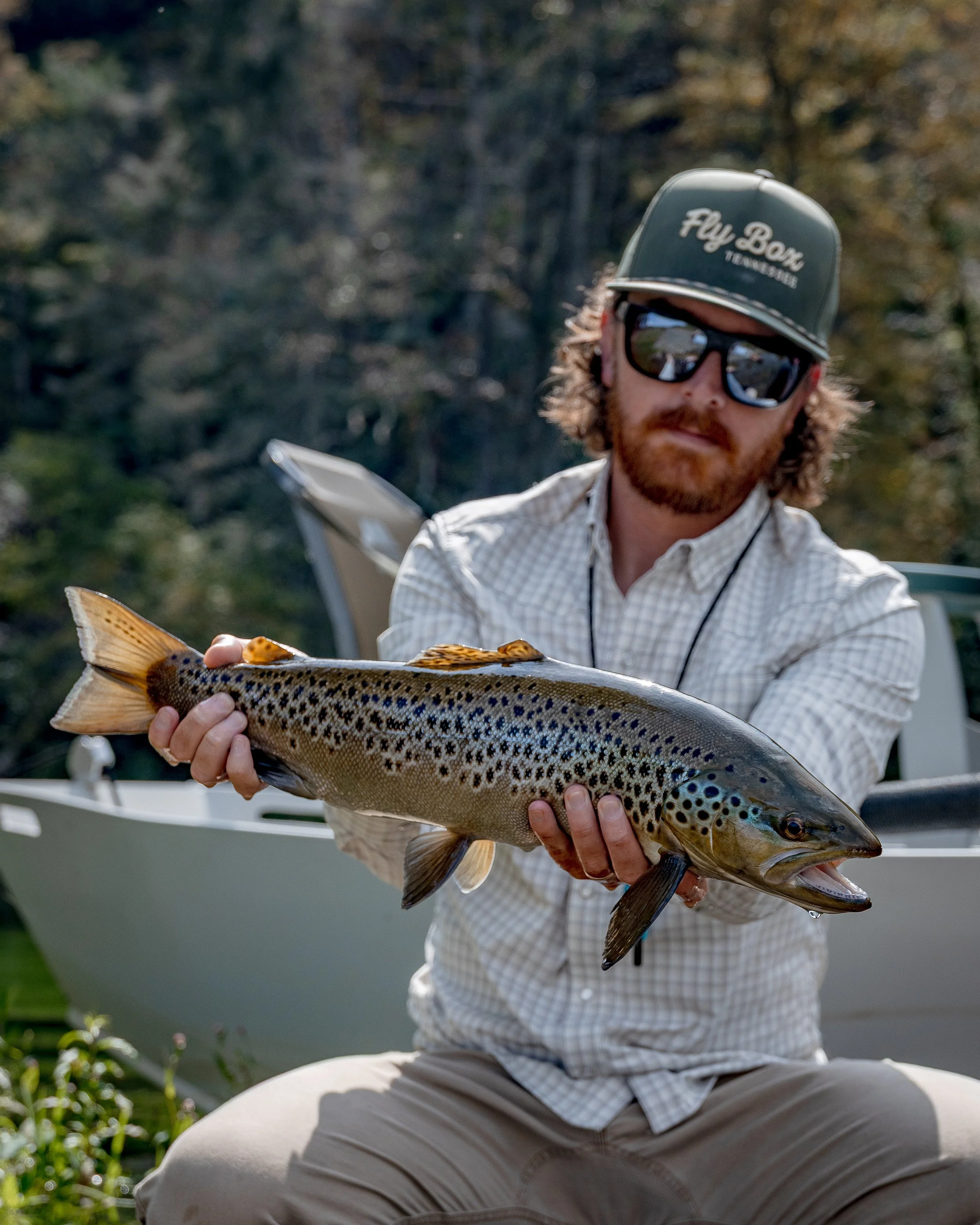
Head Guide Cy Neyman with his high water brown trout.
Big Trout Expose Bad Rod Tip Control
Small trout let you get away with bad habits. Big trout don’t.
Anyone who has spent time fishing the South Holston or Watauga with our guides has seen how quickly a heavy head shake, fast run, or sudden turn can punish poor rod position. When the rod tip drops, the margin for error disappears.
Keeping the tip up isn’t about overpowering a fish. It’s about:
Smooth, consistent pressure
Letting the rod manage energy
That’s how big trout on light tippet are landed consistently.
Why “Rod Tip Up” Matters on the South Holston and Watauga
So when one of our guides keeps repeating “tip up,” it’s not nagging. It’s not habit. And it’s definitely not about style.
It’s about protecting:
Your tippet
Your knots
Your chances of landing a quality trout
On technical tailwaters like the South Holston River and Watauga River, where good fish make you earn every inch, proper rod tip control is non-negotiable.
The fly rod is your shock absorber.
The tip is the softest part.
If you want to land big trout on light tippet, you have to let that tip do its job.
So the next time you hear it—
“Tip up. Rod tip up.”