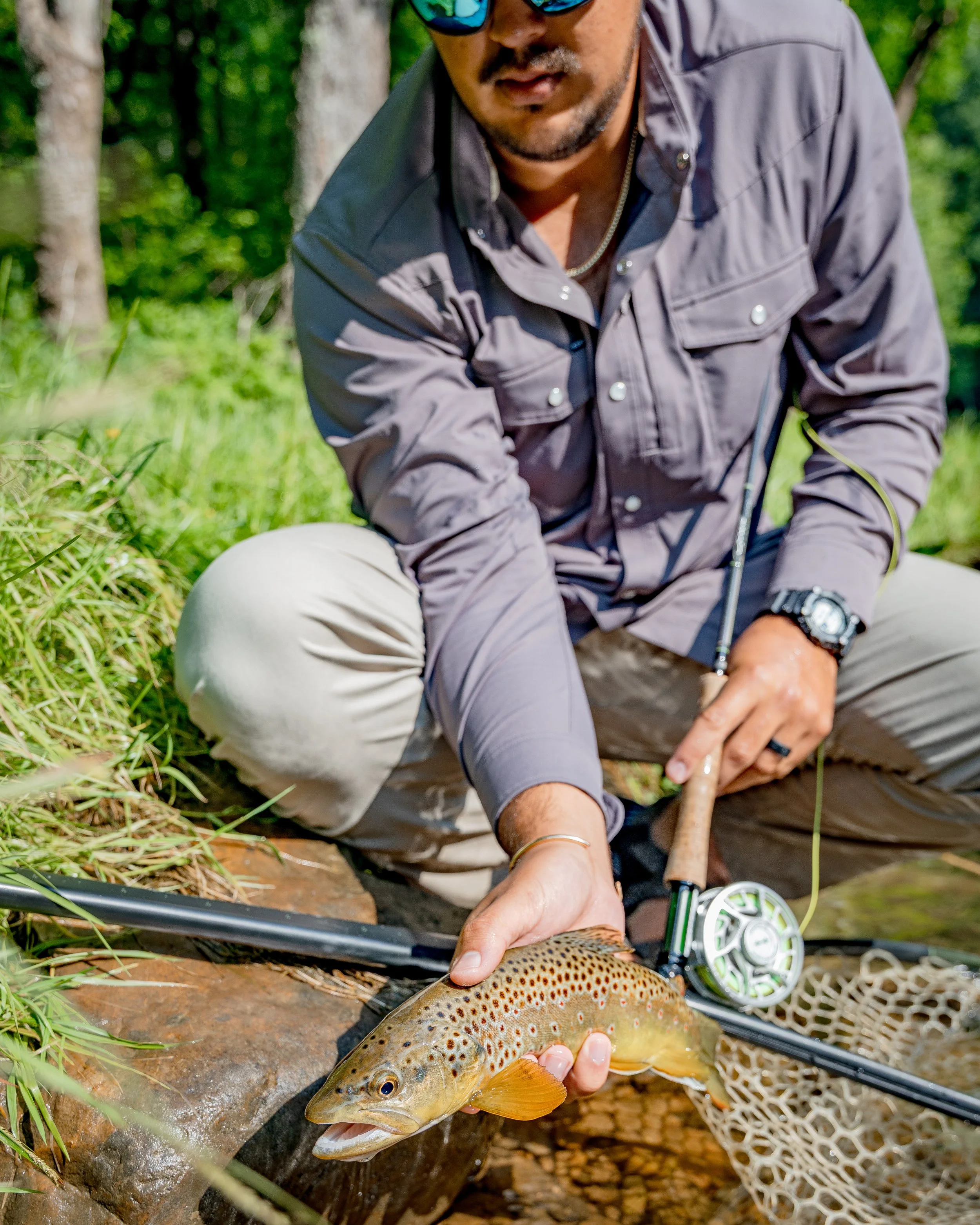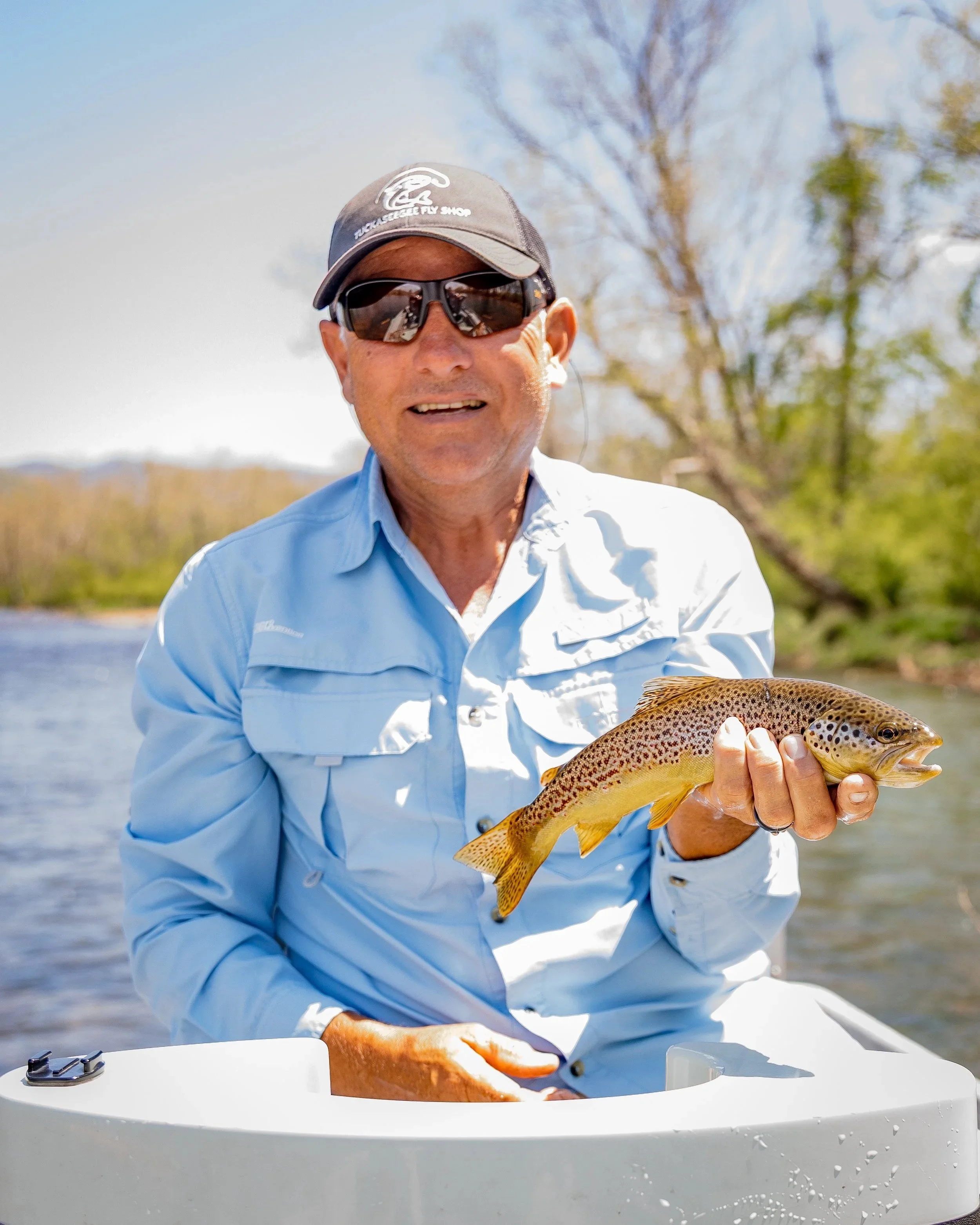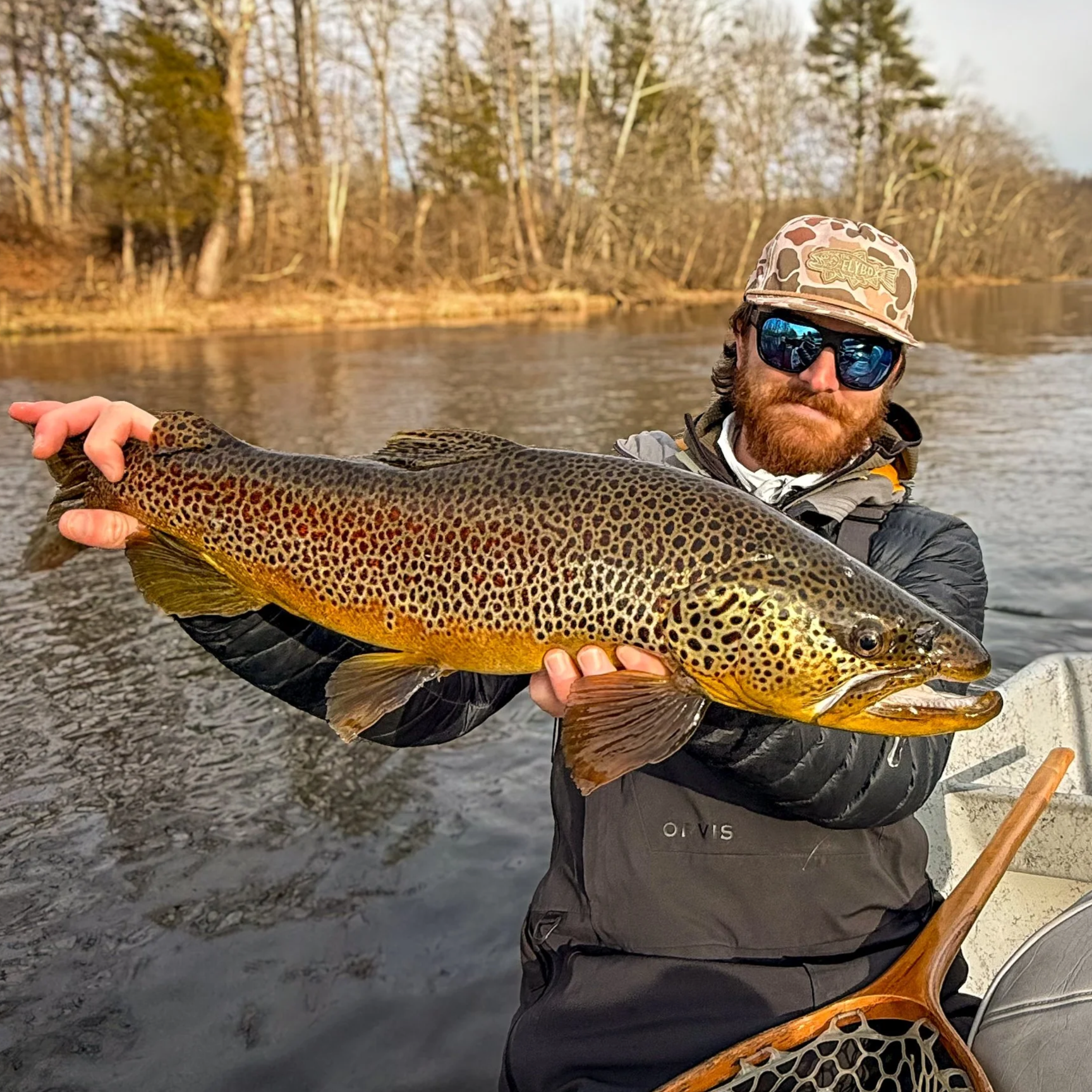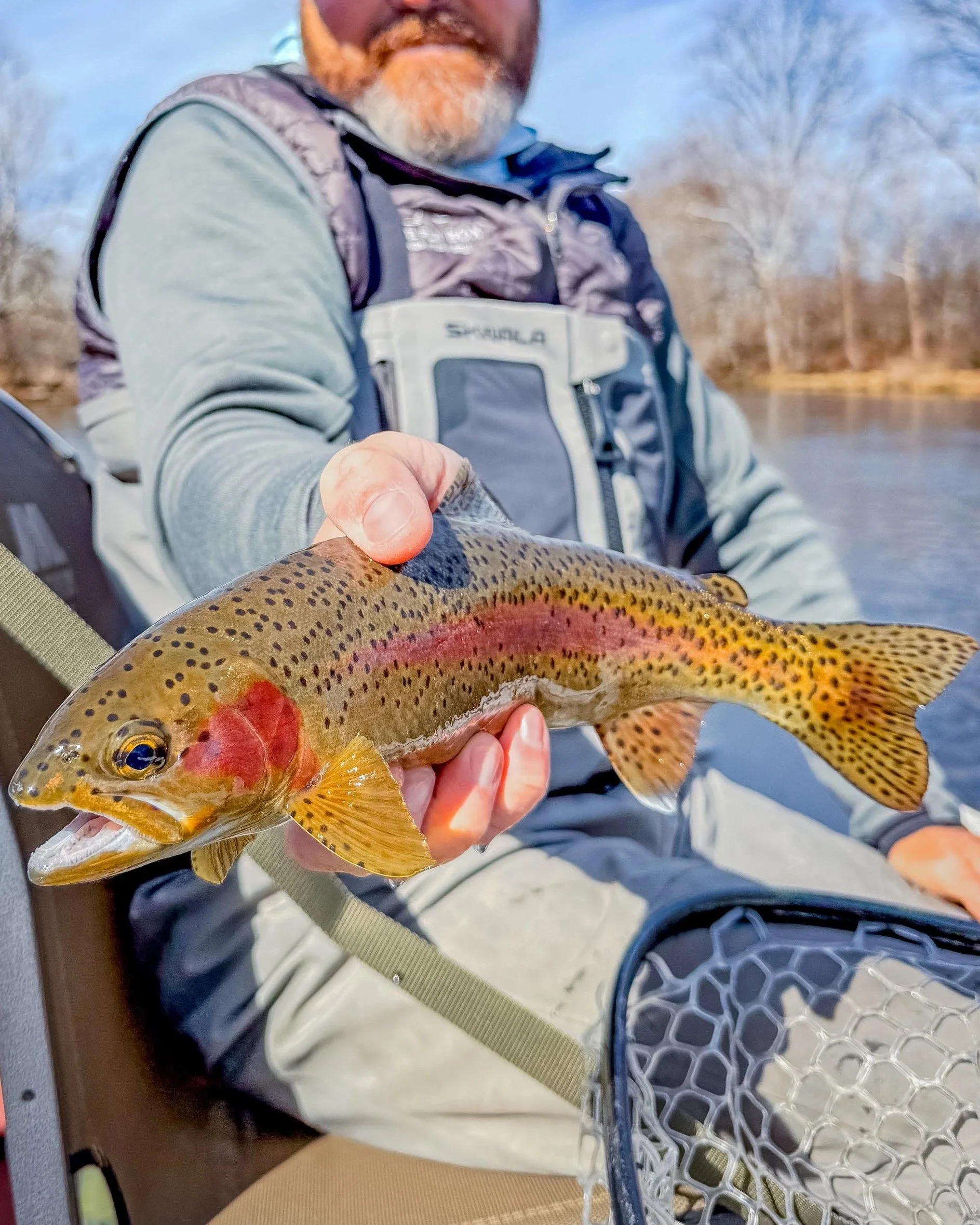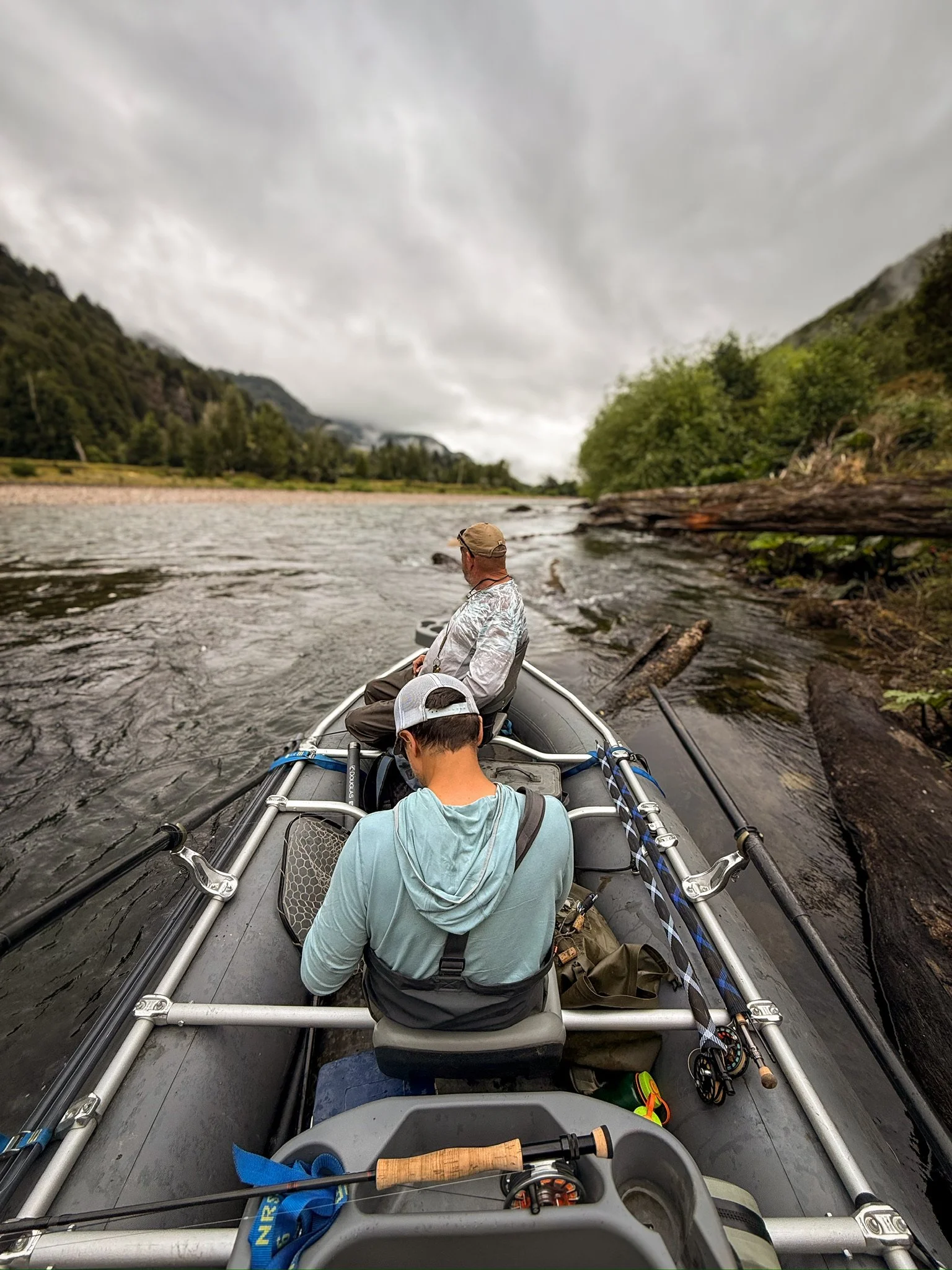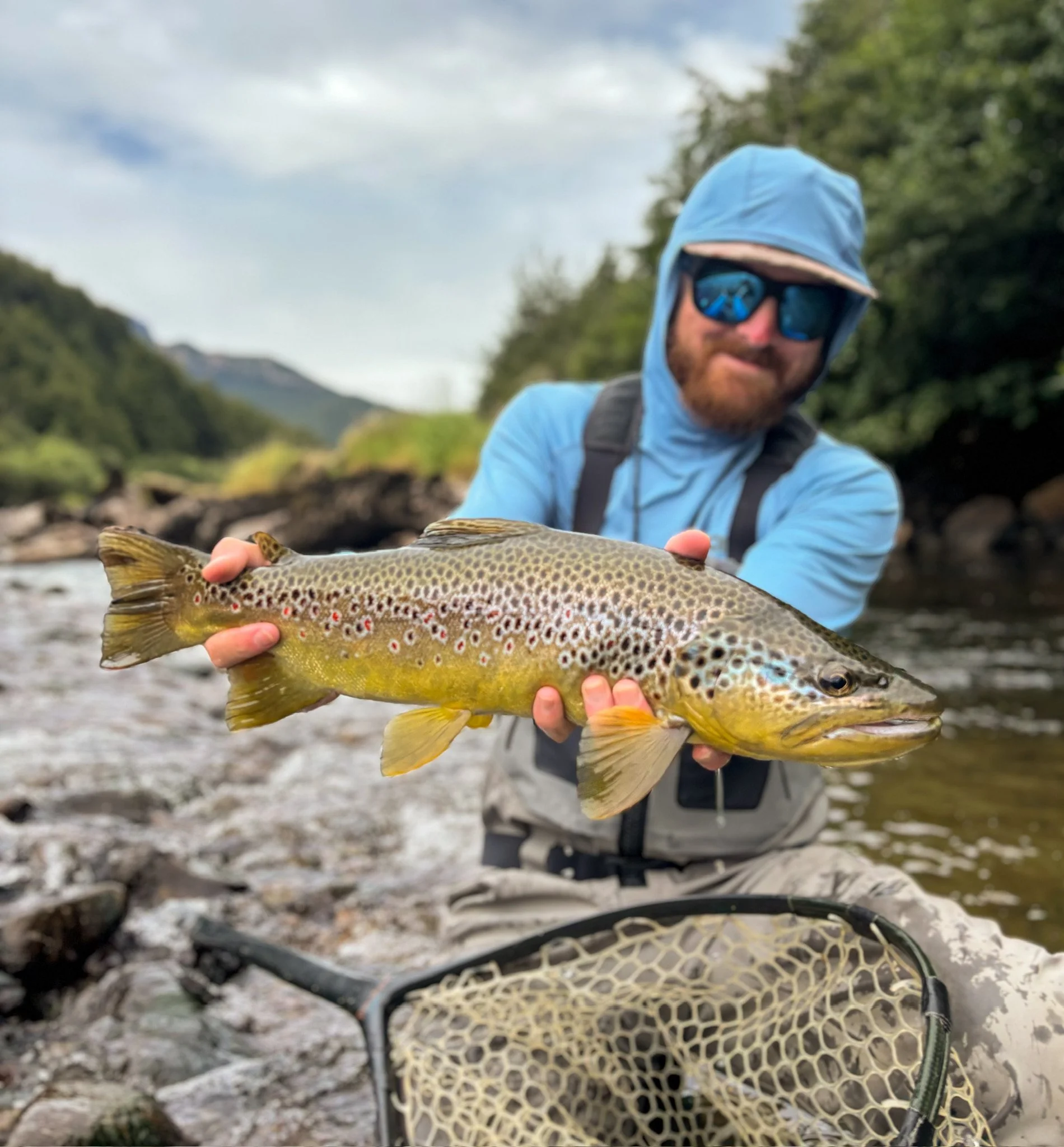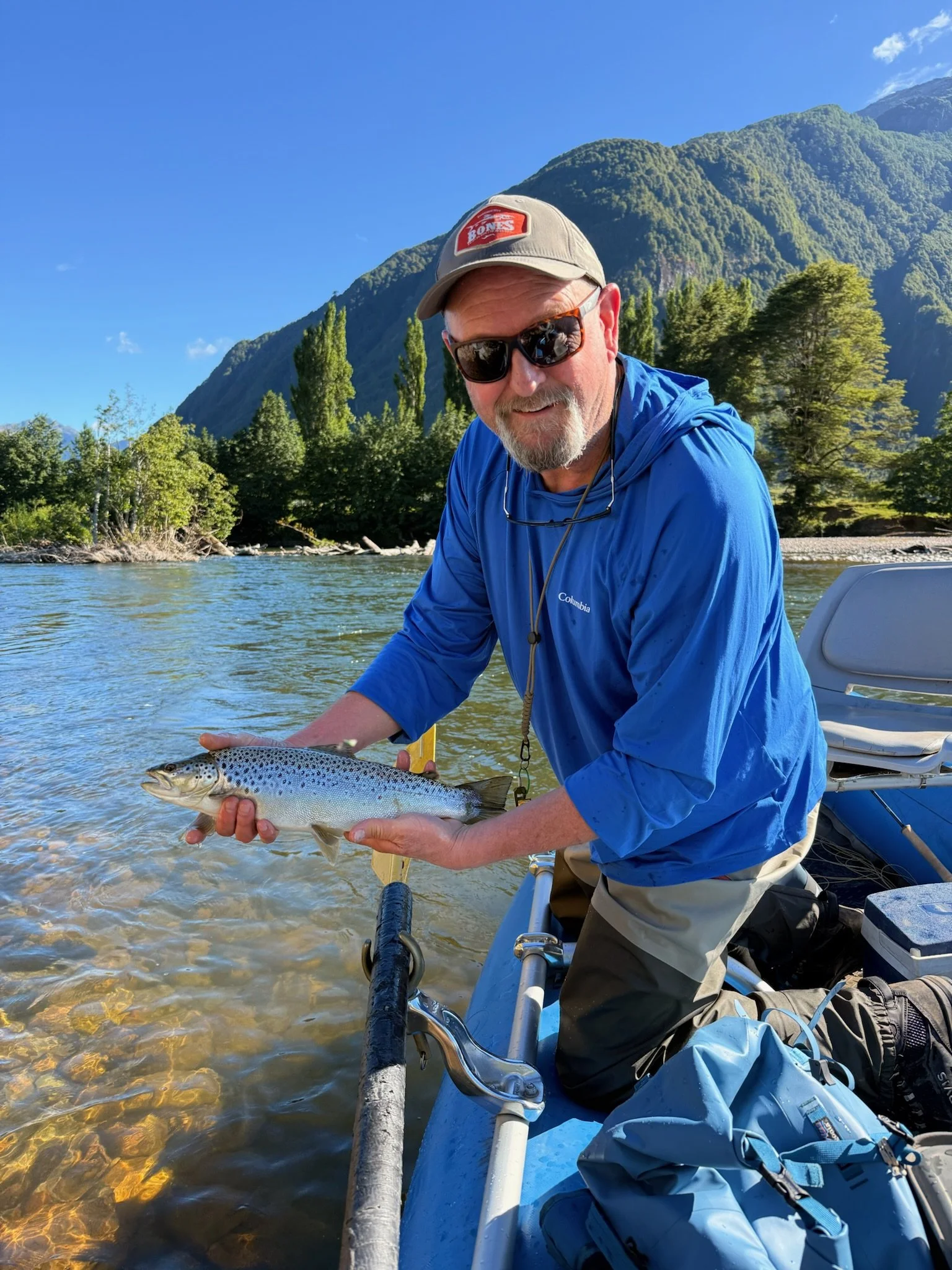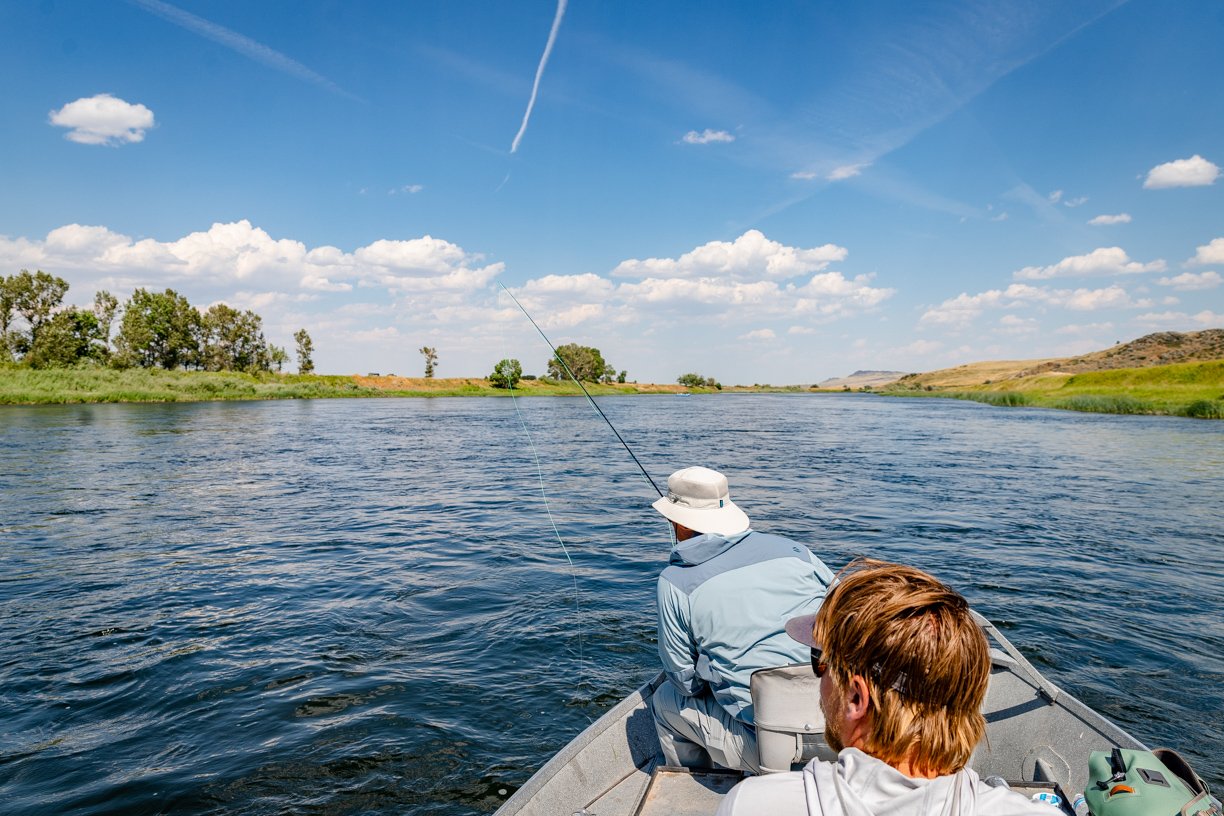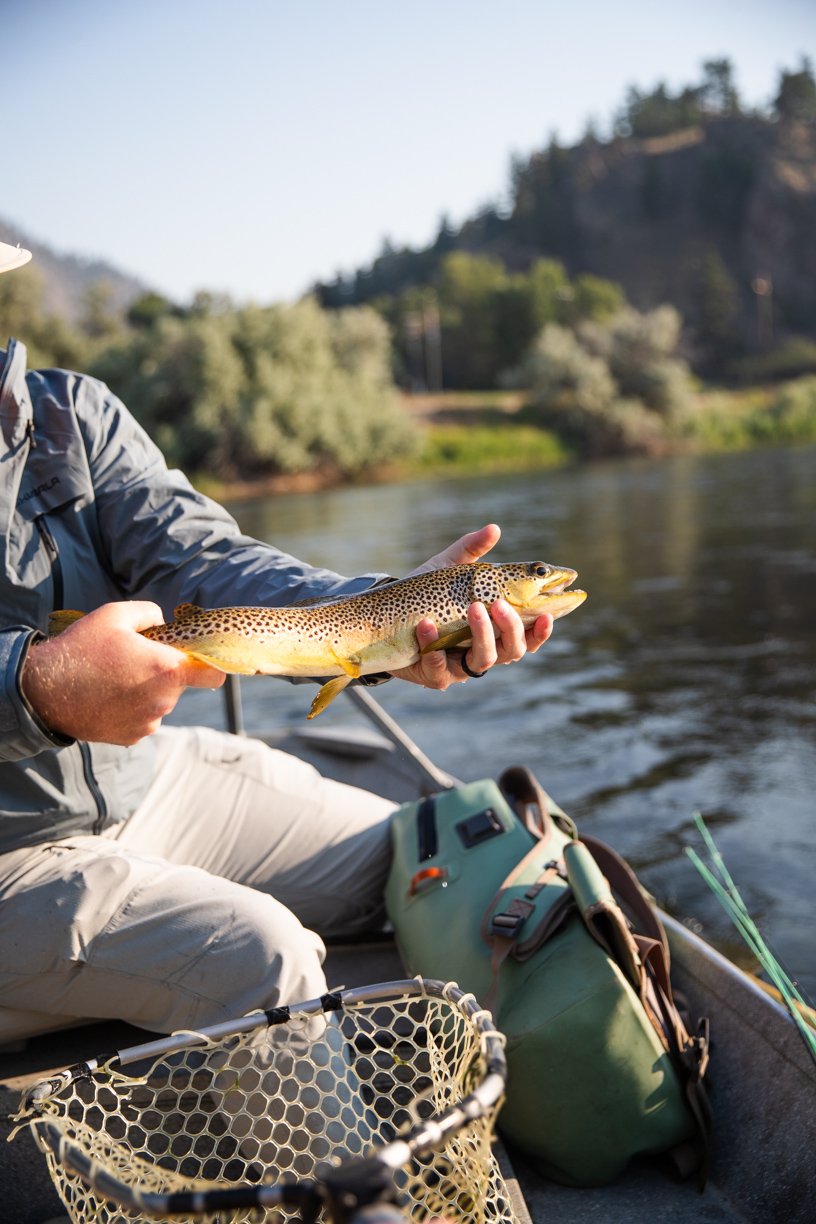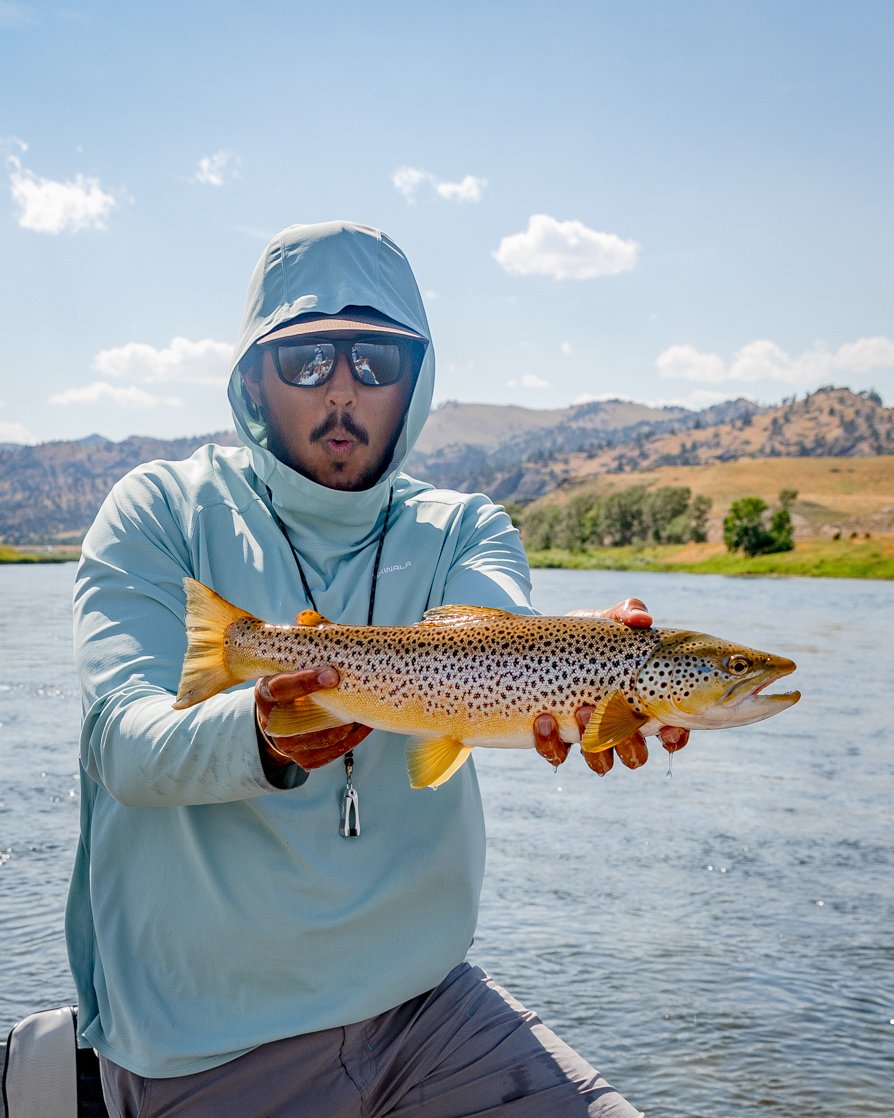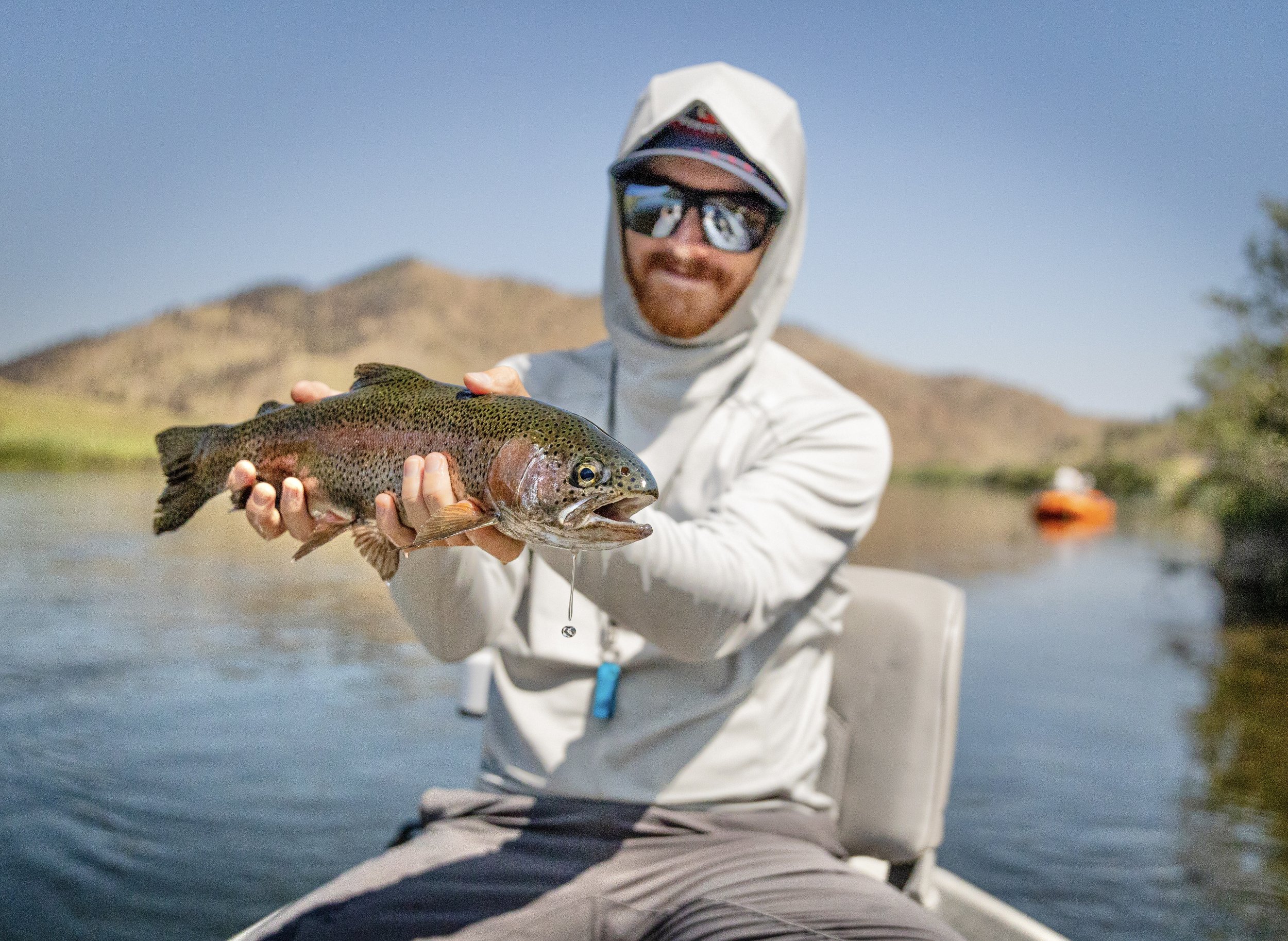
What Makes a Good Day Fly Fishing the South Holston & Watauga

What Makes a Good Day on the River?

Fly Fishing the South Holston and Watauga Rivers in East Tennessee

Having a good day?

What is your metric for a good day — or even a great day — on the river?

That answer is personal. And more often than not, it’s decided long before you launch the boat on the South Holston River or step into a run on the Watauga River here in East Tennessee.

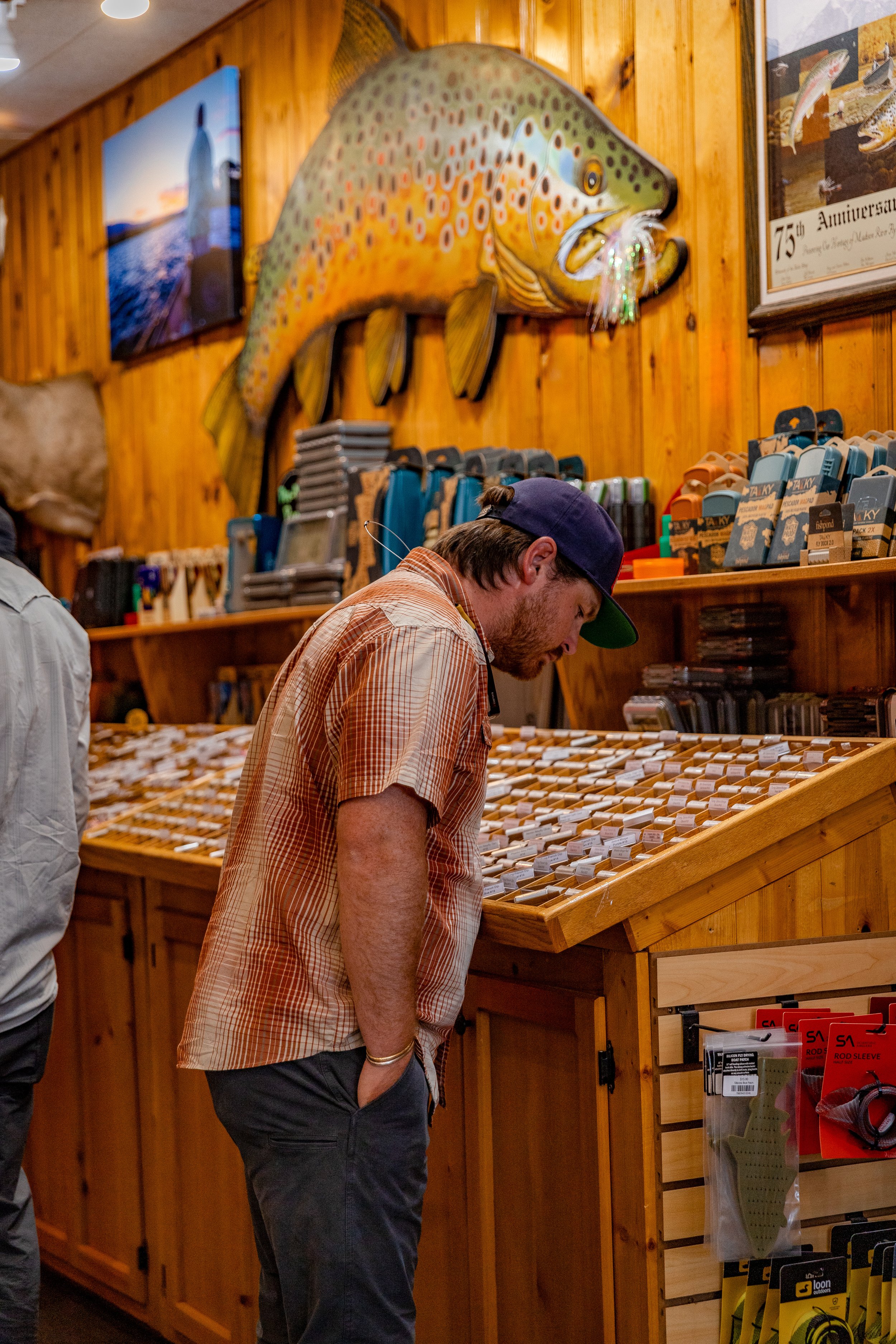
Working in the shop on the days I’m in, it’s one of the best parts of the job — talking with anglers before they head out and again when they come back in. Some are flipping through hatch charts, picking up a fresh leader and a spool of tippet, and sorting through flies before they ever step foot on the South Holston River or the Watauga River. You can see the anticipation building as they piece together their plan.

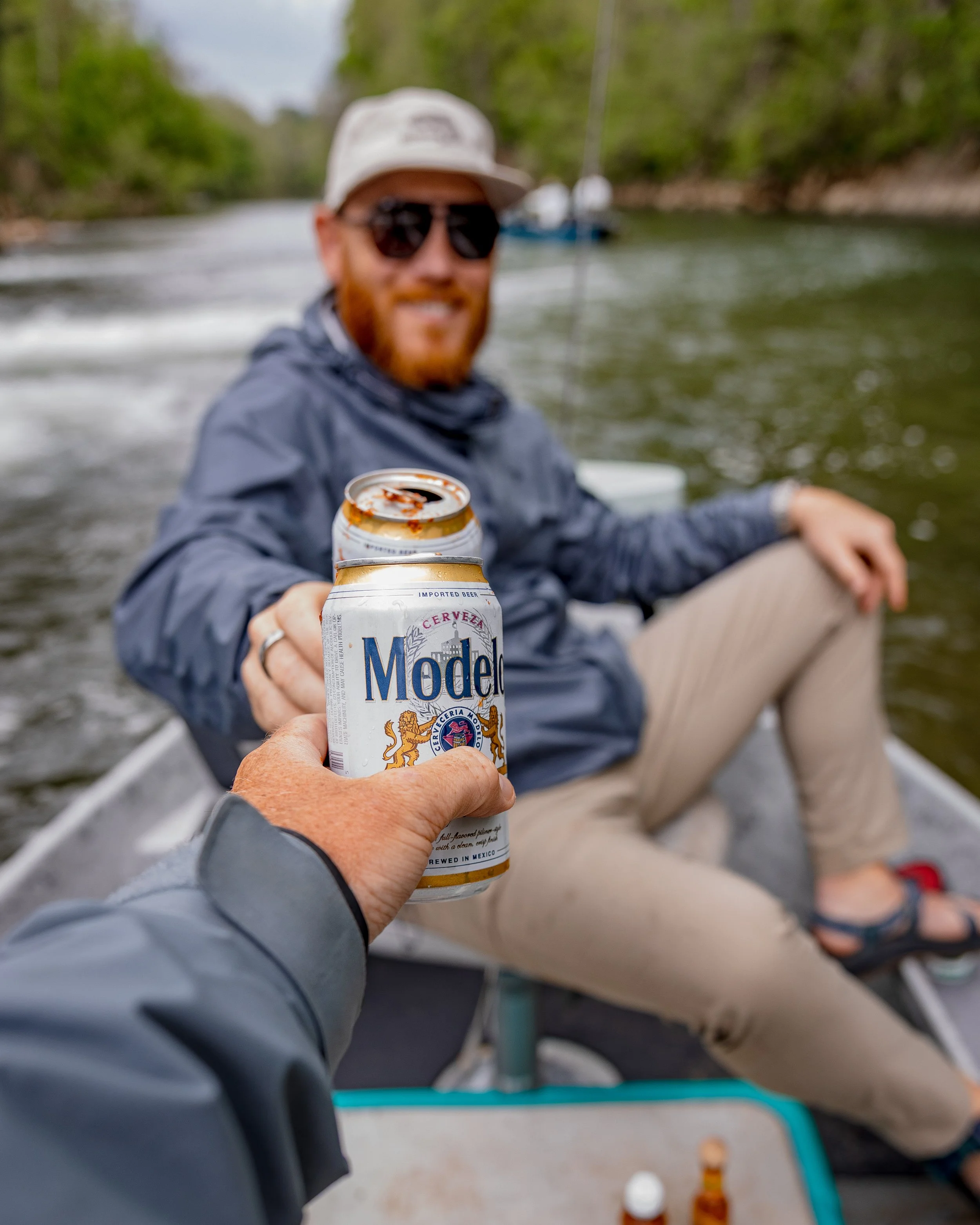
Others walk back in at the end of the day, waders half unzipped, grab a cold beer at the bar, and unpack every missed eat, every solid drift, and every fish that came unbuttoned. Some are fired up. Some are humbled. Most are somewhere in between.

And that’s the interesting part.

Two anglers can fish the same stretch of river, under the same conditions, and walk away with completely different versions of how the day went.

The range of enthusiasm is fascinating.

It got me thinking: what is my ultimate goal when I walk into the river? How do I manage expectations? What do I measure as a good day fly fishing in East Tennessee?

Because every angler goes through phases.

Phase 1: Just One Fish

At some point, all you want is to catch a trout on your fly rod.

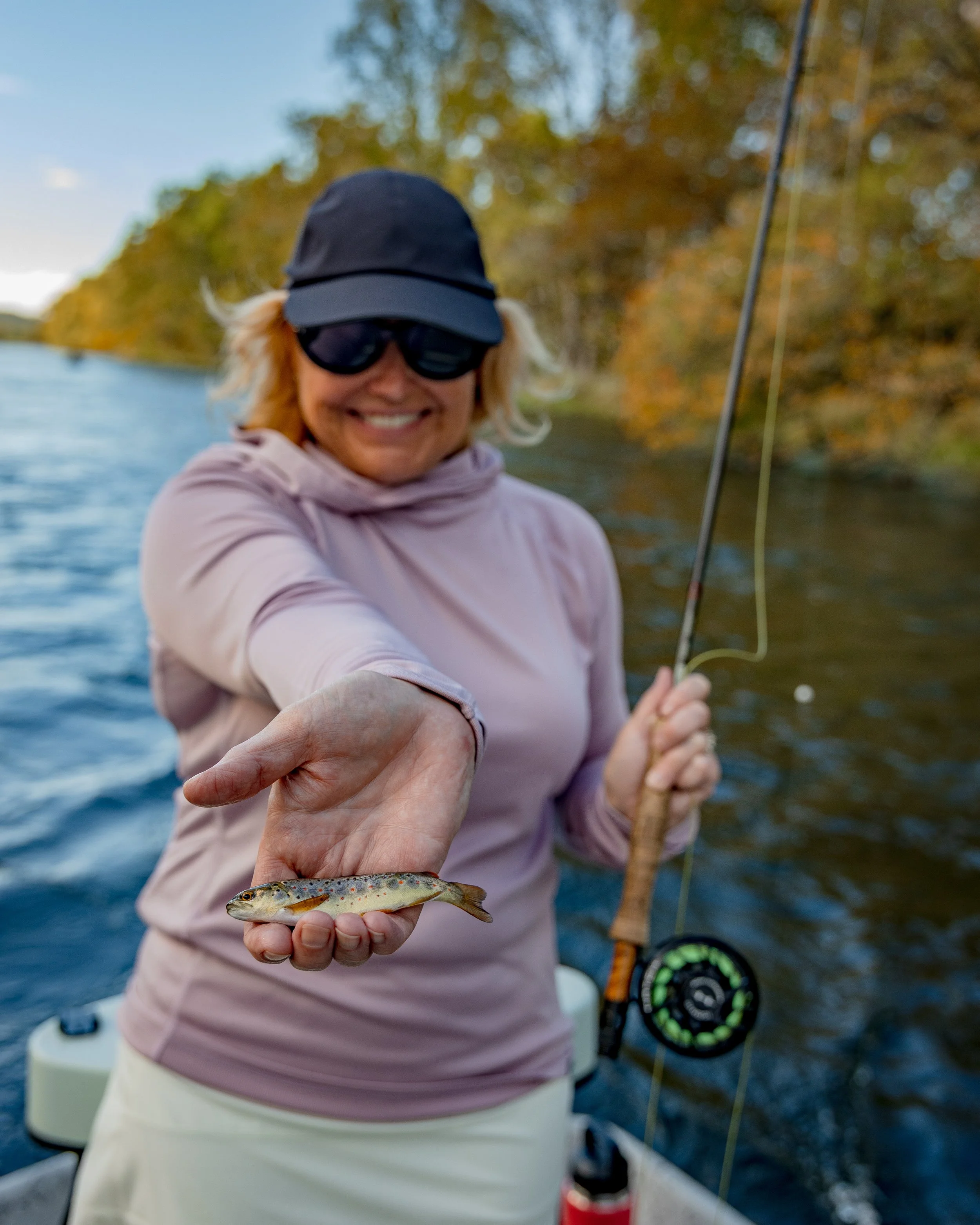
It doesn’t matter if it’s a wild South Holston brown that ate a size 20 midge or a Watauga rainbow that grabbed a nymph under an indicator. You just want that first connection.

Success here is simple: one fish.

And that phase is pure magic.

Phase 2: Numbers and Problem Solving

Then something shifts. You’ve proven you can catch one. Now you want to catch a bunch.

You start paying attention to:

Timing of the Sulphur hatch on the South Holston
Midges and BWOs in colder months
Generation schedules on the South Holston and Watauga
Water clarity after rain

You experiment with technical nymph fishing, adjusting weight and depth until everything drifts naturally. You dial in your mends. You learn where fish slide to when TVA bumps the flow.

You might dedicate a whole morning to indicator nymphing just to figure out a seam.

Now success looks like productivity. Double-digit days. Consistency. Cracking the code.

Phase 3: Style, Challenge, and Intentional Fishing

Eventually, it’s not just about catching fish — it’s about how you catch them.

Maybe you decide today is a dry fly day, even if the fish aren’t fully committed yet.

Maybe you spend the afternoon swinging wet flies through softer water, feeling that slow, heavy grab instead of watching an indicator.

Maybe you challenge yourself with tight-line or Euro-style techniques in skinny water.

Sometimes a good day isn’t about numbers at all — it’s about committing to a style and sticking with it.

And sometimes it’s about fishing something you tied the night before.

There’s something different about fooling a good South Holston brown on a sulphur pattern you tied yourself. Or testing a new variation on a soft hackle on the Watauga just to see if it moves fish differently.

When you start tying your own flies, success expands. Now it’s not just “Did I catch one?” It’s “Did that idea work?”

That’s a different kind of satisfaction.

The Big Fish Phase

And then, of course, there’s the hunt. Now it’s not about numbers or style experimentation. It’s about one fish.

A heavy brown sipping sulphurs in the same seam every evening. A deep rainbow holding on the first ledge during low generation. You fish longer leaders. You change angles. You wait for better light. One fish can make the entire day.

The Hidden Pressure: Time

There’s another factor most of us don’t talk about enough — time.

Work schedules. Family commitments. Responsibilities.

Sometimes you only get two hours on the river.

And when time is tight, it’s easy to rush.

You feel like you can’t slow down. You bounce from run to run. You change flies too quickly. You fish with a sense of urgency instead of intention.

Ironically, that pressure can rob you of the very thing you came for.

On rivers like the South Holston and Watauga, slowing down matters more. Good drifts beat fast steps. Patience beats panic.

Sometimes a good day is simply allowing yourself to enjoy the limited time you have — instead of measuring it against what you wish you had.

Managing Expectations on East Tennessee Tailwaters

The truth about fishing the South Holston and Watauga is this:

Conditions change daily.

Water releases shift.

Hatches vary.

Fish reposition.

Pressure moves.

If you show up expecting one thing and the river gives you another, frustration comes quick.

But if you walk in with intention — whether it’s learning technical nymph fishing, committing to dry flies, swinging wets, testing your own patterns, or just enjoying two quiet hours — you’ll leave feeling different.

Two anglers.

Same river.

Same conditions.

Different expectations.

Different outcomes.

That’s something we see in the shop all the time.

The happiest anglers aren’t always the ones who caught the most trout. Often it’s the angler who tried something new. Or slowed down. Or finally trusted their own fly.

So What’s My Metric?

These days, a good day for me on the South Holston or Watauga is simple:

Did I learn something?

Did I fish with intention?

Did I stay present instead of rushing?

If I get one honest eat that makes my heart jump — on a fly I tied, on a drift I executed the way I pictured it — that’s enough.

Sure, 20-fish days are fun.

Sure, big fish are special.

But more and more, I measure a good day by how I fished — not just what I caught.

What Phase Are You In?

Are you chasing your first trout in East Tennessee?

Trying to dial in technical nymph fishing on the South Holston?

Waiting for the perfect dry fly eat?

Swinging wet flies just because it feels right?

Or simply trying to make the most of a couple of hours between responsibilities?

There’s no wrong answer. But it helps to know before your boots hit the water.

Because most of the time, a “good day” on the South Holston or Watauga is decided before you ever step in.

If you want to talk about current conditions, flies, techniques, or just figure out what phase you’re in, swing by the shop. Grab a cold one after the river and tell us how your day measured up.

The river will always have its own plan.

But your expectations?

Those are yours to set.

MEND: MASTERING THE DRIFT ON THE SOUTH HOLSTON & WATAUGA

What Does “Mend” Really Mean?

It’s a word you hear constantly when fishing with a guide—whether you’re in the boat or wading.

“Mend.”
“Mend it.”
“Go ahead and mend.”

Mending is the technique used in repositioning fly line on the water—either upstream or downstream with your rod tip after the cast—to improve the fly’s drift and achieve a drag-free presentation in the current. On our home rivers—the South Holston and Watauga—mending usually comes down to one simple idea: drift is king!

That doesn’t mean a fly can’t ever swing or speed up and still get eaten. Fish break rules all the time. But when you’re hunting better trout—especially the fish that have seen it all—you’ve got to get everything as right as possible.

What We’re Watching When We Say “Mend”

Mending is about recognizing when your flies are starting to move unnaturally. As I fish, I’m always watching my line and leader, not just the indicator or dry fly itself.

The goal? A drag-free drift. On technical tailwaters like the South Holston and Watauga, drag shows up fast. The moment your fly line moves faster than the water your flies are in, the drift is compromised.

Tip: The mend happens before the flies reach the strike zone—not after drag has already affected the presentation.

Are You Fishing the Flies or the Indicator?

I’ve said it before, and I’ve heard it said plenty of times by other guides:

Are you fishing your flies, or are you fishing the indicator?

What that means is this—too many anglers fixate on keeping the indicator floating straight and clean, while the flies underneath are dragging, ticking, or racing through the drift.

The indicator is just a tool. The flies are what matter.

Good mending puts the flies first. It allows them to drift at the speed of the water they’re actually in, not the speed dictated by the fly line or the surface current.

When a Swing Is a Good Thing

Not all movement is bad. There are times—especially while anchored or wading on the South Holston—when a controlled swing at the end of the drift can trigger strikes by imitating emerging insects.

“A controlled swing at the end of the drift can be the difference between a refusal and a eat. But only if the drift was clean at first.” – Cy

The key is intentional movement, not accidental drag.

Mending Is Anticipation, Not Reaction

The best mends are subtle and early. Big, aggressive mends often lift flies out of the strike zone or ruin an otherwise good drift.

On rivers like the South Holston and Watauga, where currents stack and layer on top of each other, frequent light mends almost always outfish one large correction.

“If you’re constantly correcting, you’re fishing in the wrong place. Mend early and keep your fly where it belongs.” – Forrest

Why Mending Matters on the South Holston & Watauga

These rivers reward attention to detail. If you’re not getting strikes, it’s tempting to change flies, add weight, or adjust depth. Most often, the answer isn’t in your fly box—it’s in your mending which leads to your drift.

Watching your line and leader, and keeping your flies drifting naturally, will improve your catch rates dramatically.

If you want to get better at mending and see the difference it makes, come hang out at The Fly Box or book a guided trip with Jonathan, Forrest, or Cy. We’ll show you the “why” behind the mend while on the water.

Mending is one of those skills that really clicks when you see it in action. If you’re ready to sharpen your drift game, give us a call at 423-573-5668 or shoot us an email at info@theflyboxtn.com to book a trip—we’d love to show you how it’s done on the water!

Forrest NeymanThe Fly Box
Tip Up, Rod Tip Up: Why Rod Tip Control Matters on the South Holston and Watauga

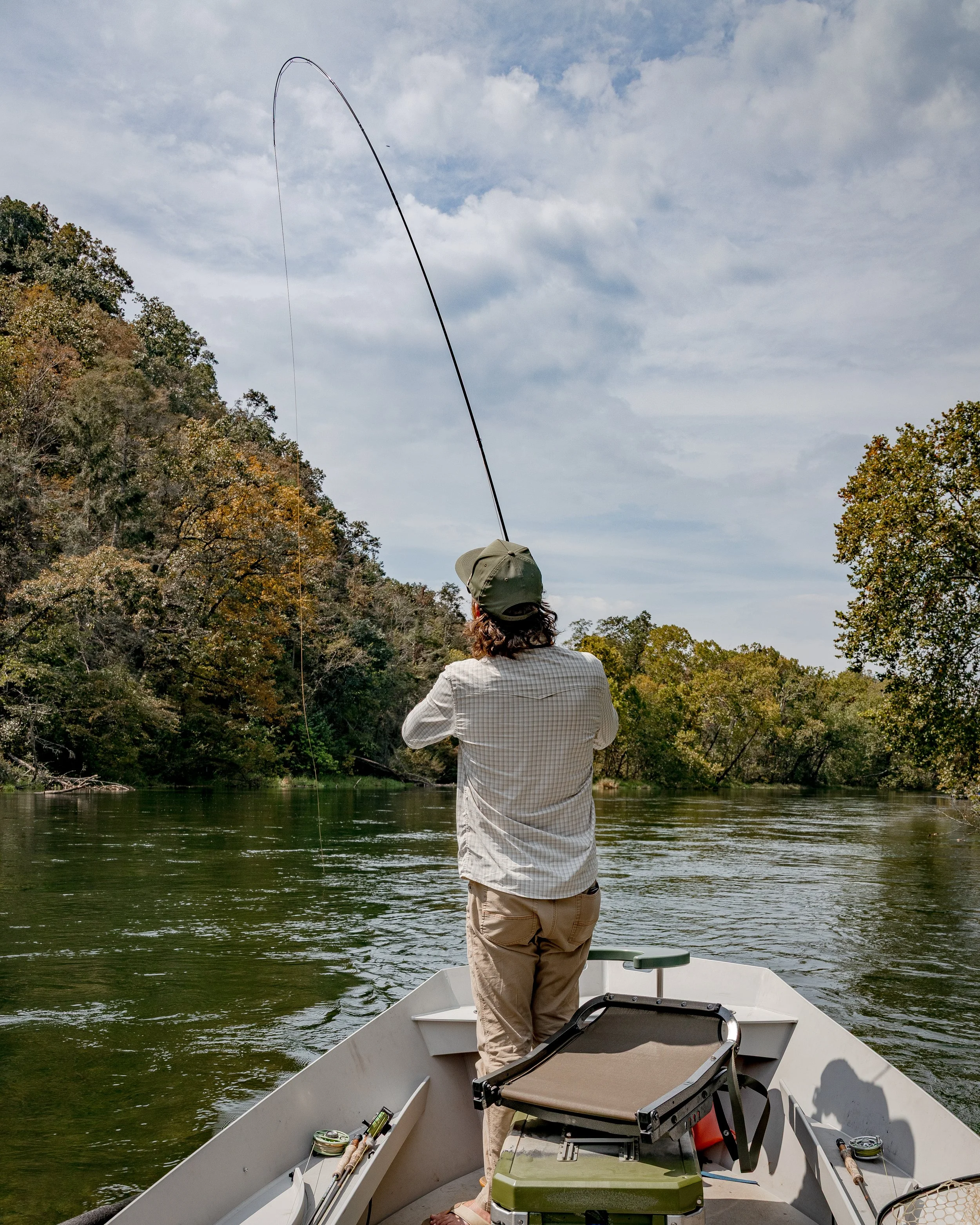
Head Guide Cy Neyman fighting a brown trout on the South Holston River, demonstrating proper rod tip control.

Tip Up, Rod Tip Up: Why Rod Tip Control Matters on the South Holston and Watauga

If you’ve ever taken a guided trip with us at The Fly Box—or spent much time around experienced trout anglers—you’ve heard it. Probably more than once.

“Tip up.”
“Rod tip up.”
“Keep that tip up.”

On our home waters in East Tennessee, especially the South Holston and Watauga tailwaters, this advice matters more than most anglers realize. Many assume it’s about leverage or control—or something guides say out of habit. In reality, rod tip control is one of the most important factors in landing trout when you’re fishing long leaders, small flies, and light tippet.

And it becomes even more critical when the fish on the other end is a good one.


Why Guides Emphasize Rod Tip Control

As guides on the South Holston and Watauga, Jonathan, Forrest, and Cy see the same scenario play out again and again. An angler hooks a solid trout. Adrenaline kicks in. The rod tip drops. The butt of the rod gets tucked into the waist.

Suddenly, the fish is being fought with the stiffest part of the rod.

That’s usually when things go wrong.

Keeping the rod tip up ensures that the softer sections of the rod stay engaged. Once the tip drops, the angler removes the rod’s built-in protection—and that’s when break-offs, pulled hooks, and heartbreak happen.


Your Fly Rod Is a Shock Absorber

Modern fly rods are designed with purpose. The tip section—and into the second section—is the softest, most flexible part of the rod. That softness isn’t accidental. It exists to protect light leaders and fine tippet.

When you’re fishing technical tailwaters like the South Holston or Watauga and trusting fine-diameter material—often down to 6X, 7X, or even 7.5X—you need every advantage you can get.

Keeping the rod tip up allows those softer sections to absorb:

  • Head shakes

  • Sudden directional changes

  • Short, explosive runs

All of that energy is managed by the rod before it ever reaches your knots or tippet.

Drop the tip, and that protection disappears. The mid and butt sections are powerful—but they don’t give much. When there’s no give, the stress goes straight into your tippet. That’s why landing bigger trout on light tippet suddenly gets much harder the moment rod tip control breaks down.


Fighting Trout on Light Tippet in Tailwater Fisheries

Tailwater trout don’t forgive mistakes.

On rivers like the South Holston and Watauga, fish live in steady current, feed selectively, and grow strong. When a heavy trout shakes its head or turns under tension, any flaw in rod angle or pressure gets exposed immediately.

Most break-offs on light tippet don’t happen because the tippet was “too light.” They happen because the angler took the rod out of the equation.

Good fly rod tip control keeps steady pressure without overpowering the fish. It allows the angler to apply side pressure when needed while still letting the rod absorb the stress. Yes, the fight may take a little longer—but that patience is usually the difference between landing the fish and watching your fly come back alone.

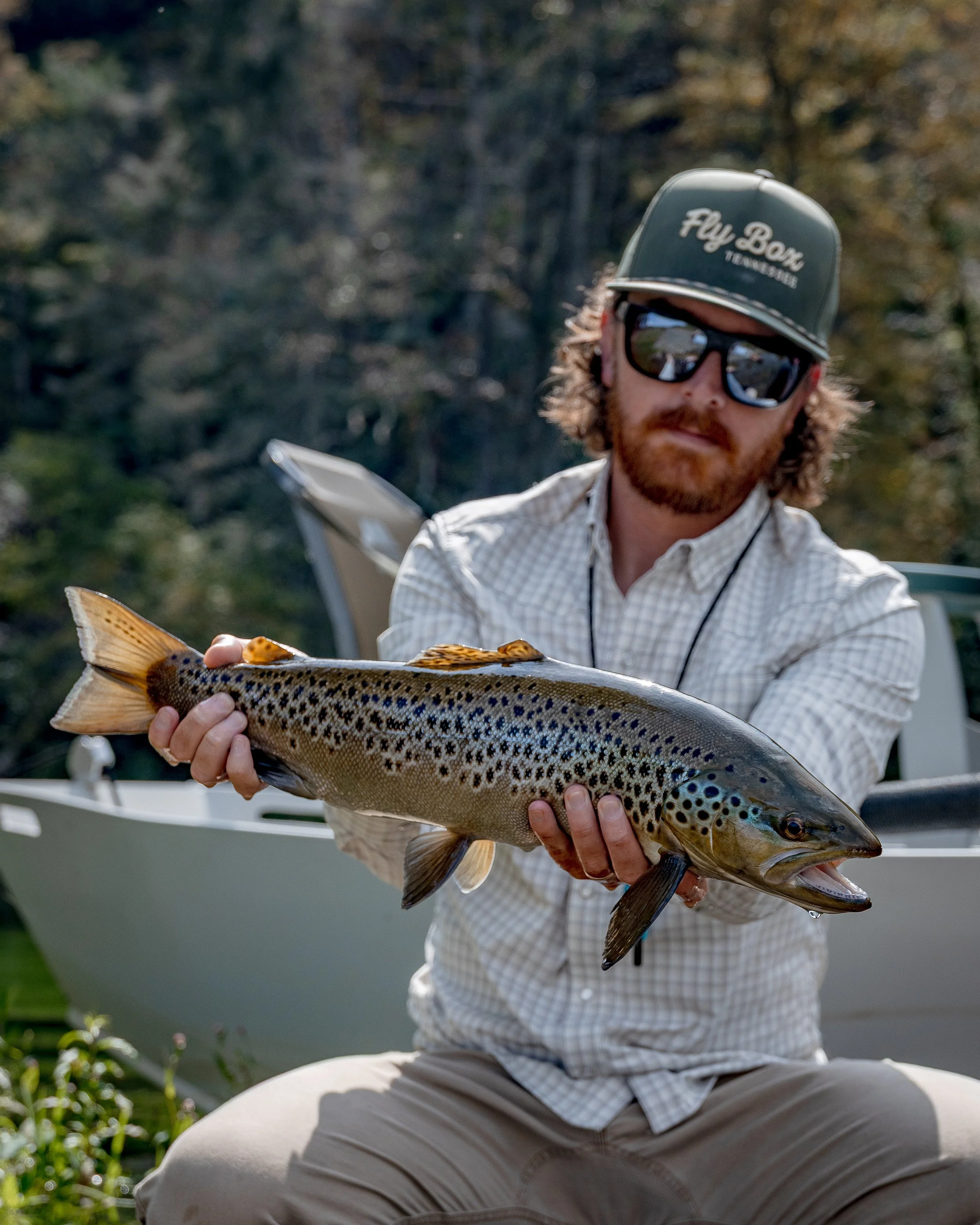
Head Guide Cy Neyman with his high water brown trout.

Big Trout Expose Bad Rod Tip Control

Small trout let you get away with bad habits. Big trout don’t.

Anyone who has spent time fishing the South Holston or Watauga with our guides has seen how quickly a heavy head shake, fast run, or sudden turn can punish poor rod position. When the rod tip drops, the margin for error disappears.

Keeping the tip up isn’t about overpowering a fish. It’s about:

  • Smooth, consistent pressure

  • Letting the rod manage energy

That’s how big trout on light tippet are landed consistently.

Why “Rod Tip Up” Matters on the South Holston and Watauga

So when one of our guides keeps repeating “tip up,” it’s not nagging. It’s not habit. And it’s definitely not about style.

It’s about protecting:

  • Your tippet

  • Your knots

  • Your chances of landing a quality trout

On technical tailwaters like the South Holston River and Watauga River, where good fish make you earn every inch, proper rod tip control is non-negotiable.

The fly rod is your shock absorber.
The tip is the softest part.

If you want to land big trout on light tippet, you have to let that tip do its job.

So the next time you hear it—

“Tip up. Rod tip up.”

Forrest NeymanThe Fly Box
2026 VISTA PATAGONIA FIRST AND SECOND WEEK RECAP

INTRODUCTION

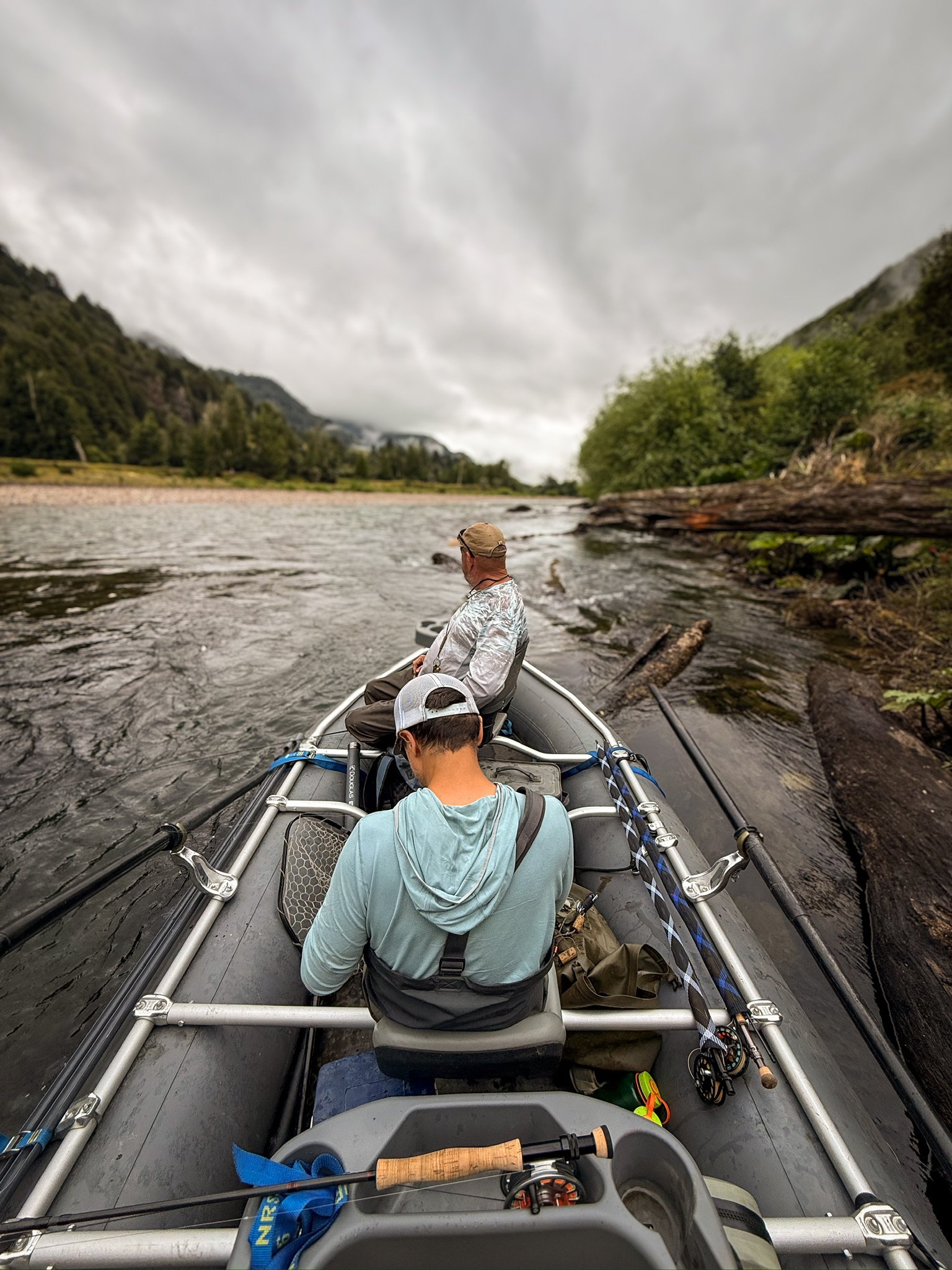
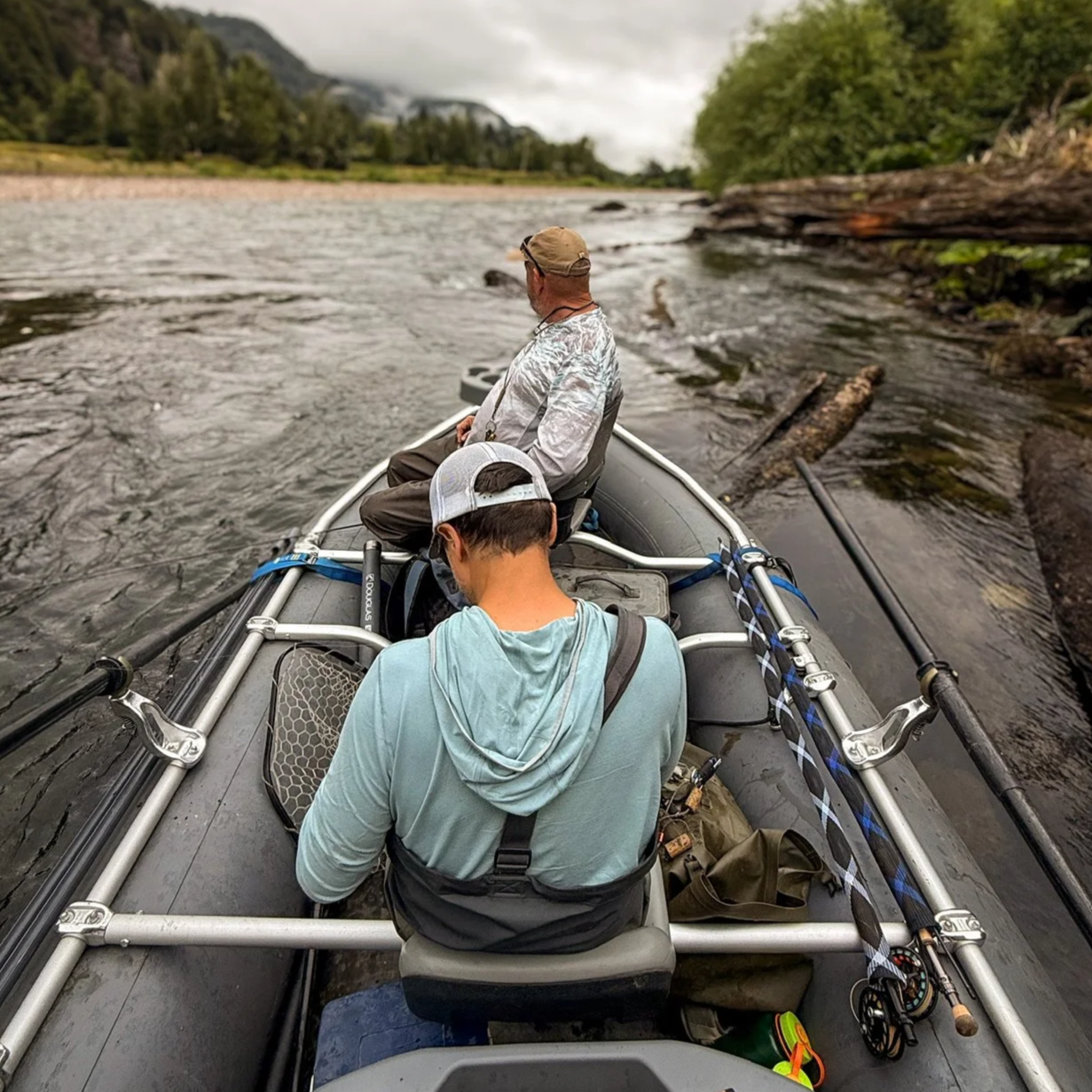
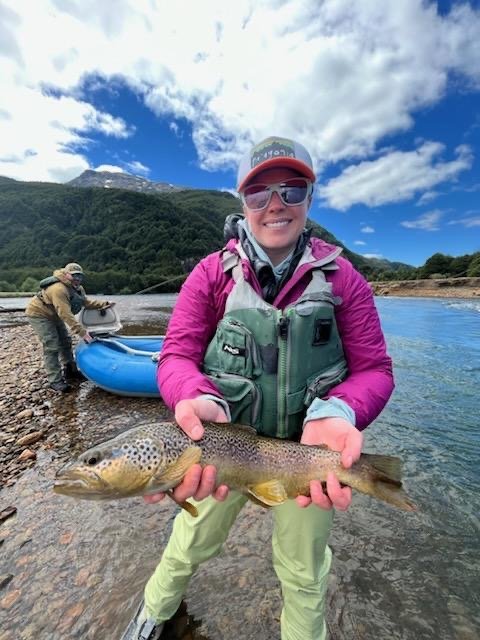
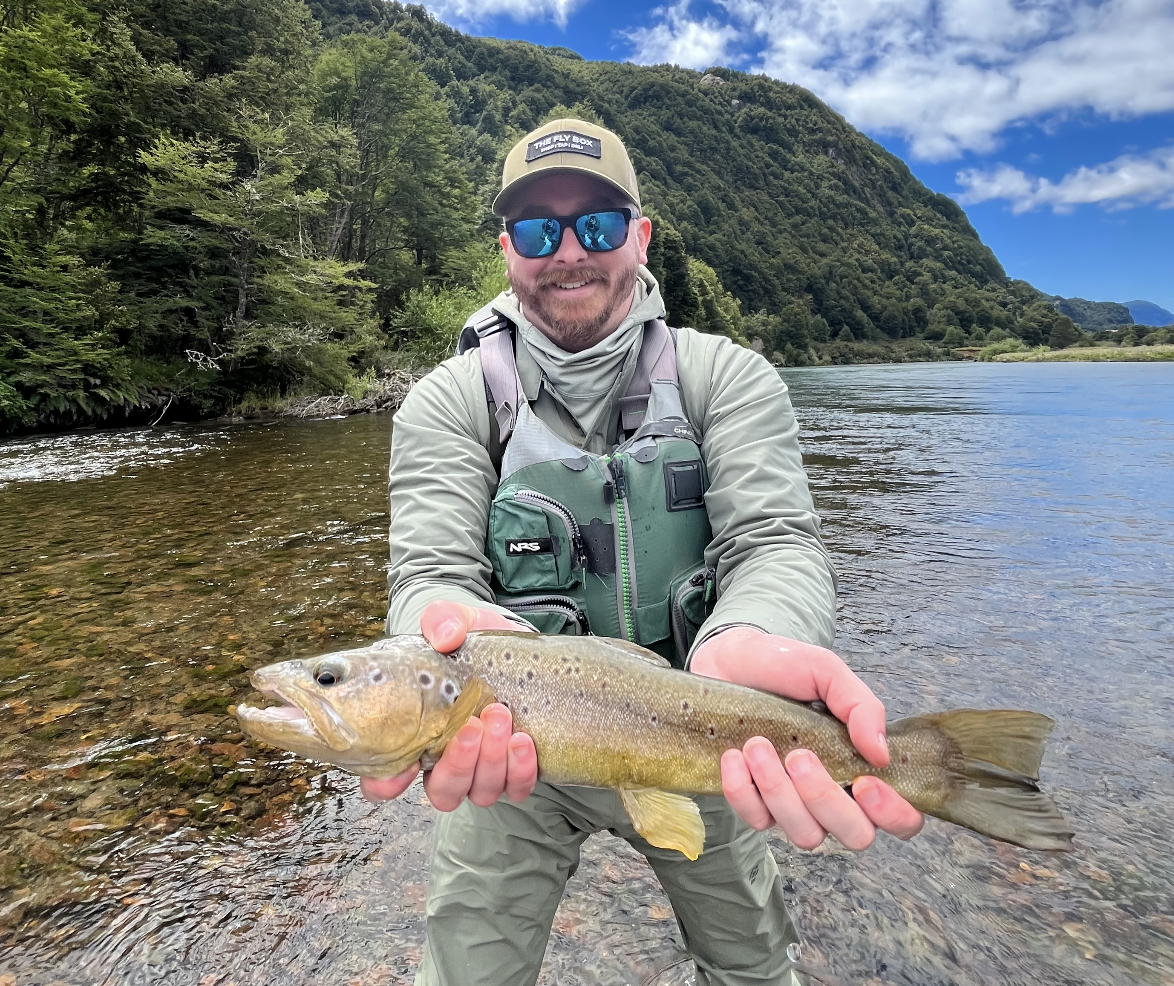
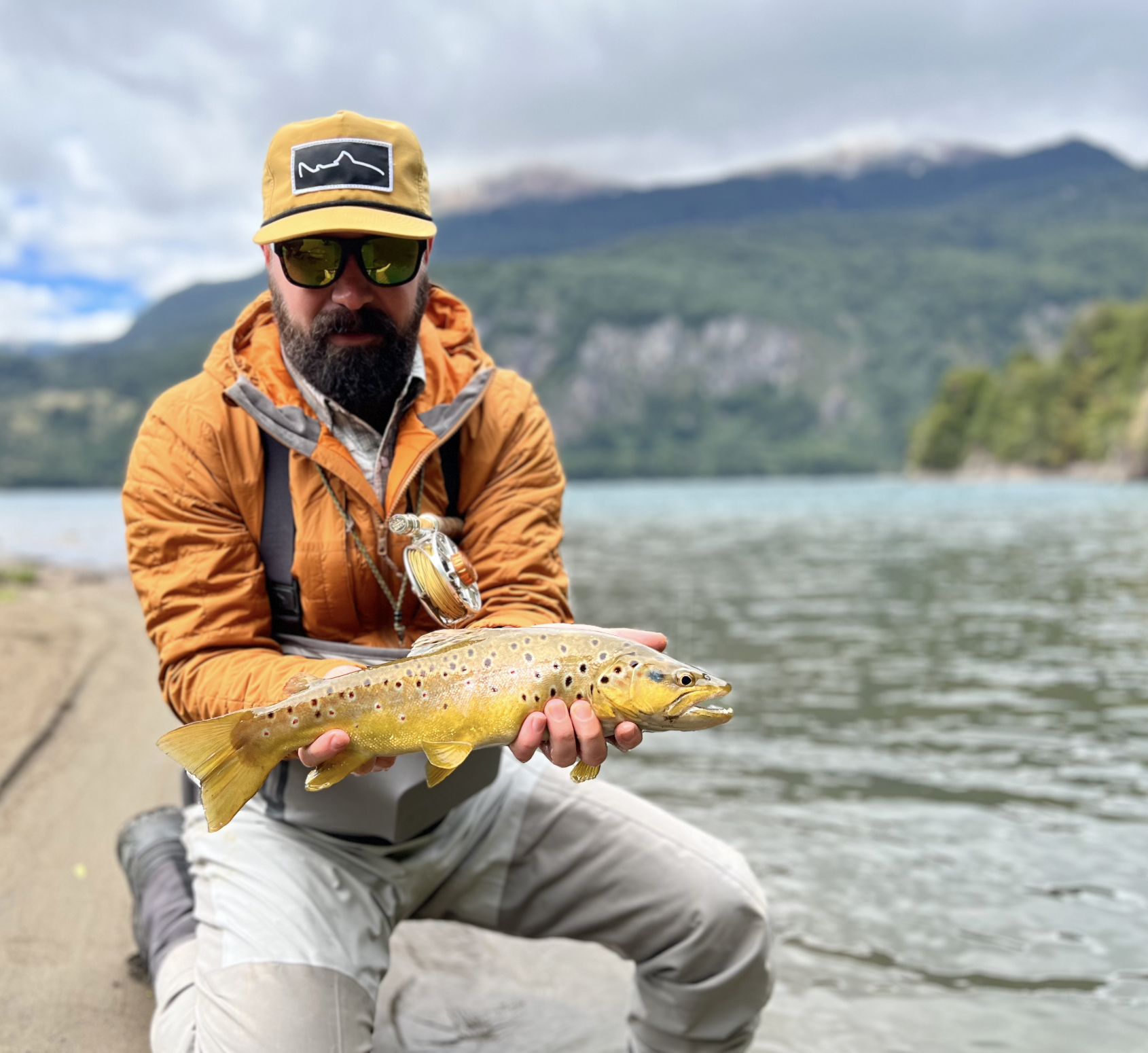
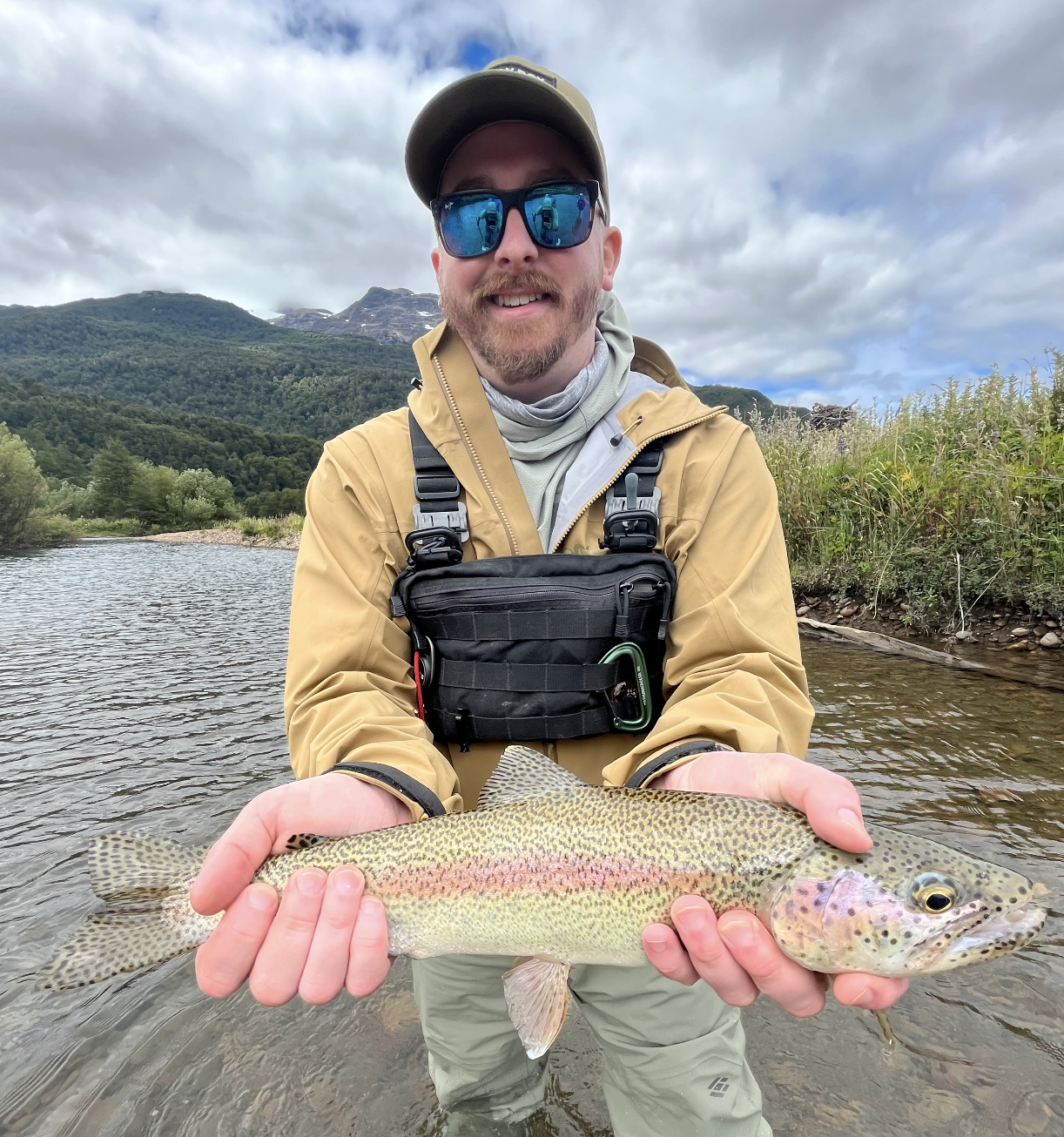
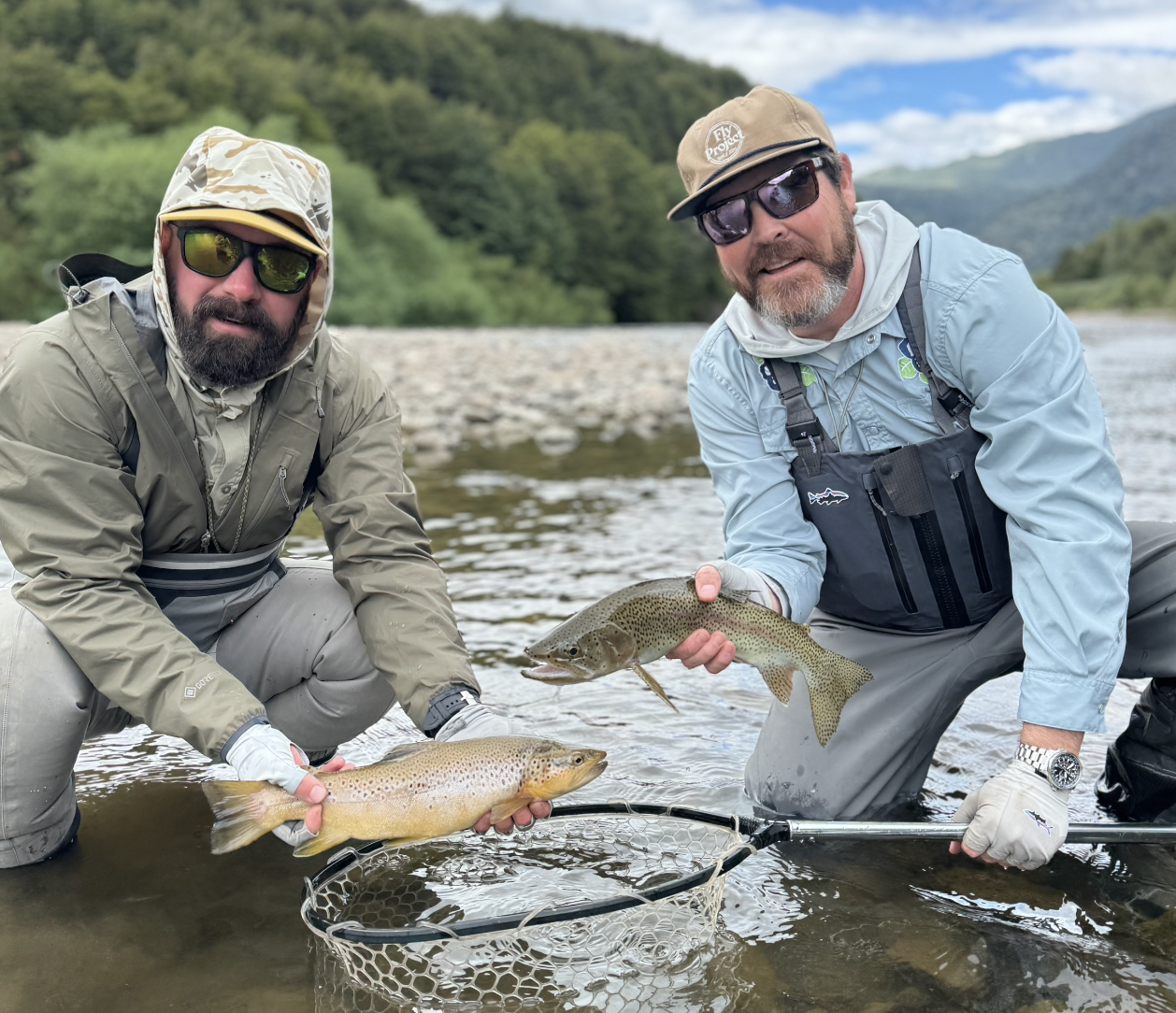
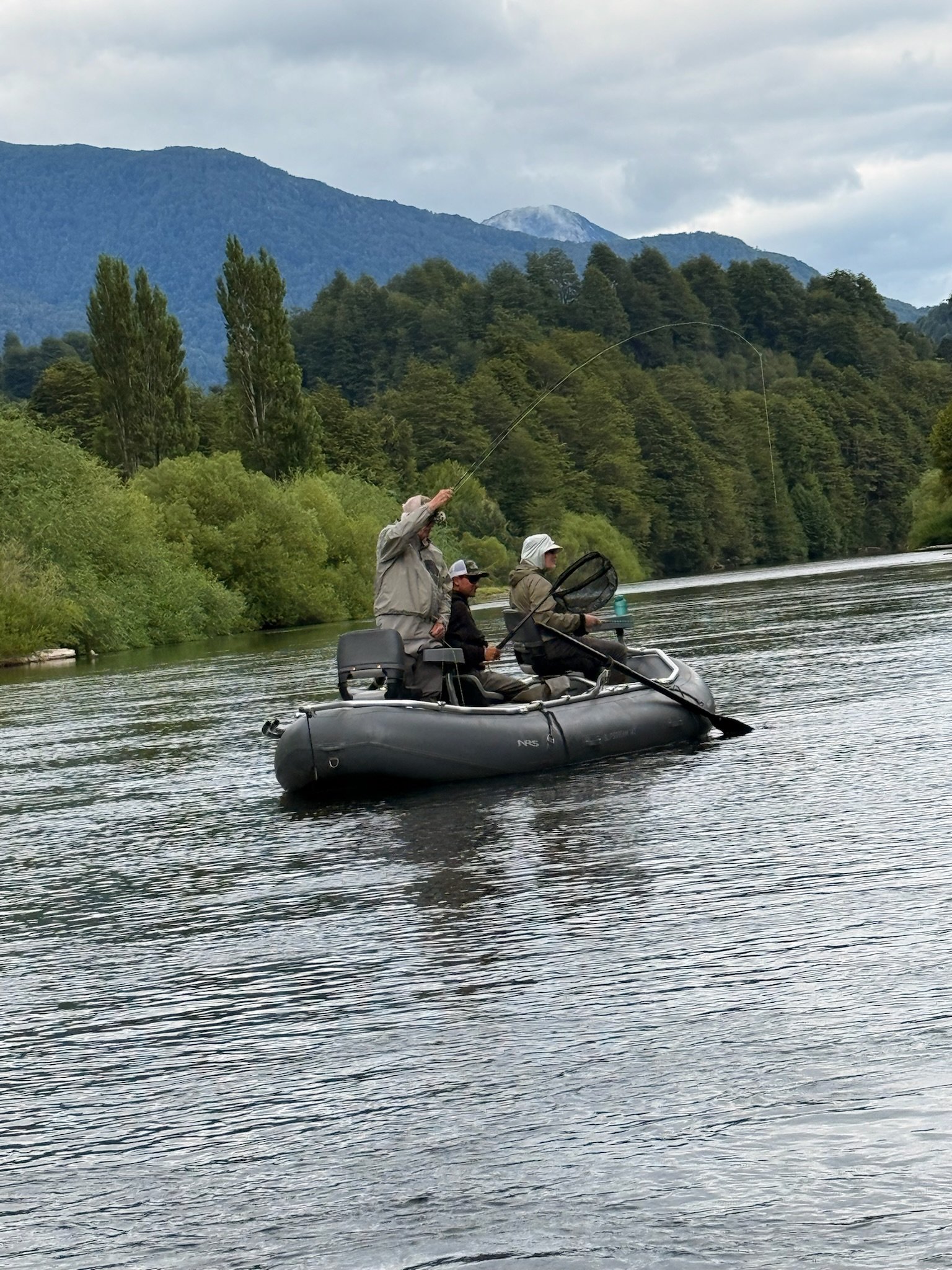
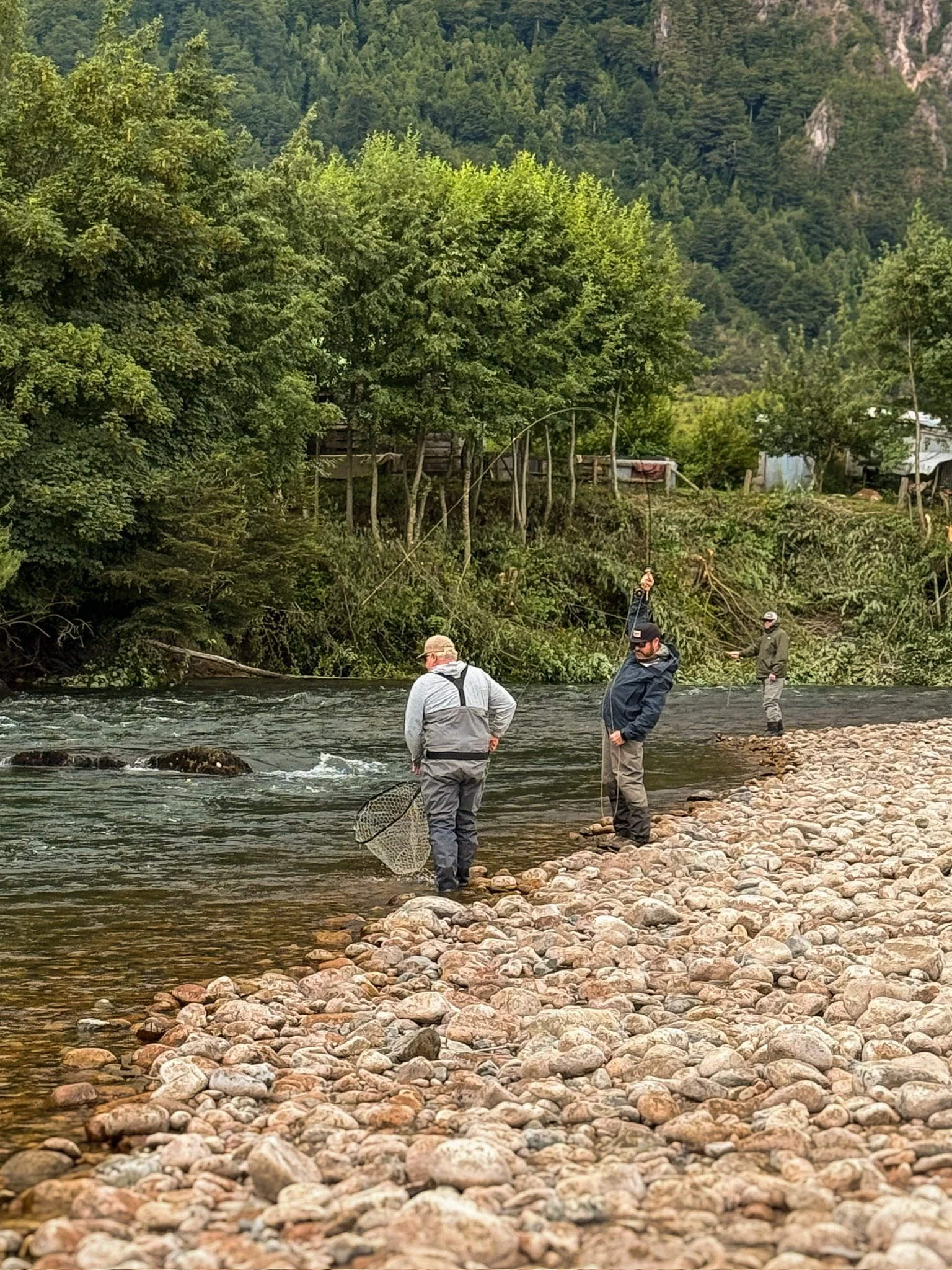
For 2026, we had a great start to our season in Patagonia. The first week kicked off with higher-than-normal temperatures and lower water conditions, but this in no way affected the fishing. With a mix of walk-wading and floating, our group had record days both in size class and numbers landed. The second week brought its challenges—strong winds and persistent rain—but the fishing remained excellent, with tactics that differed from week one.

FIRST WEEK

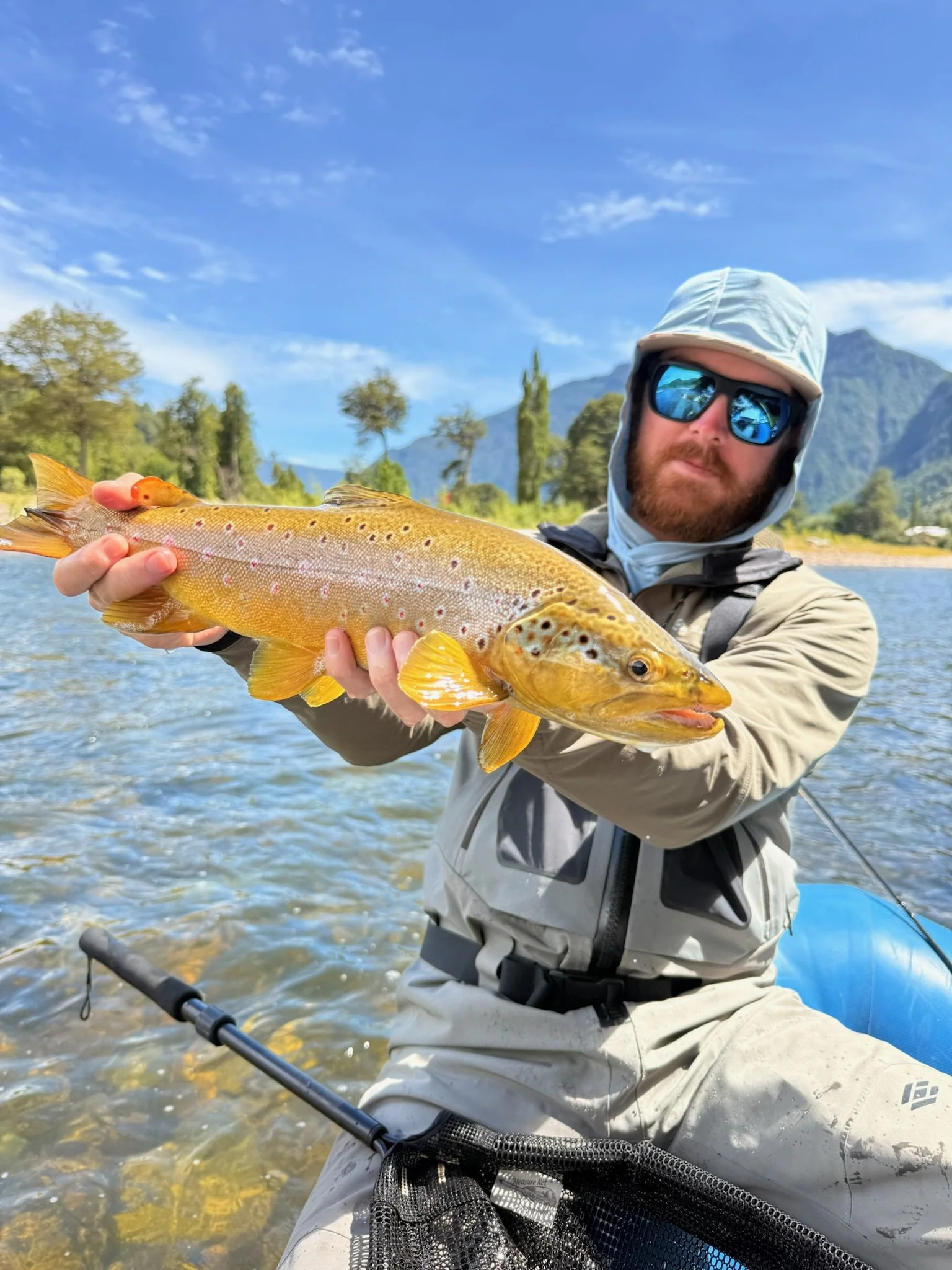
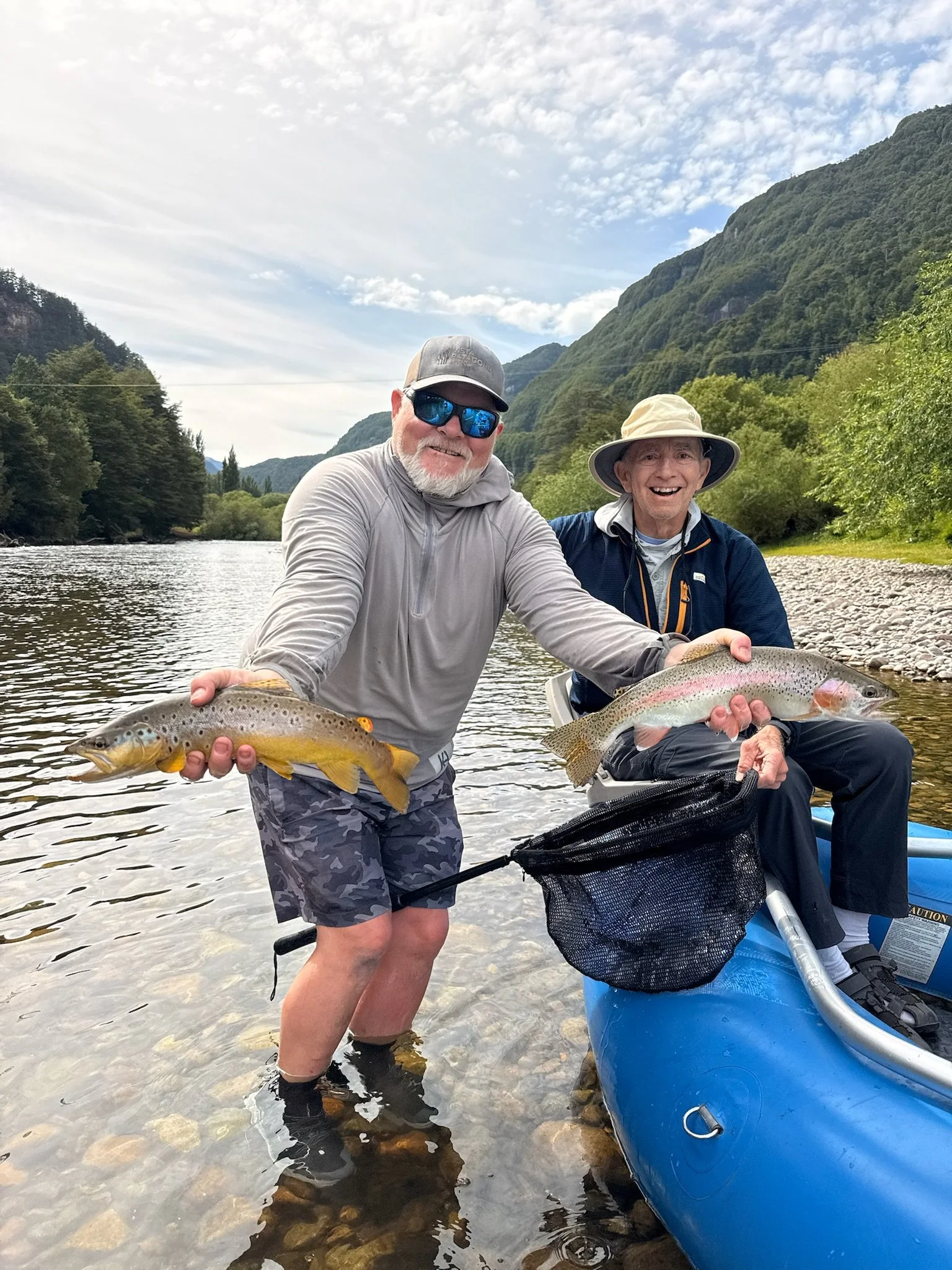
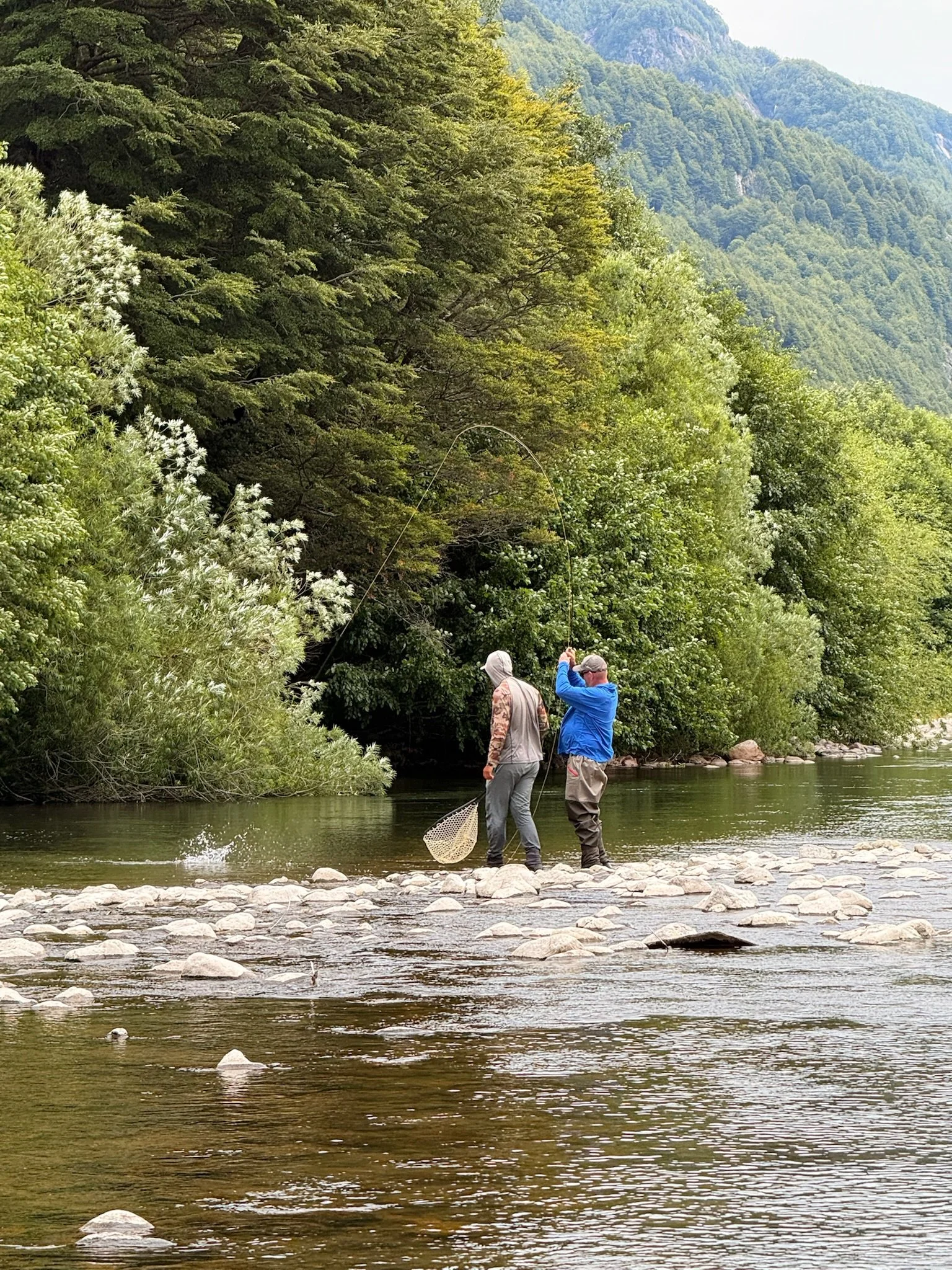
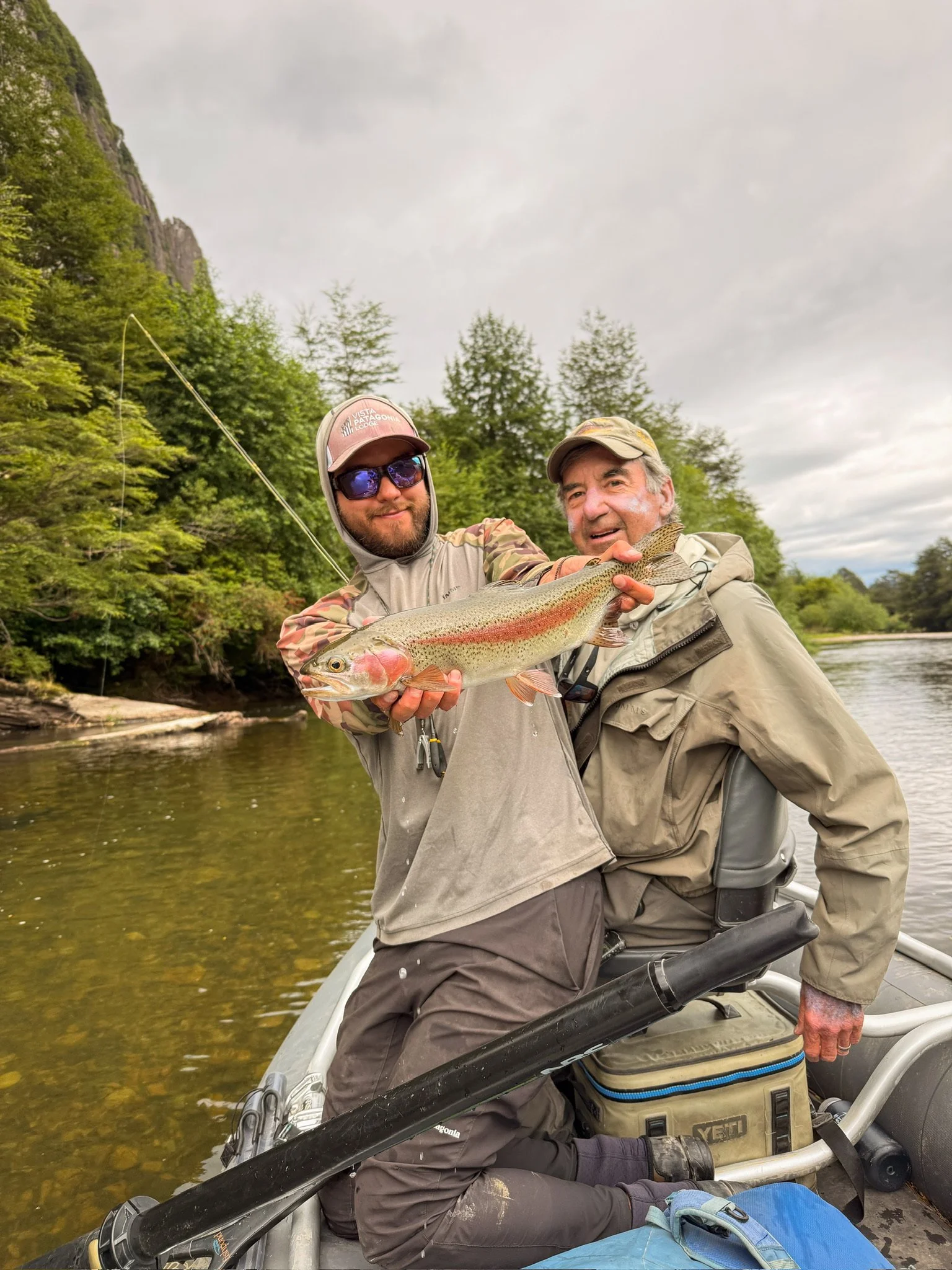
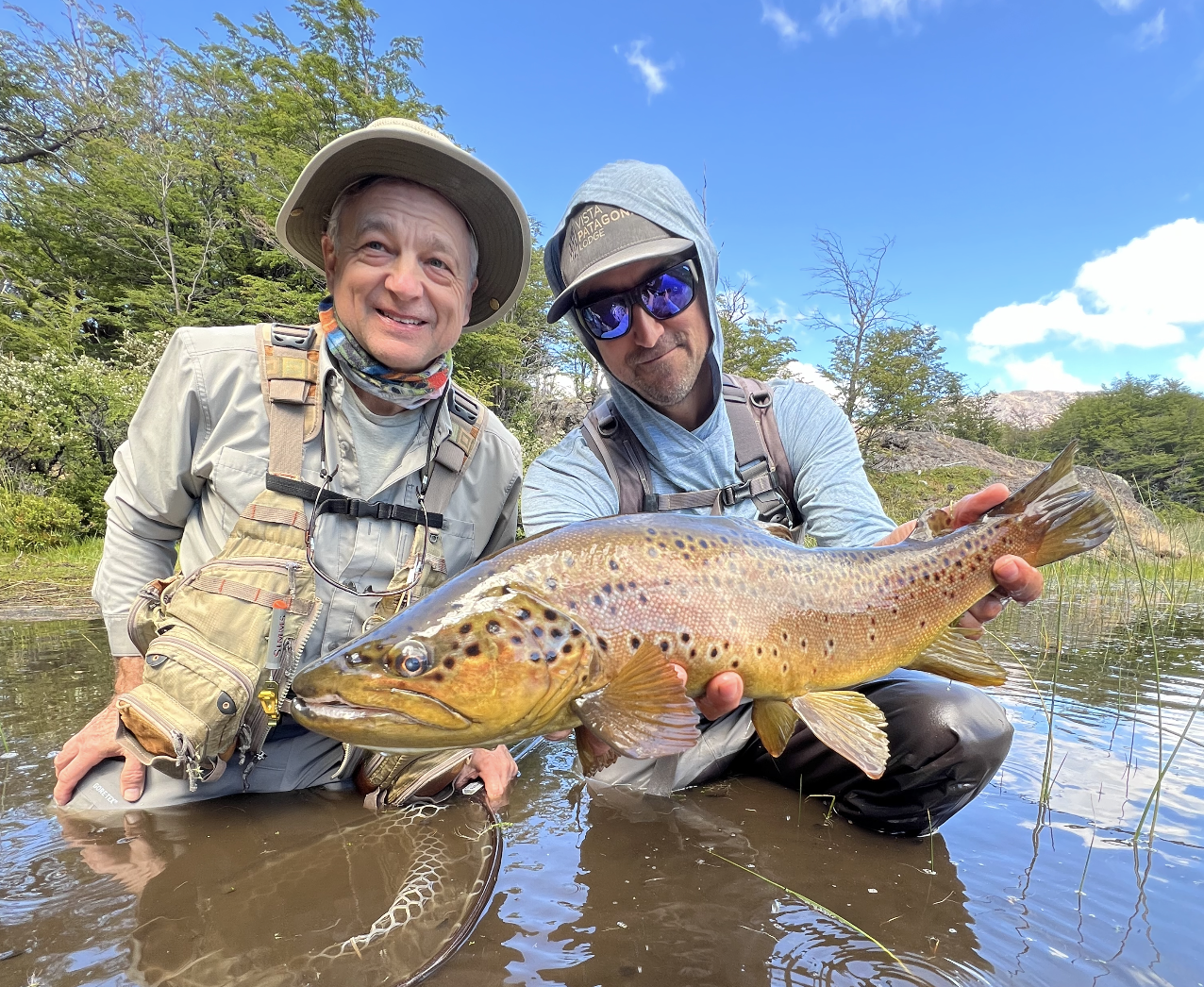
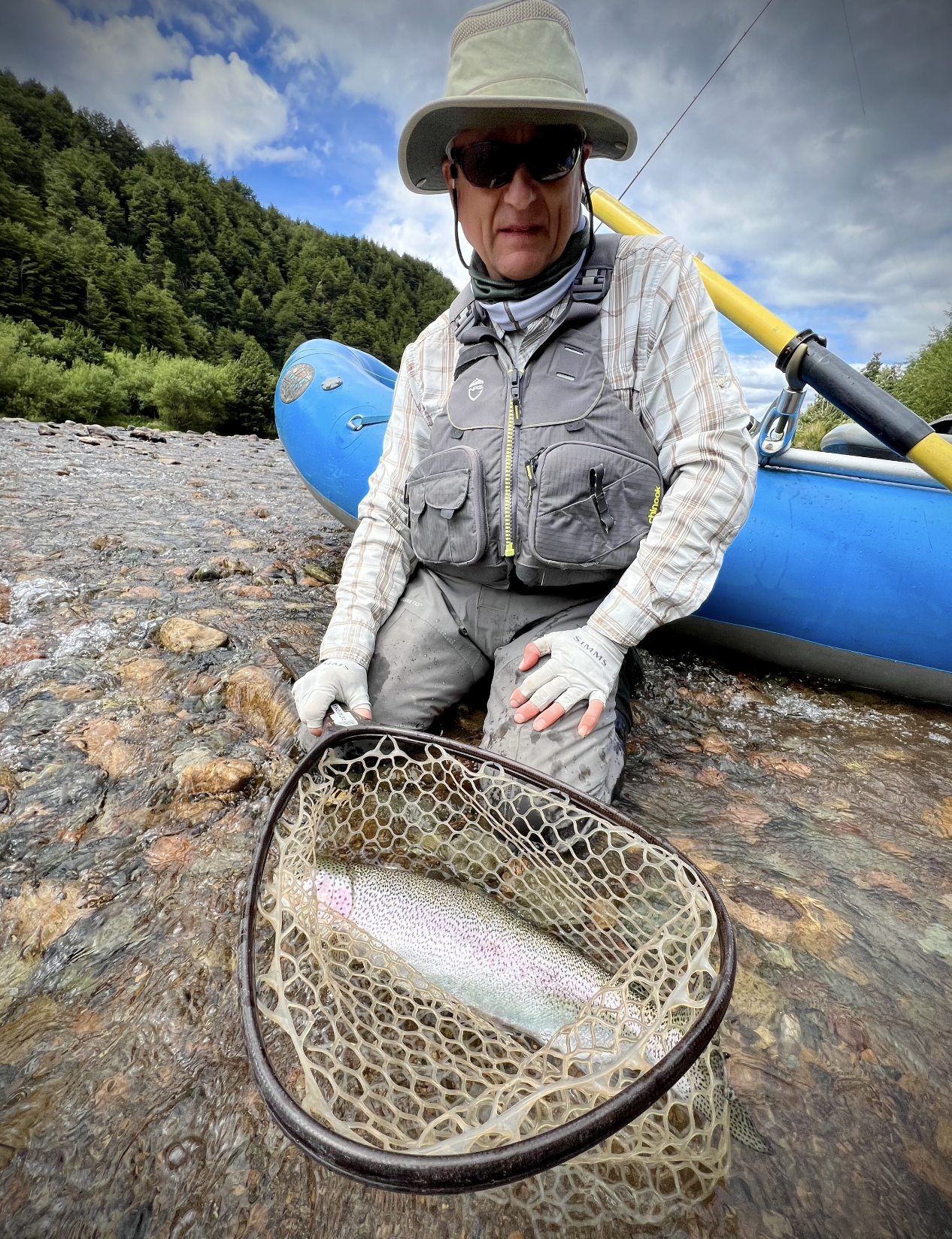
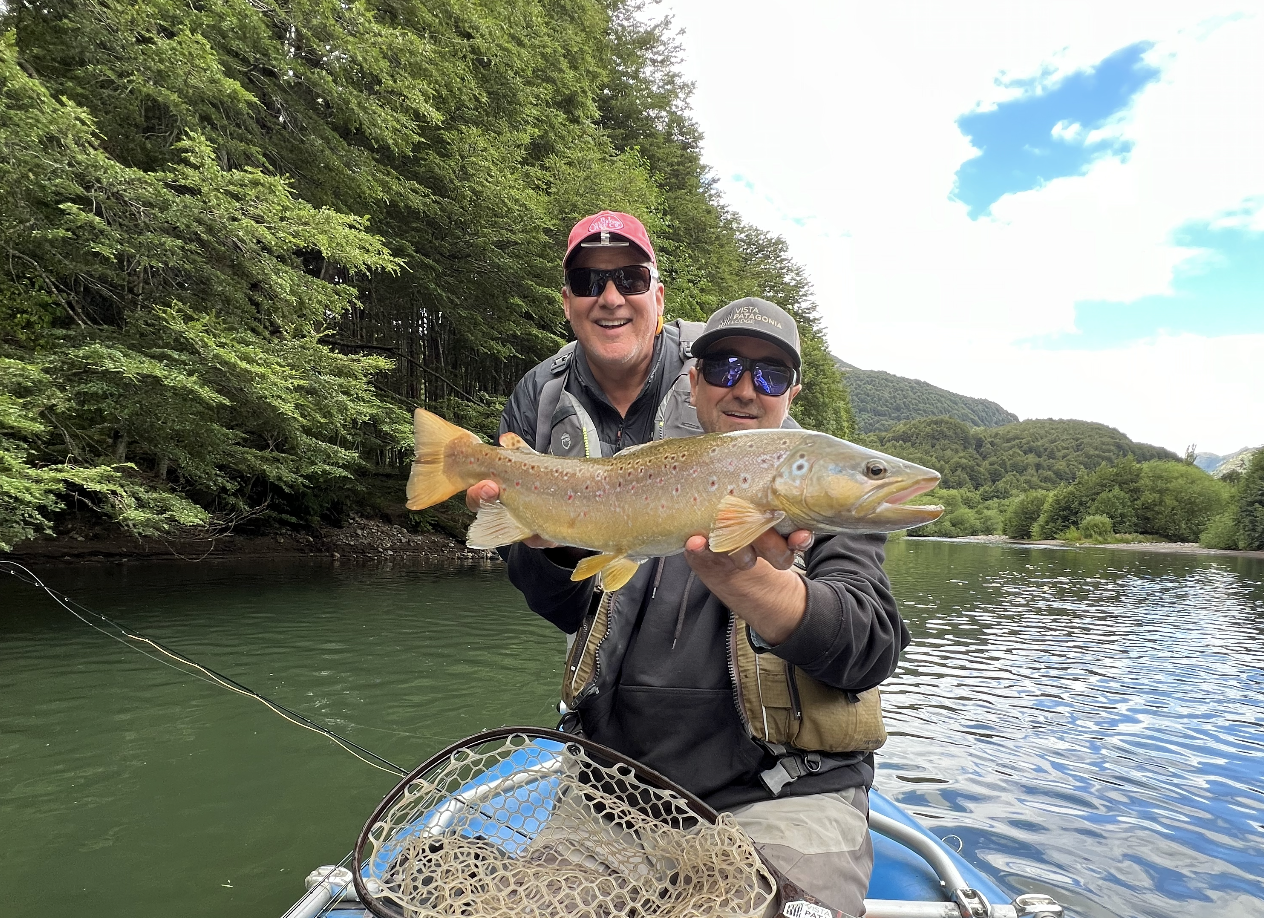
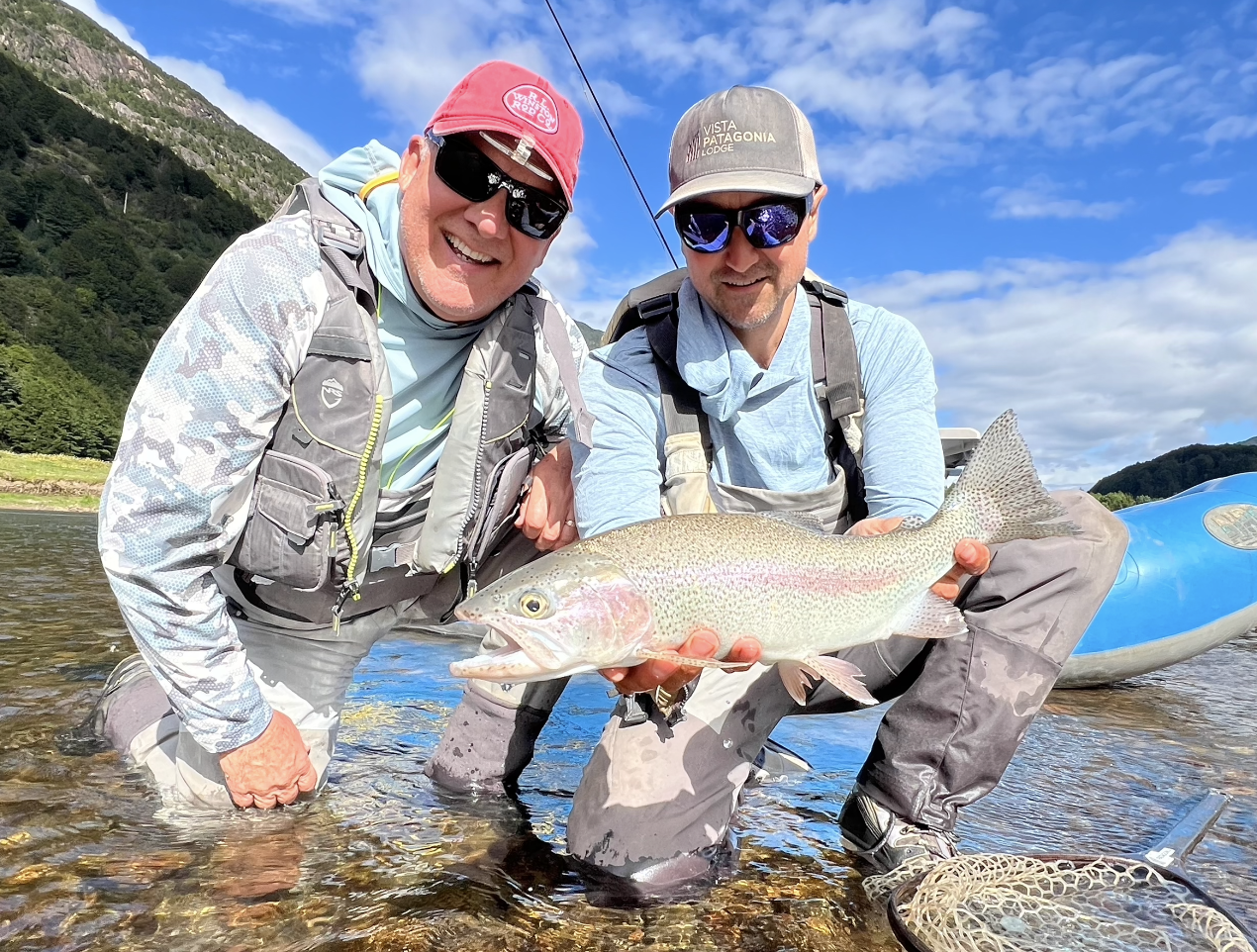
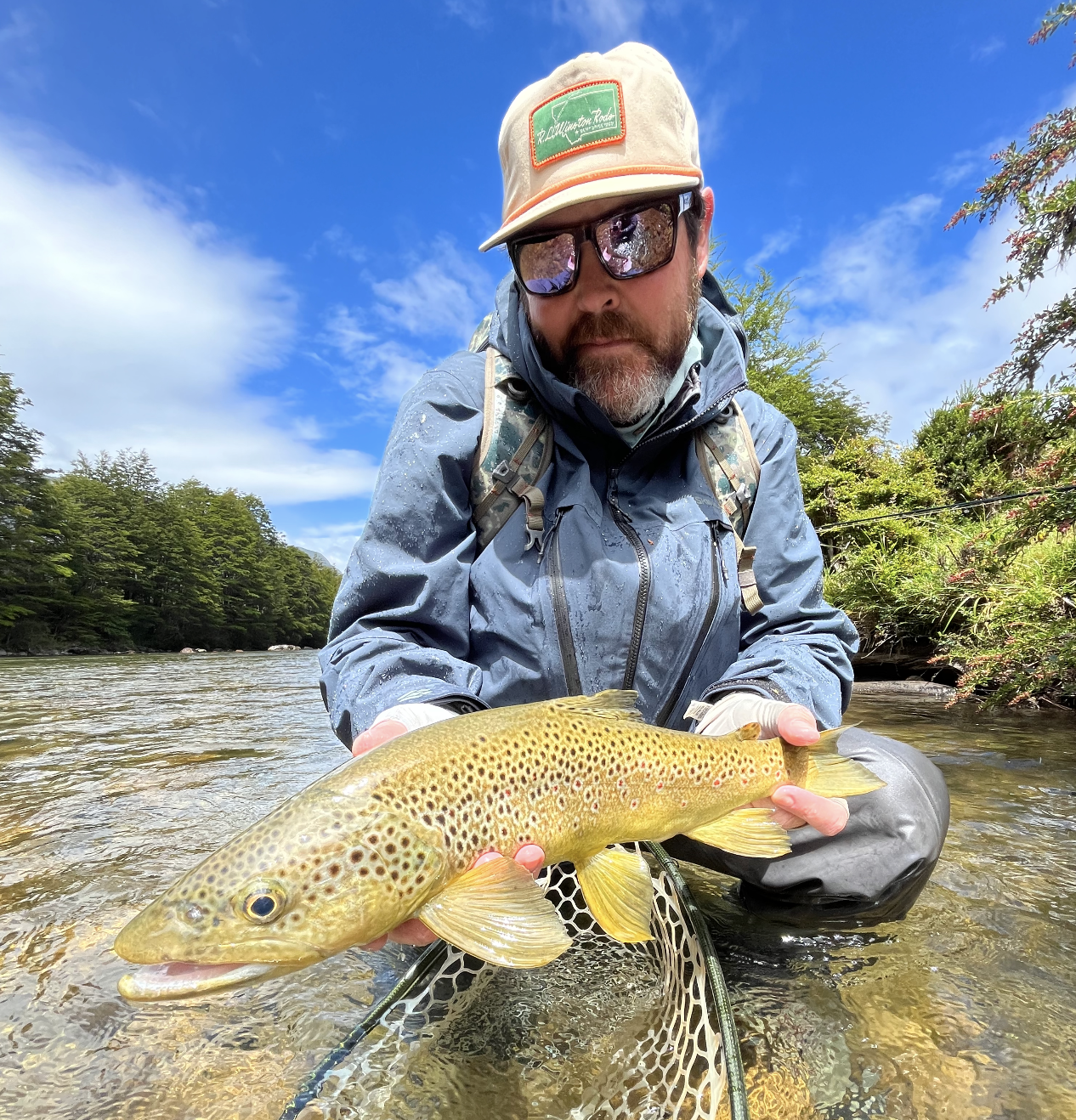
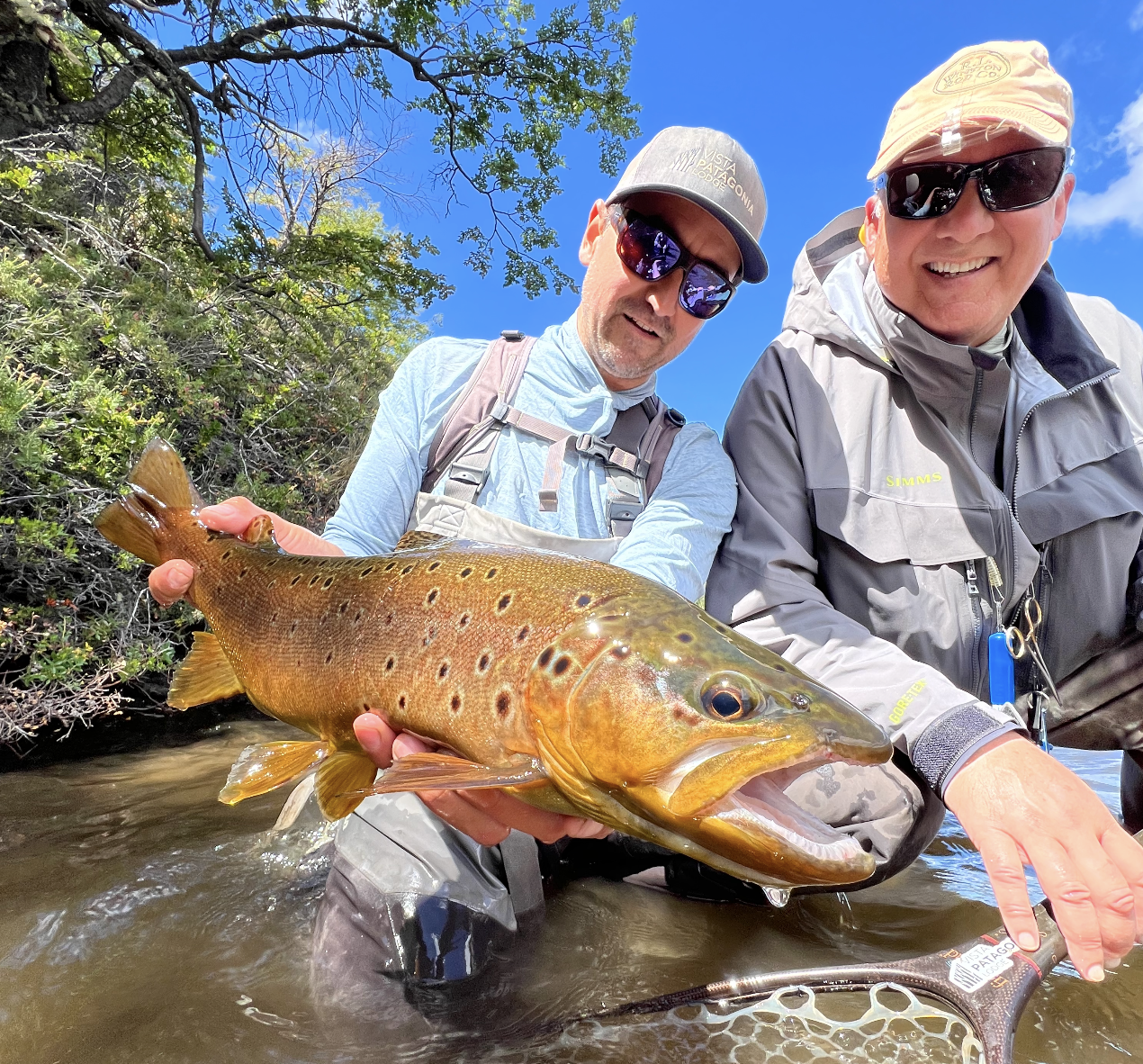
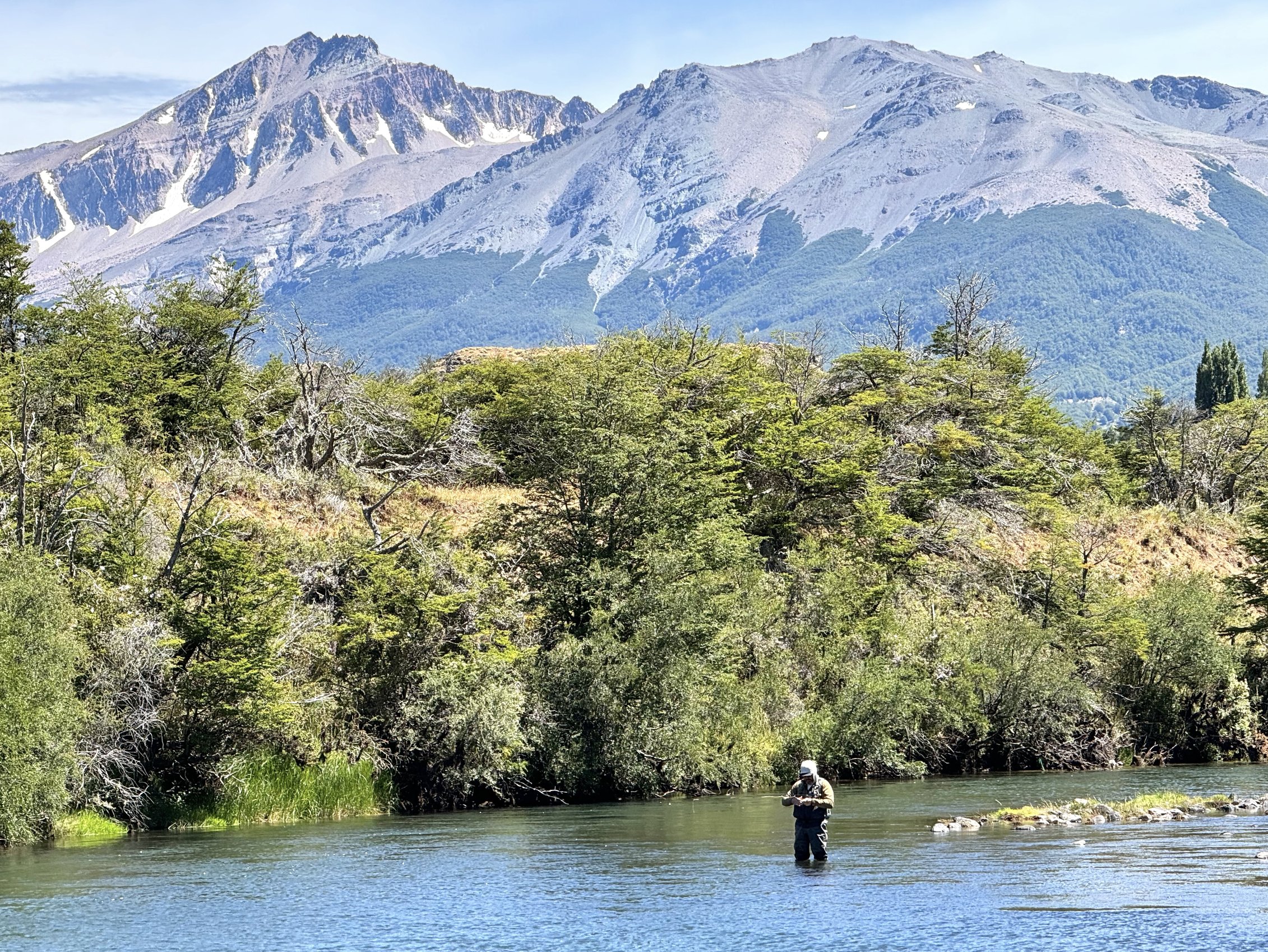
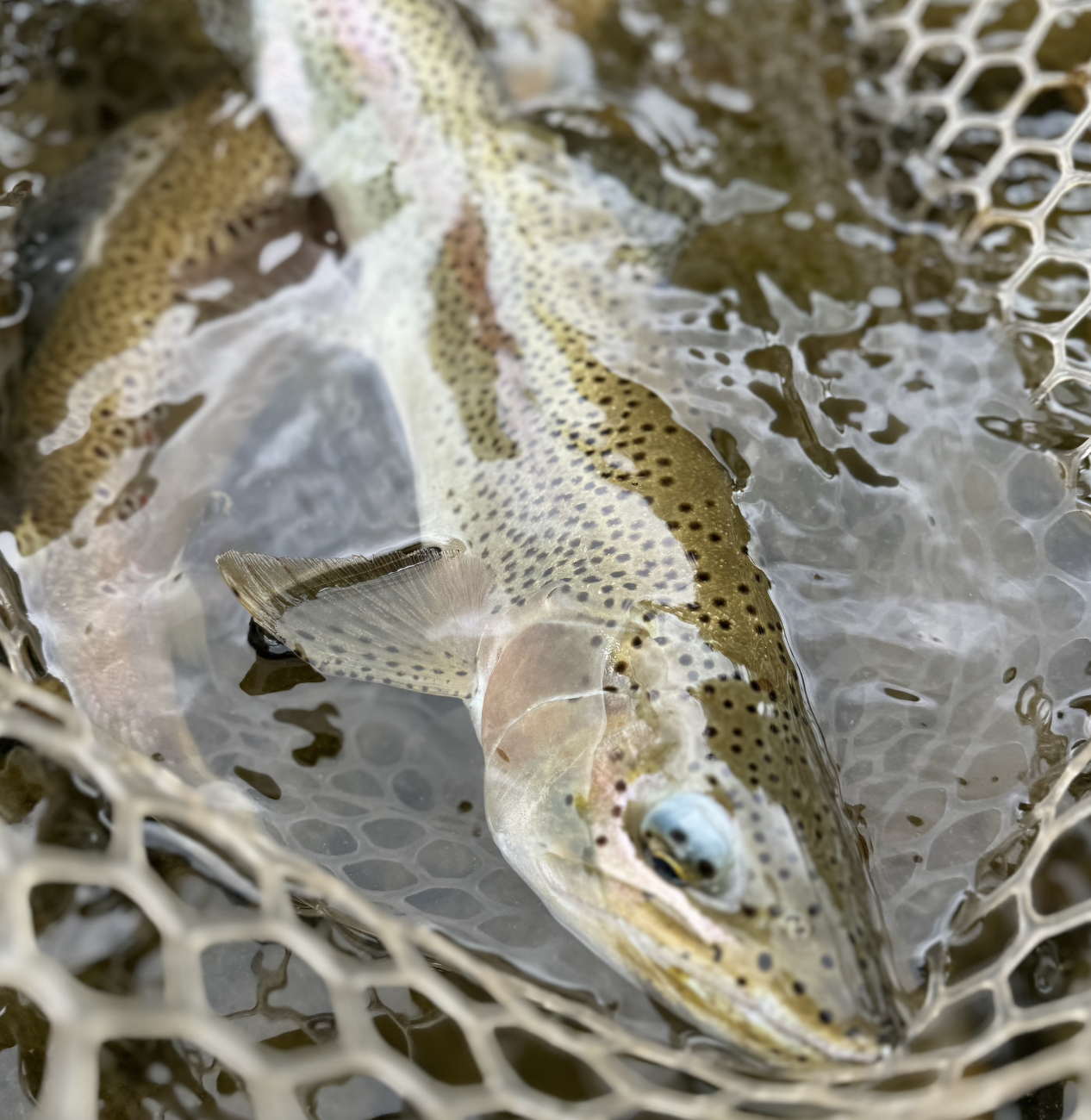
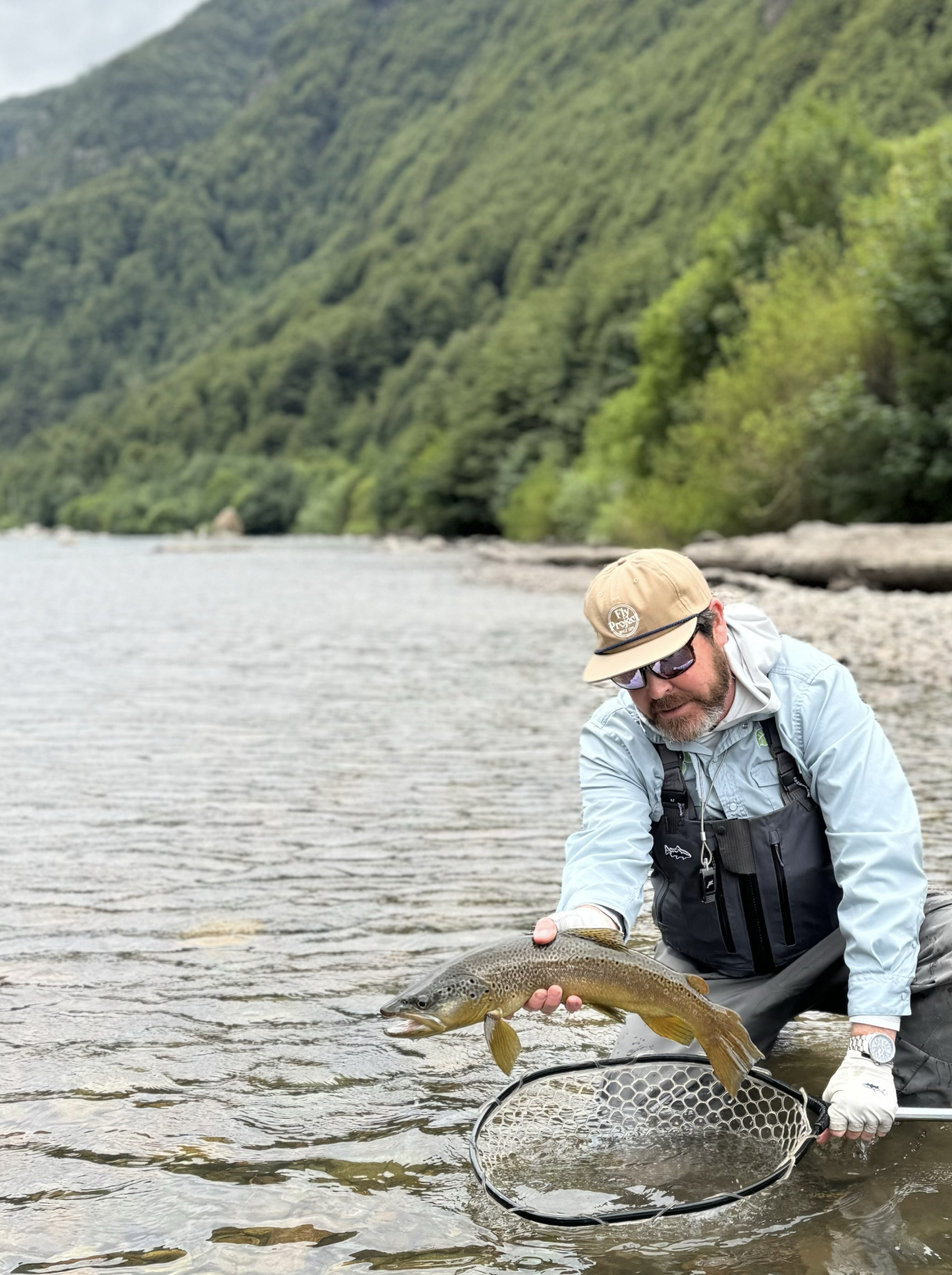
Dry-dropper fishing was extremely productive. A black and purple Chubby in a size 8 or 10, with 2–3’ of 4X below the dry paired with either a PT pattern or a smaller-profile Pat’s Rubber Legs, absolutely wrecked fish. We also targeted pods of rising trout holding close to—or tucked just inside—the willows along the banks. Most of the fish we saw sipping could be fooled with a smaller Parachute Adams or a small cream caddis, and if you were able to deliver a near-perfect drift, the fish rewarded you. Cy and several guests landed multiple fish in the 18–20” range. These were some of the hardest-fighting fish we have ever hooked, with long, hard-charging runs pulling drag on 6wt rods and tough battles all the way to the net. With lower water levels, fishing on foot at times allowed you to access harder-to-reach sections of the river and fish more technical nymphing setups under an indicator.

SECOND WEEK

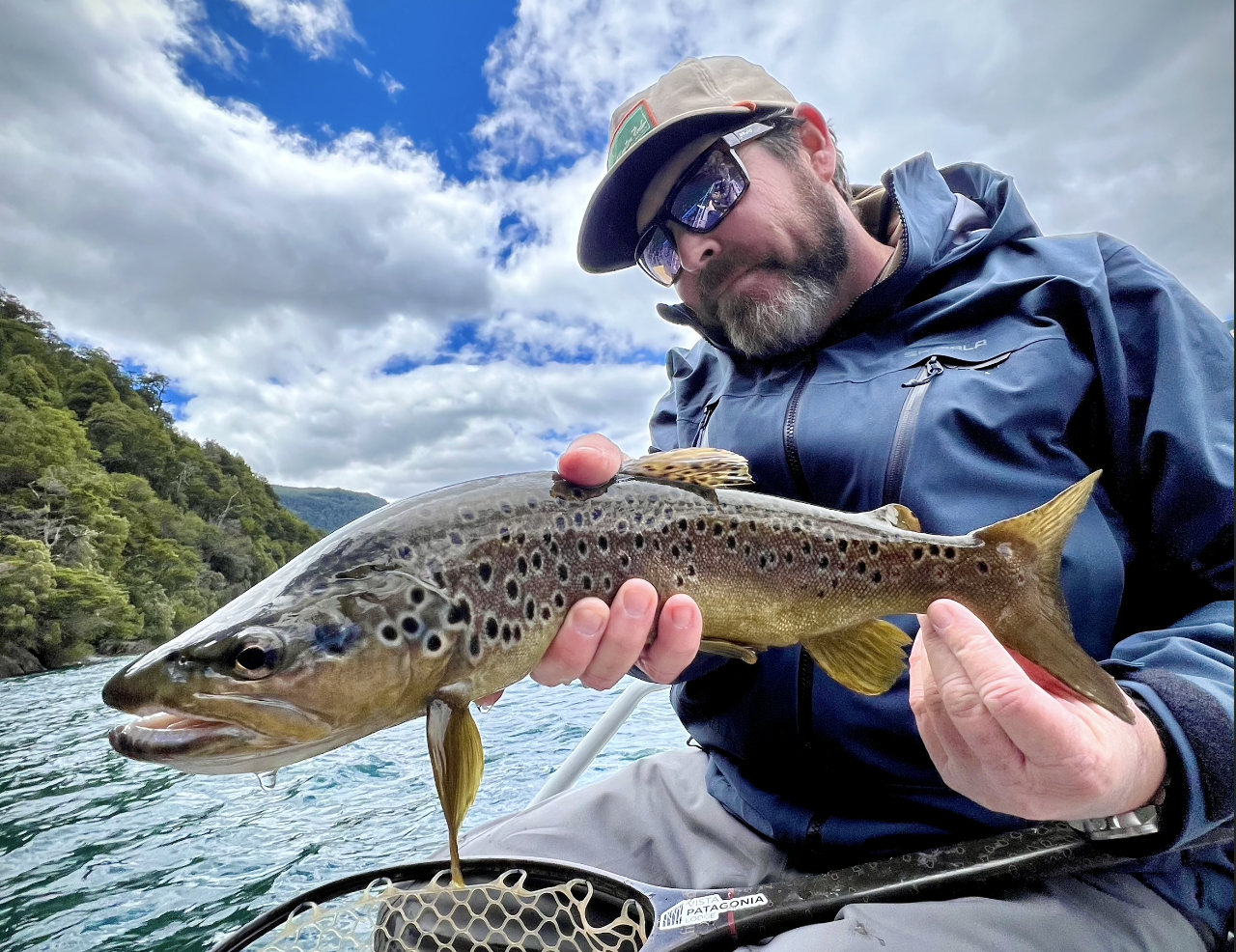
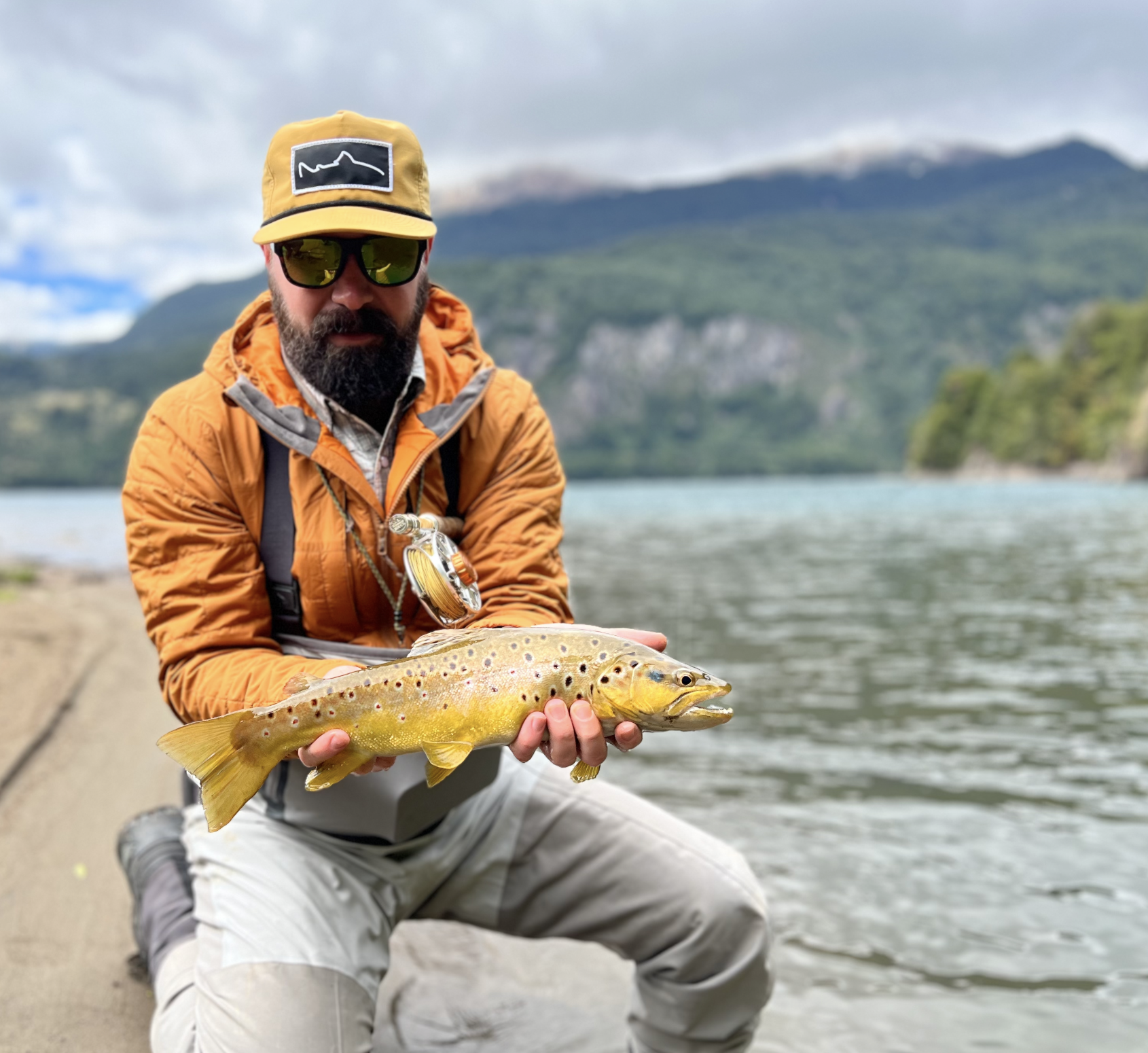
Week two saw a big shift in the weather pattern, with classic Patagonian winds and colder rain complicating the conditions. The fish, however, seemed to like the cooler weather. The wind kept us off the larger lakes and pushed us into both big and small river systems throughout the region, and it also tested the gear you brought—mainly your rain jacket. I ran the Skwala RS rain jacket paired with a merino wool system, including the 150 and 350 hoodies. With the added water and color, the rivers set up for some of the best streamer fishing I have ever seen there. Fish were moving aggressively for the fly, and some of the eats were epic, with blowups that looked more like smallmouth or largemouth bass than trout.  Playing the game “risk it for the biscuit,” as guide Ben would say, paid off with some of the bigger fish for the week.

Mostly throwing 7wts with sink tips or full intermediate lines, paired with smaller streamers like the Chile Bugger (a guide favorite), was crazy effective. Kelly Galloup’s Sex Dungeon in cream, black, and olive did the trick as well. I especially liked using the Micro Dungeons on foot in shallow water to explore structure and small back eddies, and some of the largest fish of the trip came to the net using this tactic. I’m honestly excited to see how these flies work on our local rivers. They’re small enough to throw on a 5wt with a short poly leader to create a quick sink tip on tailwaters or even smaller mountain streams.

The dry-fly fishing during week two was a bit spotty, but patience and waiting for the bugs to show during the warmer parts of the day paid off. I fed, hooked, and lost the biggest trout I have ever fed a dry fly to. Losing that fish hurt, but the setup—and the two to three minutes I had it on—were unreal and well worth the memory.

evening experiences

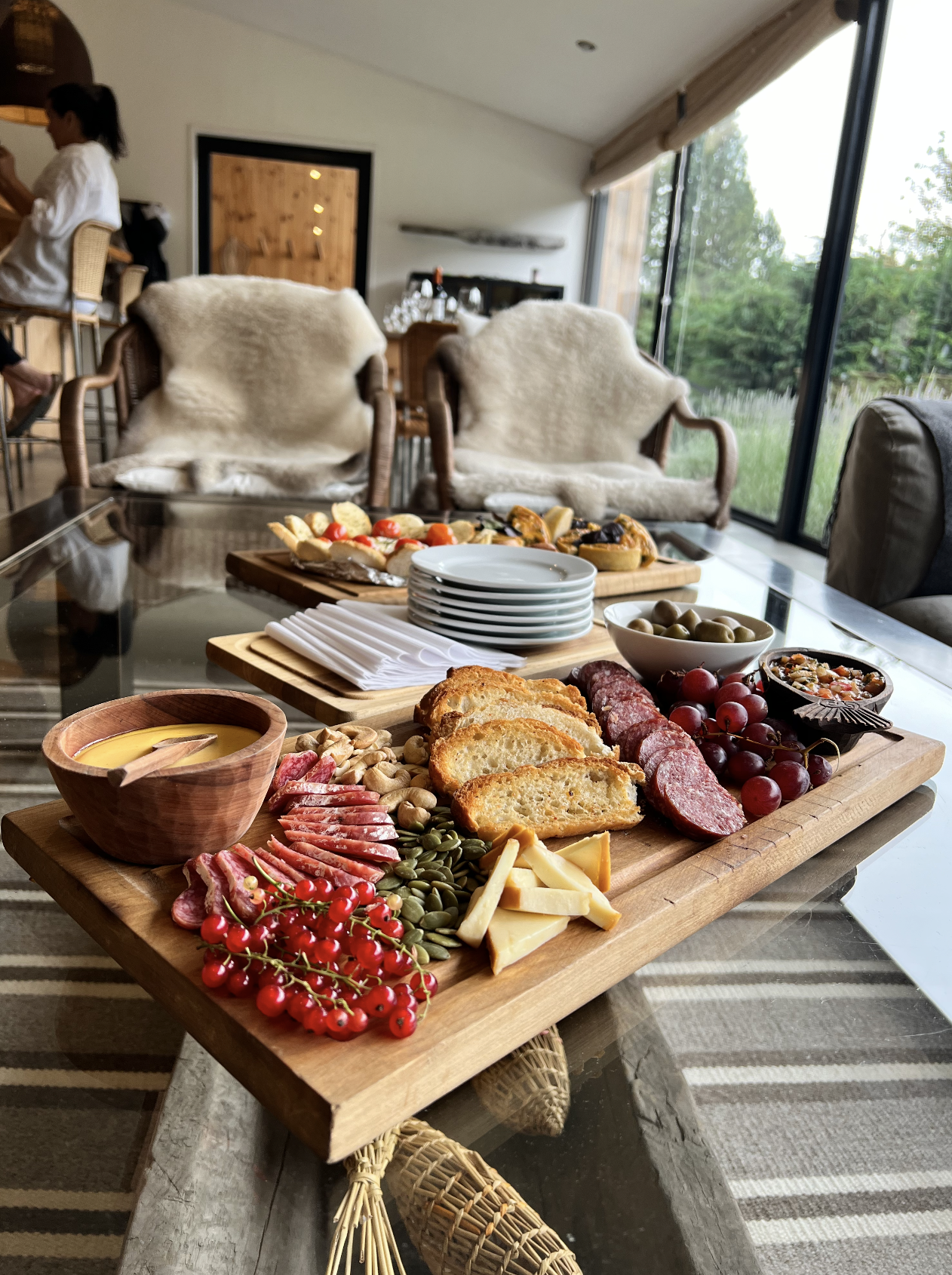
The group for the second week included several guests fishing in Chile for the first time. The look of amazement and pure excitement each morning as we headed out from the lodge is a big reason why we love hosting these trips. Each evening, as we returned to the lodge, Head Chef Claudio and his staff had plenty of regional appetizers and light bites waiting while everyone relived the day. Cy and I would just sit back and smile.

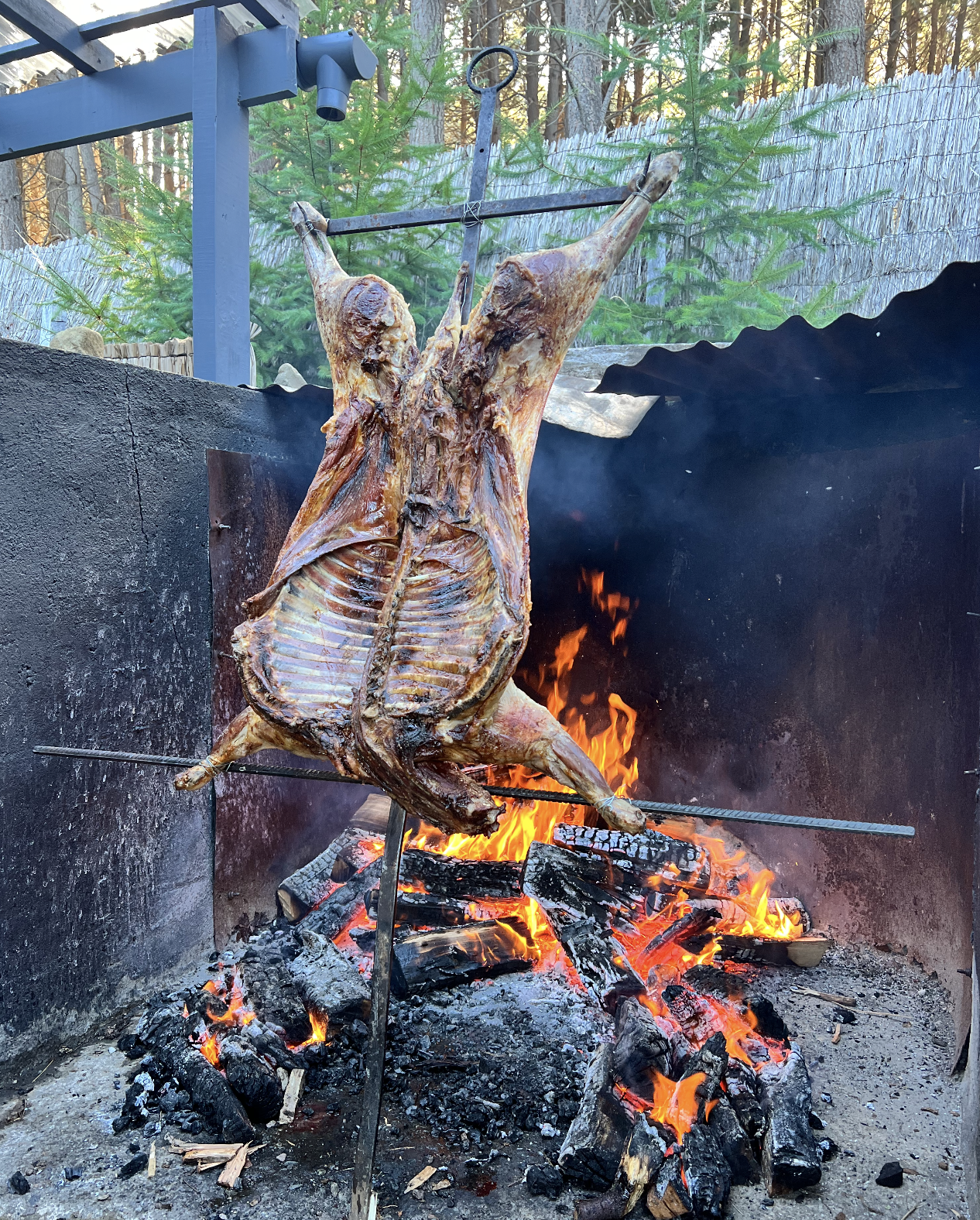
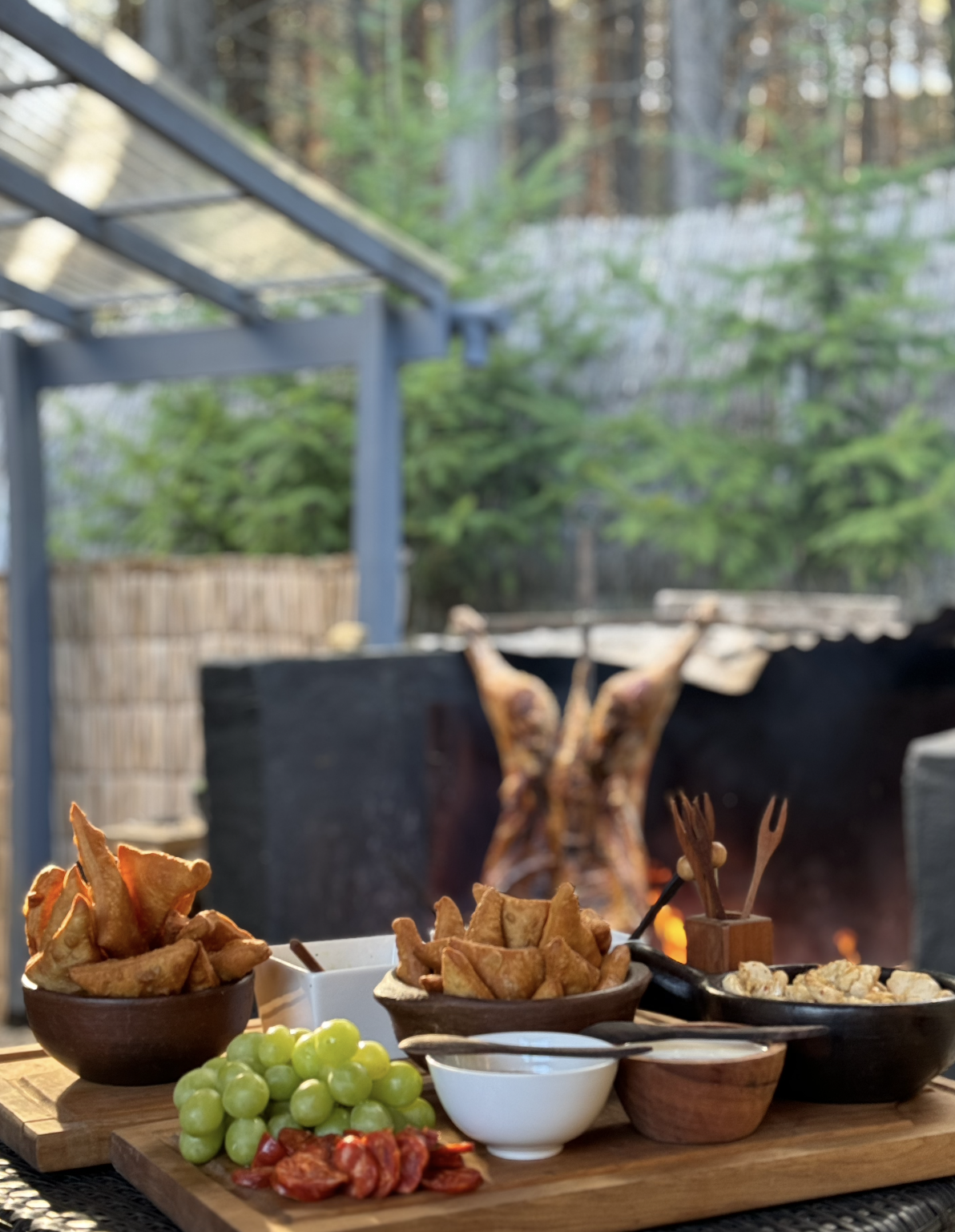
Diego and the entire staff at Vista Patagonia delivered an incredible experience for each guest. Each night wrapped up with a four- to five-course meal featuring some of the best food and Chilean wine I’ve ever had. Our final meal was capped off with a traditional asado—a whole lamb roasted over an open fire—to close out the week. The mix of fishing, food, and the best guides we’ve ever worked with always makes it hard to leave Patagonia. We always tell our guests that Diego and his staff strive to make you feel like family, and his attention to detail and lifetime of experience guiding those rivers and lakes make the trip 100% worth it. Stay tuned for the Week Three recap, which will be posted after Forrest returns from his February trip.

Forrest Neyman
East Tennessee Dry Fly Class


Join us for an evening discussing East TN dry fly tactics. We will be going into more depth than our other classes, specifically focused on ramping up your dry fly game. Topics discussed will include: leaders, best rods, approach strategy, flies, and more!

If you have any questions, give us a call! (423) 573-5668
 
Spring Season Kickoff


On Saturday, April 13th, join us for cold beer and a good time! We will be hanging out with the garage door open (weather allowing) and solid tunes playing. Come chat with your Fly Box homies and get ready for the upcoming season. We will have select items on sale!

If you have any questions, give us a call! (423) 573-5668
 
East Tennessee Nymphing Class


Join us for an evening discussing East TN nymphing classes. We will be going into more depth than our other classes, specifically focused on ramping up your nymphing game. Topics discussed will include: in-line rigs, bottom-bounce rigs, indicators, weights, and more!

If you have any questions, give us a call! (423) 573-5668
 
Fly Tying Night w/ Pat Dorsey sponsored by Umpqua Feather Merchants


FLY TYING SEMINAR ON MARCH 16th

Join us March 16th for an evening of fly tying with the legendary Umpqua Signature Tier Pat Dorsey at The Fly Box! Whether you're a beginner or an experienced tier, this event is perfect for all skill levels. Pat Dorsey, a renowned Colorado tailwater fly fishing guide, will share his expertise and teach you some of his best-kept tactics for targeting finicky trout.

This is a seminar style event, no need to bring a vice. Just kick back, grab a beer (or seltzer), and relax as we get to watch a master work.

Umpqua will be sponsoring this event and providing some great raffle prizes. We will also have some other raffle prizes from other partners.

TICKET PRICE INCLUDES ONE FREE BEER!

Evening Will Include

Doors Open - 5:45pm

Blue Ridge Guide guest speakers 6:15pm

Raffles 6:45pm

Q&A 7:00pm

Pat Dorsey Tie 7:30pm

Meet & Greet 8:30pm

Patterns We Will Discuss

1. Bread Crust Jig

2. Pats Midge

3. Top Secret Betis

4. UV Orange Scud

5. Black Beauty

6. Tungsten Mercury Caddis

7. Mercury SH Pheasant Tail

8. Top Secret Midge

Space is limited, so be sure to reserve your spot today!

PATAGONIA HOSTED TRIP RECAP 2024
 

INTRODUCTION

Our first Chilean hosted trip to Vista Patagonia is in the books. Here is a quick recap of our week to give you an idea what it’s like to travel and fish in Patagonia.

We all have those places that we love to travel and make it a routine to regularly go back. For us, one of those places is Vista Patagonia Lodge. The staff, scenery, and fishing is exactly what folks who love to trout fish dream of. We are already getting our group lined up for 2025, reach out if you are interested. It will be here before we know it.

CUSTOMER FEEDBACK

“I dreamed about going to Patagonia for over 20 years. This trip far exceeded my wildest expectations with diversity in fishing experiences, amazing food, hospitality, and a truly unique adventure throughout the week. I left feeling like family, and I could not have imagined a better group to join for this. Thank you to the team at Vista Patagonia and the Fly Box family for memories that will last a lifetime.” - Chris W.

“The hospitality was warm and inviting, the accommodations are comfortable and impeccably clean, the food is excellent. The fishing was absolutely awesome. Without a doubt the best destination fishing experience I have ever had. All thanks to Diego, his lovely family, and the dedicated staff of Vista Patagonia Lodge. Thanks for an amazing adventure.” - Steve F.

“A once in a lifetime trip to probably the most beautiful place we’ve ever seen. Great food, great views, and better people. As people who are relatively new to fly fishing, the guides were incredibly kind and happy to teach us. By the end of the week, both of us were significantly better than when we arrived.” - Tyler & Ginny

FISHING EXPERIENCE

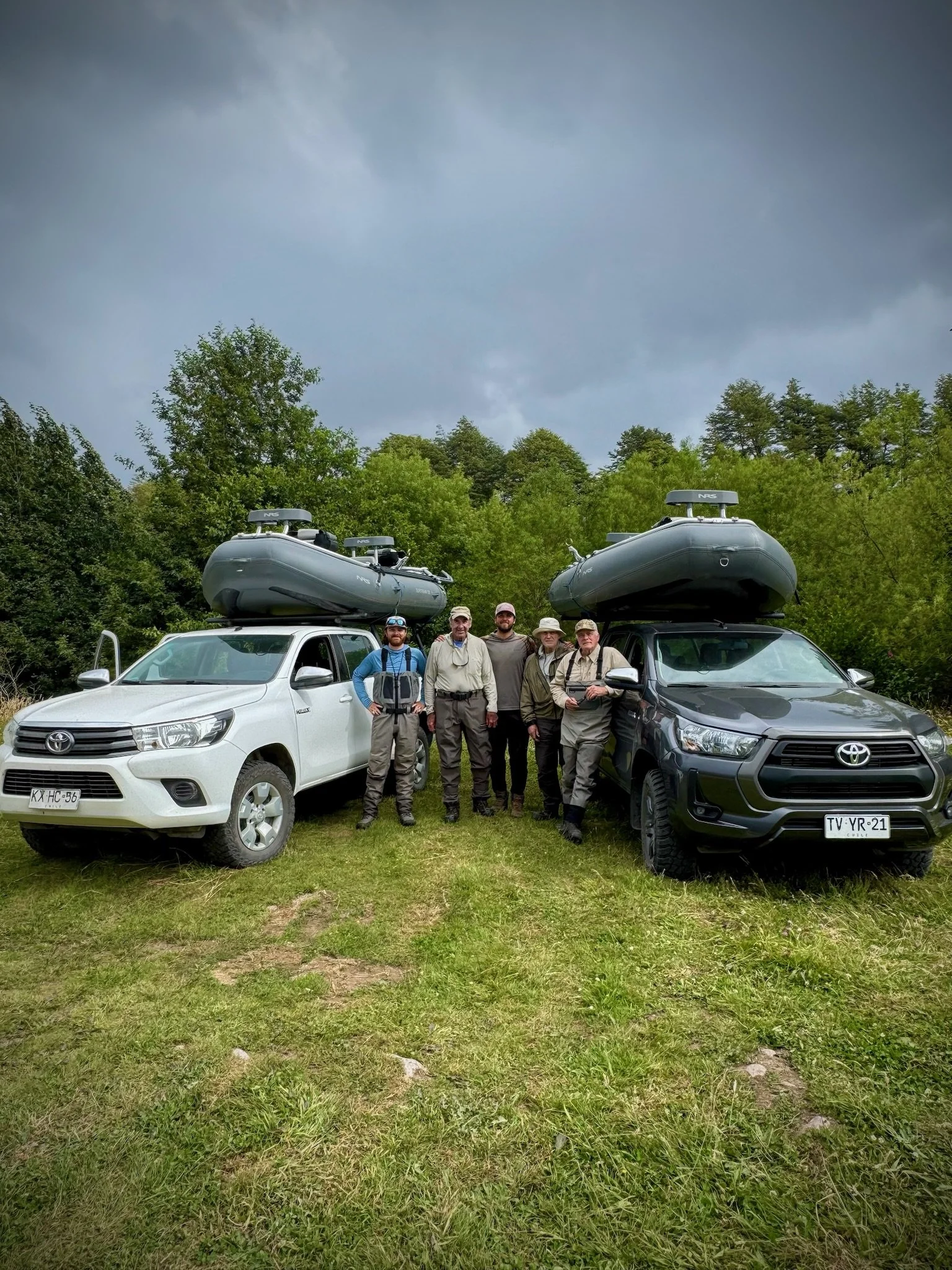
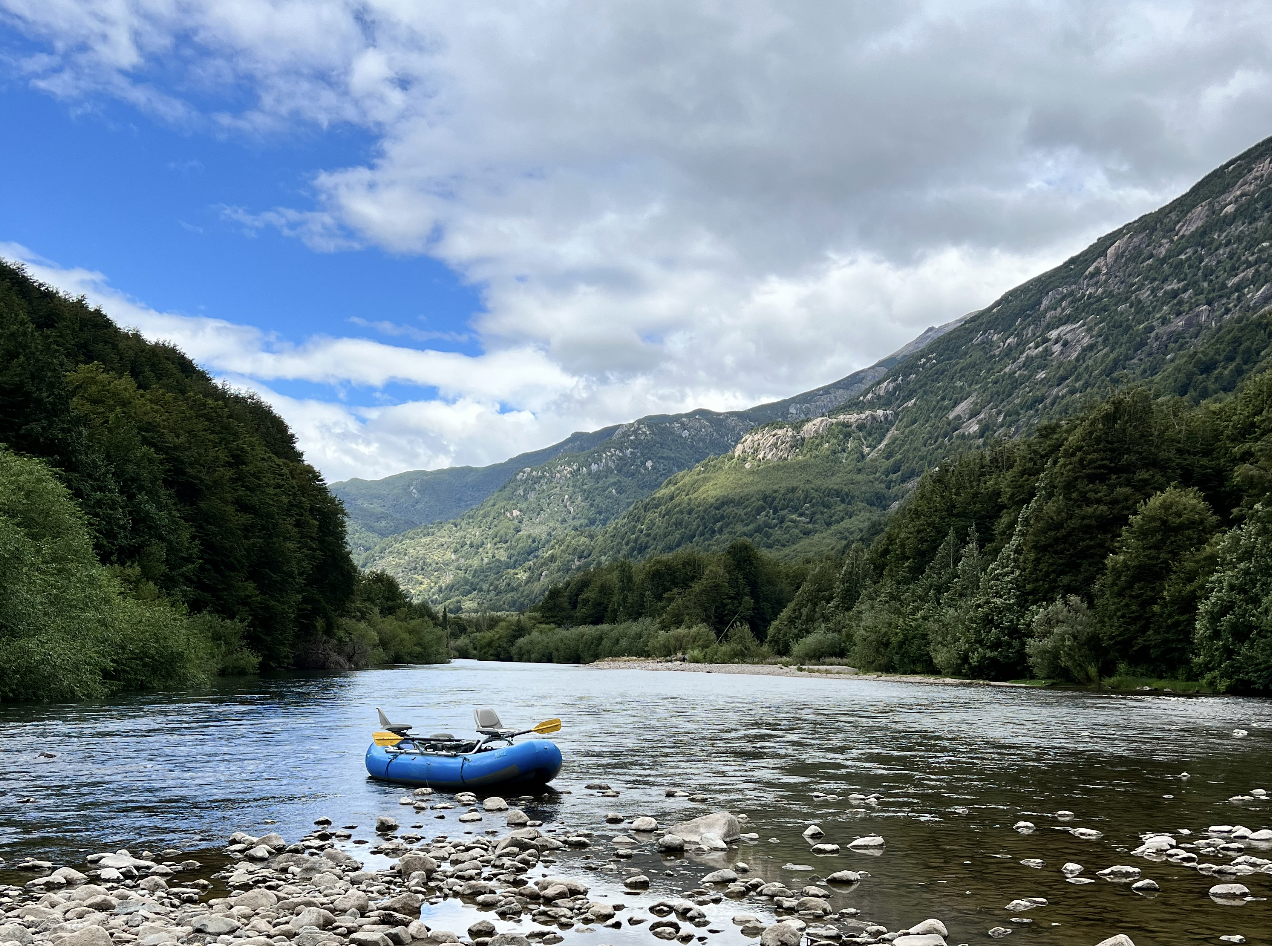
The next six days of fishing was a perfect mix of lakes, both large and small, spring creeks, and larger rivers. Utilizing rafts allows the Vista crew more mobility to make their own “put -ins and take-outs” to fish sections of the rivers and lakes that most other guides do not.

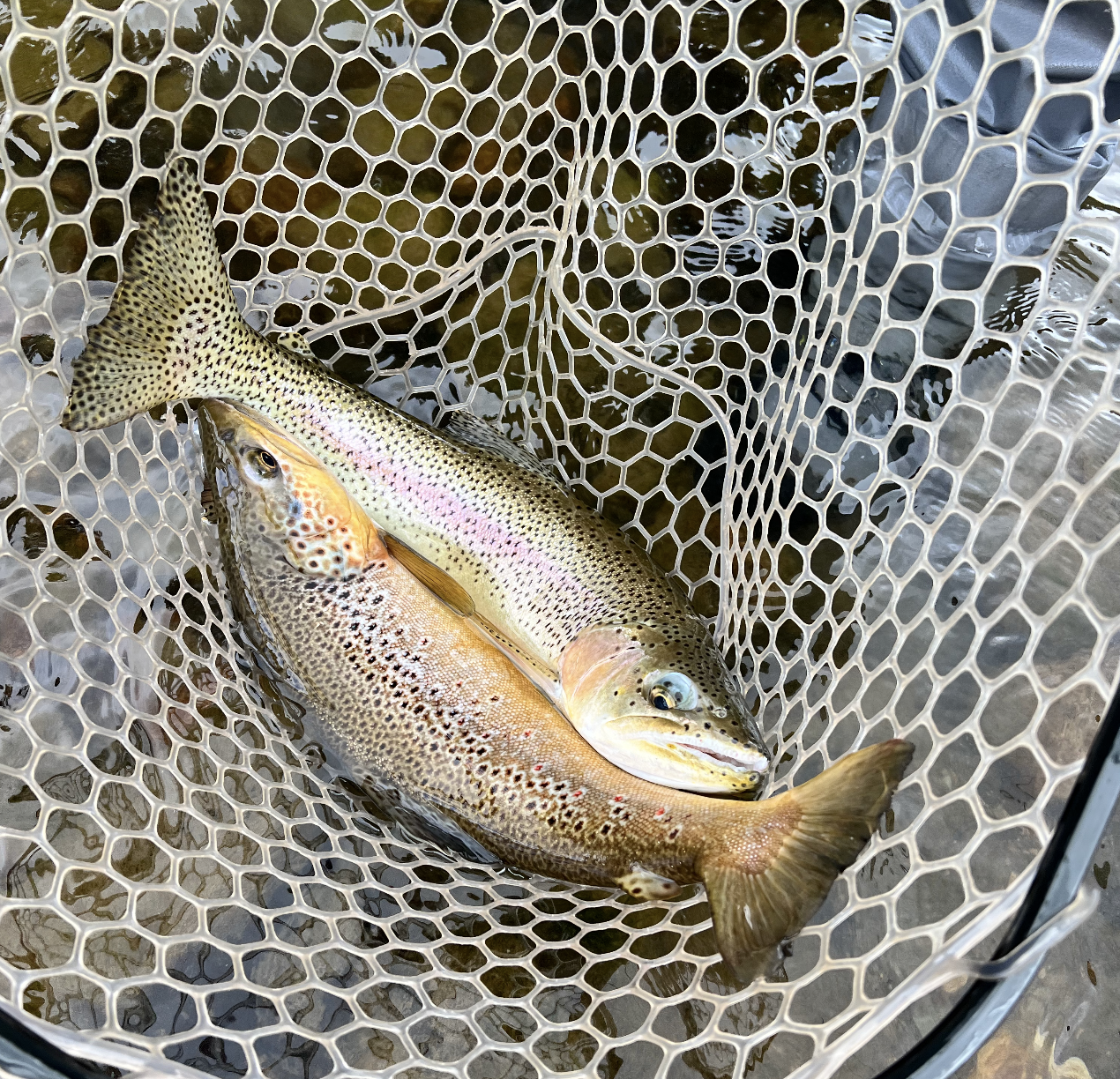
Casting larger terrestrials with 1-2X leaders and tippet was a welcome change from the 6-7X we are used to here on the tailwaters of East TN. Although the fish are eager and willing to eat, this is not shooting fish in a barrel. Casting accuracy and distance in wind is a must. Get those two things right and the rewards are awesome. The Rainbows and Browns in the region are absolutely beautiful. Average size is 17-22” with several caught through the week in the 24” range, and even a couple nearing the 30” range. Unlike the first time Chelsia and I visited, the water levels were perfect for the rivers and spring creeks. It’s amazing what just a month difference provided for our group this year.

EQUIPMENT & GEAR

Fishing that region of Patagonia you are going to experience a range of conditions; one constant is wind. It will vary from light gusts to sustained “stiff” winds. We mostly fished 6WT rods paired with the correct lines that allowed us to punch large flies through the wind with accuracy. We fished a lot with larger “bugger” streamers appropriately named “Chile Buggers” and streamers like Dungeons. We also fished 7WT rods with SA I, S3, S5 sinking line which worked flawlessly. I can’t recommend the Red Truck 7WT Diesel enough for this application - a sub $500 rod that I guarantee will perform alongside any $1000 rod. My 6WT rod choices are Winston’s Air2 6WT and the Scott Centric 6WT both paired with either SA Infinity or SA MPX.

TRAVEL

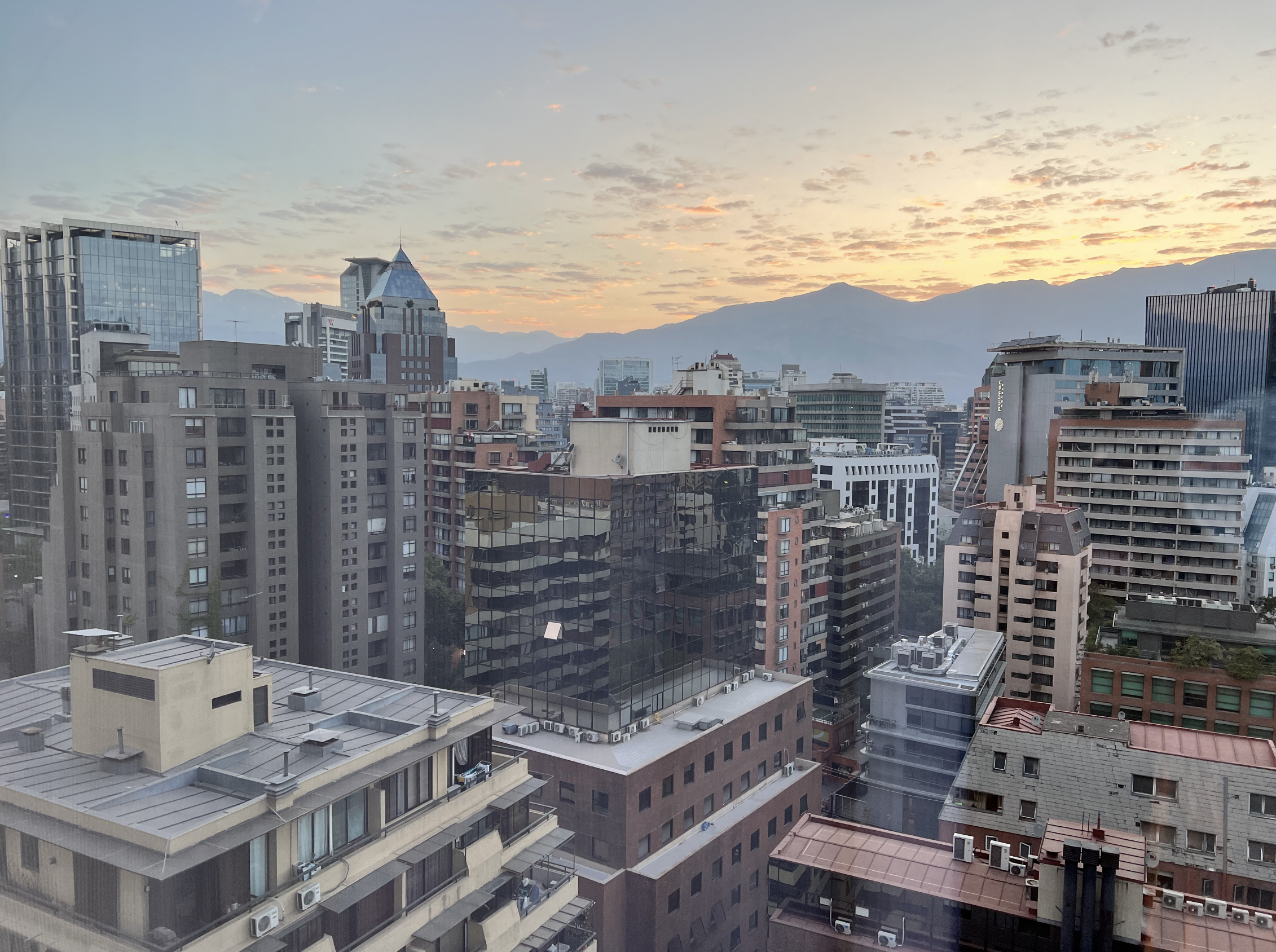
My travel began at the Tri-Cities regional airport connecting to Atlanta. From there I flew overnight to Santiago, Chile. We had a tour bus pick up our group at the airport after clearing customs and getting our bags. From the airport we took a 30 minute ride to downtown Santiago and checked into our hotel. After some much needed rest we struck out and walked around the area enjoying the local shops and restaurants. Dinner that night was at a local Peruvian restaurant. Great wine, food, and conversations about the week of fishing ahead filled the restaurant. The next morning we took the van back to the airport and flew domestically a couple hours south to Balmaceda in the heart of Chilean Patagonia.

LOCATION

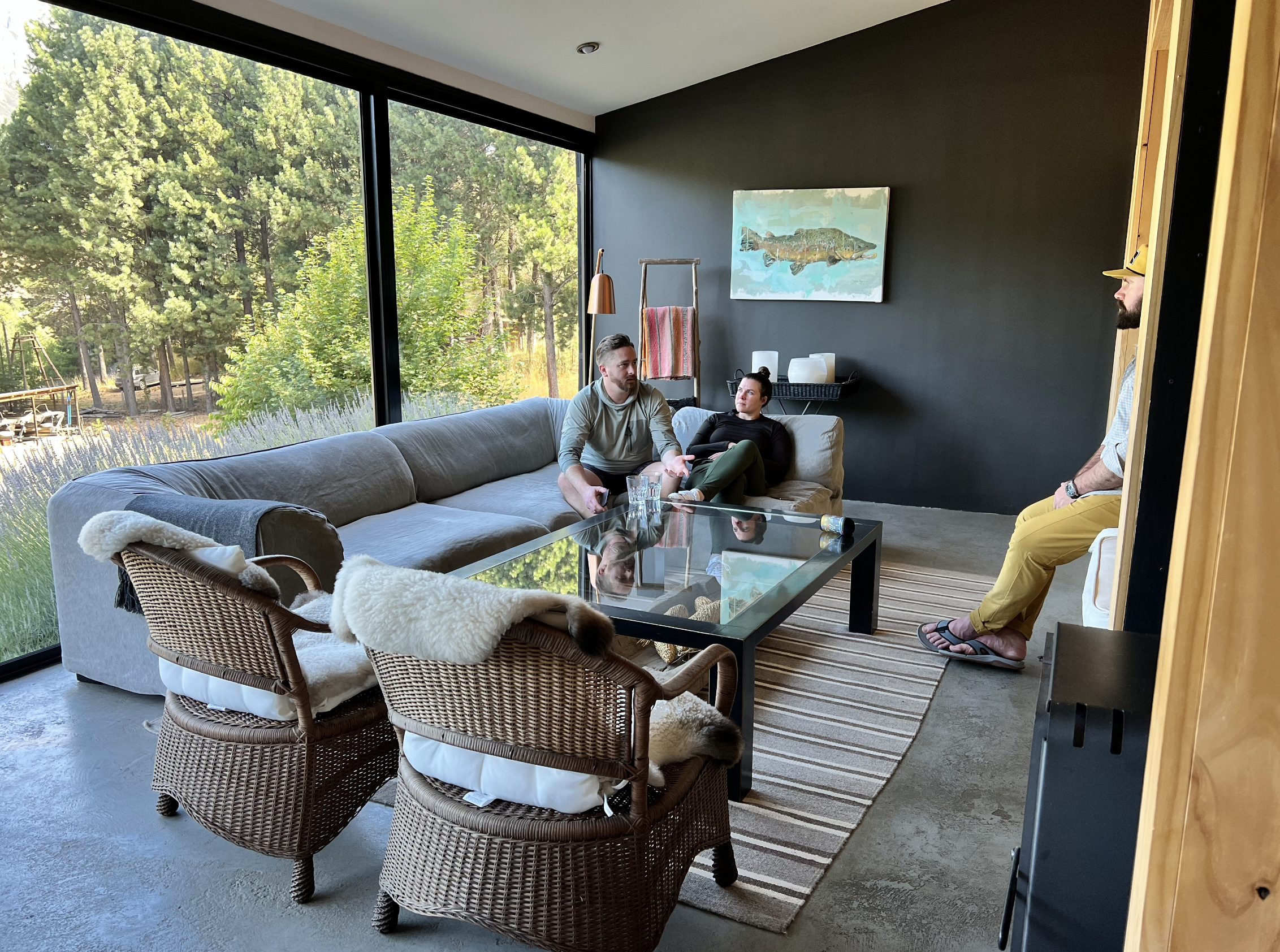
Vista Patagonia’s staff was there to greet us and get us to the lodge just outside of Coyhaique, a short 45 minute ride with amazing views of mountains. One guest put it perfectly, “This is Montana on steroids!” I couldn’t agree more.

WEATHER

Unlike our first visit to that area the year before, the weather was great! The weather during the week was ideal. Temps in the morning around 50-60 and highs in the upper 70’s was the norm. The wind in that part of the world is just a fact of life. You will deal with wind, so we encourage our guests to practice casting in wind at home to get “tuned up.“ Rain is always a variable and it did rain a couple times during the afternoons. Good rain gear that allows movement while casting and breathes well is an absolute necessity.

GUIDES & SERVICE

Diego and his staff are exemplary hosts, southern hospitality is definitely alive and well in South America. Their level of professionalism is unmatched in my experience. His guides work all day to ensure you have a safe, fun, and educational experience. I have said it many times, you feel like you are fishing with friends and family you’ve known your whole life.

CHILEAN CULTURE

Chile is a must visit country, the people are friendly and experiencing Chilean culture is amazing. Chilean people have a pride in their country and food that is infectious. It was evident that our guests enjoyed the culture and traditions of Patagonia.

LESSONS LEARNED

Each visit has taught me that as much as I love catching fish, I need to allow myself time to enjoy the sights and beauty of the areas I am in. I encouraged our guests to “look up and around” each day. Most of the discussions with how good the fishing was that day centered around the beauty and ruggedness of Patagonia. From a fishing perspective, I learned once again to push myself to perfect my casting in ALL conditions good and bad.

CONCLUSIONS

I can’t express enough how much you need to experience this part of the world for all the obvious reasons. This truly is a “bucket list” trip. Although costly, it is worth every penny. I cannot thank Diego and his staff at Vista enough for making this a perfect experience for my guests. His hard work and dedication to being the best shows. Thank you, Diego.

If you would like information, or just to discuss going on a trip to Patagonia please reach out to me directly. Consider joining us in 2025, I promise you won’t be disappointed.

- Jonathan Neyman

 
WHAT FLIES WILL PAT DORSEY TIE?


“What flies will Pat tie at the fly tying seminar?”

The Mercury SH Pheasant Tail is one of the many Pat Dorsey flies that you can learn how to tie on March 16th at The Fly Box. 
With the glass bead and soft hackle, this fly can be swung or nymphed under an indicator. It’s a killer fly to have in your box for the Sulphur and BWOs on East Tennessee tailwaters.

Buy your ticket soon, they are selling fast! Ticket price is $49 to attend the event. This includes a free beer + getting entered into our awesome giveaways for the evening! Odds are you will win something! Trust us, it’ll be really good.

TICKET PRICE INCLUDES ONE FREE BEER!

Other patterns Pat will tie:

1. Bread Crust Jig

2. Pats Midge

3. Top Secret Betis

4. UV Scud Orange

5. Black Beauty

6. Tungsten Mercury Caddis

7. Mercury SH Pheasant Tail

8. Top Secret Midge

 
December Fishing Update
 

South Holston River Fly Fishing - December Update

Flows are changing!

The South Holston has increased the 1300 CFS and is now running an Average Discharge of 2200 CFS.

It looks like they are going to keep that going until Sunday. They are forecasting 813 CFS for the Average Outflow. Keep your eye on the app to see exactly what this looks like.

For fishing, this means that our boat anglers will need to add more weight on their rigs with the increase in water.

We expect that streamer fishing should pick up in consistency from the 1300 CFS flows we did have.

Our wade anglers are out of luck until Sunday it looks like. The Watauga is generating most of today and it looks like Saturday and Sunday will be lots of generation as well with an Average Outflow of 1300 CFS. This can be a good time to tie a few patterns or sit at the shop and tell a fish story or two.

When you can find the afternoons where the sun is out and the temperature gets into the mid 50’s like today the mountain streams can still come alive this time of year.

We also have some rain coming in on Sunday it looks like so definitely bring your rain jackets.

If you’ve got any questions, definitely give us a call!

(423) 573-5668
 
FIVE FLIES FOR DECEMBER


FIVE FLIES FOR DECEMBER

If you are fishing the South Holston or Watauga Rivers during this December, these are five flies you want to bring in your box.

This is the season of midges! As you can see, they are the bug of the month. They may not be the sexiest bug, however they make up a large majority of the fishes diet this time of year.


1. Olive Midge #18-20

A classic fly here on the SOHO all year. If you aren’t locked and loaded with lots of Olive Midges, you are definitely missing out.


2. Micro Olive Bullet
#18-20

This fly killed it fishing in the fall and it’s been producing through the winter. It’s a low-key pattern that gets the job done. It’ll fish on both a bounce rig and in-line rigs. We typically are starting with a bounce rig on our guided trips.


3. Stripper Midge #18-20

For our wade fishing anglers on both the South Holston and Watauga, the Stripper Midge is a stealthy staple that is great for low-water applications. When the sun gets high and the fish get picky, this is a great option. It’ll fish on high-water too!


4. Morgan’s Midge #18-20

The Morgan’s Midge is a incredibly versatile dry fly. Obviously, it will work when fish are rising on midges but don’t be afraid to fish this during a Baetis hatch or black Caddis hatch! Fish crush them. It can be hard to see on the water, so definitely consider fishing a larger dry fly in front of it.


5. Jake’s Fluffer #18
Jake’s Fluffer is technically a Sulphur pattern developed for here on the South Holston, but it could easily be mistaken for Blue-Winged Olive or small black Caddis. It rides high and is a great fly to put in front of your Morgan’s Midge.


Lots of bugs and still finding plenty of happy fish! December is off to a good start.


Fishing Update and Sale!
 

SALE + FREE BEER!

Starting this Friday - Sunday

This weekend we are having a Fly Box Sale! Your first beer is on the house while you shop.

Most items are at least 20% off!
The river is fishing solid, it’s a great weekend to get on the water and hit our sale while you are at it. It’s been super cold lately, but this weekend it’s going to warm up. Definitely take advantage of it while you can. We have seen some amazing hatches on cloudy days!

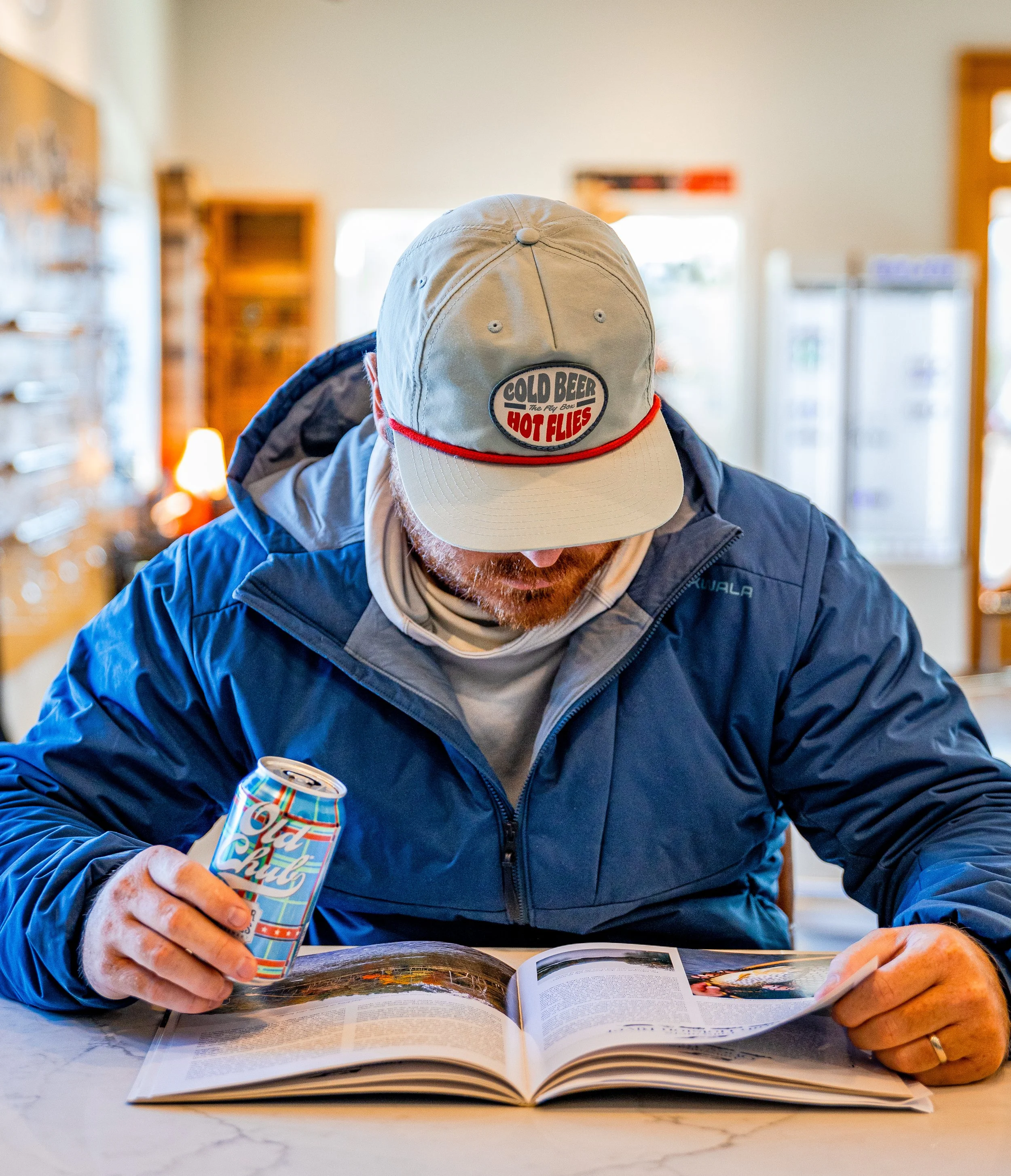
We are also going to be releasing our new “Cold Beer, Hot Flies” hat and sticker!

3 HOT FLIES

  • Bullet Quill #18

  • Micro Mayfly #18

  • Jake’s Fluffer Sulphur #18

Want to come fish with us? Give us a call!

(423) 573-5668
 
November Fishing Update
 

South Holston River Fly Fishing - November Update

A quick update for fly fishing on the South Holston River in November! As temperatures drop and fall foliage flows down the river, the South Holston continues to offer solid fishing opportunities.

Weather and Water Conditions
10 Day Forecast

Lots of solid fishing days ahead. Lows will be mid-30’s, highs will be mid 60’s. Be prepared for colder conditions in the morning and take advantage of this manageable weather before things get really nasty. Not much rain ahead, but we could use it. We got some over this past weekend but could use more. Our mountain stream levels have been very low.

South Holston and Watauga Generation Schedule

For boat anglers, the flows on the South Holston have been great. The Time Period has been 1 generator from 7AM or 8AM - 8PM or 9PM. The Average CFS has been around 1300-1400 and the Average Outflow has stayed around 733. At this time, the next few days look to hold this 733 Average Outflow.

Don’t forget our spawning sections are closed until February 1.
This means that the full day generation is likely to hold. Boat anglers rejoice. Wade anglers head over to the Watauga. 

The Watauga River has been maintaining 240CFS throughout most days. With the South Holston generation, this is your best bet for sure. Check out Hunter Bridge and Lover’s Lane Bridge for decent access.

Fly Recommendations

Nymphing remains productive. Midges are the hot ticket as of late and this should continue until the spawn really gets going. With plenty of BWOs out, definitely give your favorite Baetis patterns a try. Just know, the midge nymph bite has been better for us. #18-20s. Copper bead!

For dry flies, most BWO patterns have been effective in size #18-20. Puffdaddy. Comparadun’s. CDC Thorax Emerger.

The Morgan’s Midge has been a great fly to add behind the larger dry. It imitates the small black caddis we are seeing very well.

For streamers, keep it simple with Wooly Buggers and small Dungeons. We like white and olive.

South Holston River Hatches:

Cloudy days. We’ve seen some epic hatches in the last week when the conditions are right. Typically it’s starting on the upper end around 11AM. We are seeing rising fish all the way down to Weaver Pike. On the best days, we see some Sulphurs, plenty of small black Caddis, and many BWOs!

South Holston Fly Fishing Guided Trips

Consider booking a guided fly fishing trip with our experienced guides. We can get you down the river, very safe and super fun! All levels of experience are welcome. This is a great time of year to do a half day trip in the heat of the day, especially with part of the river being closed for spawning.


Shallow Water In-Line Rig / South Holston & Watauga
 

We refer to our shallow water in-line fly fishing rigs for the South Holston and Watauga quite a bit, and that's a little different than our high water rigs. In this video, Forrest goes over what factors to consider.

LEADER

For the leader set up, typically we are going to use a Scientific Angler Nylon Trout, 9FT 5X or 9FT 6X. There's some people that will fish a 7.5FT leader, especially if it’s windy. We like to get our flies as far from the fly line as possible if there is no wind. 

FLOWS

Our flows, typically when we were fishing this rig on the South Holston, are 0-400 CFS generation. If a generation pulse comes through, we can still fish this shallow water rig. This rig works equally well on the Watauga River on the minimum recreation 240 CFS flow.

RIGGING

  1. Tie 18-20 inches of 5.5-6.5X tippet to the end of your leader of choice.

  2. Cut that tippet in half and tie a Triple Surgeon’s knot.

  3. Leave a tag piece from your Triple Surgeon’s knot and tie a fly on that.

  4. Tie a fly on the bottom of your tippet as a point fly. 

In the video, Forrest ties on an unweighted Pheasant Tail and Stripper Midge onto the rig. These are a few of our favorite flies for low-water fishing on both rivers. 

INDICATORS

On this rig we use three different types of indicators.

Yarn: 90% of the time we are using yarn as an indicator. It’s more stealthy and sensitive to strikes.

Oros: Anglers that struggle casting yarn, heavier flies, adding split shot, windy conditions

Airlock: Same use cases as Oros, some folks just like Airlocks better. 

DEPTH

Typically, we run this rig about 35in deep. If you touch your right shoulder with your right hand, then extend your left hand, that should give you a good idea. It's different for all the various water depths that we are fishing, but that's a good depth to start at when wade fishing or floating the South Holston and Watauga. 

FLOATANT

We always apply High-N-Dry Liquid Floatant or Gel to keep the yarn floating for longer.

When you dip the yarn in the liquid, before letting that yarn indicator hit the water, we like to give it a few false casts. This helps dry off the indicator so it does not get over-saturated.

Always keep a brush for your yarn indicators. We sell some now at the store for a few bucks! It helps fluff up the fibers and dry off the indicator when soggy.

CONCLUSION

If you guys want to see a video on how to build this Dorsey system, click here! Please reach out to us with any questions you have. 

Guided Trips on the South Holston and Watauga are still rolling! We are always willing to spend some time “in the classroom” on guided trips if you are looking to jump up the learning curve on both rivers. 

(423) 573-5668
 
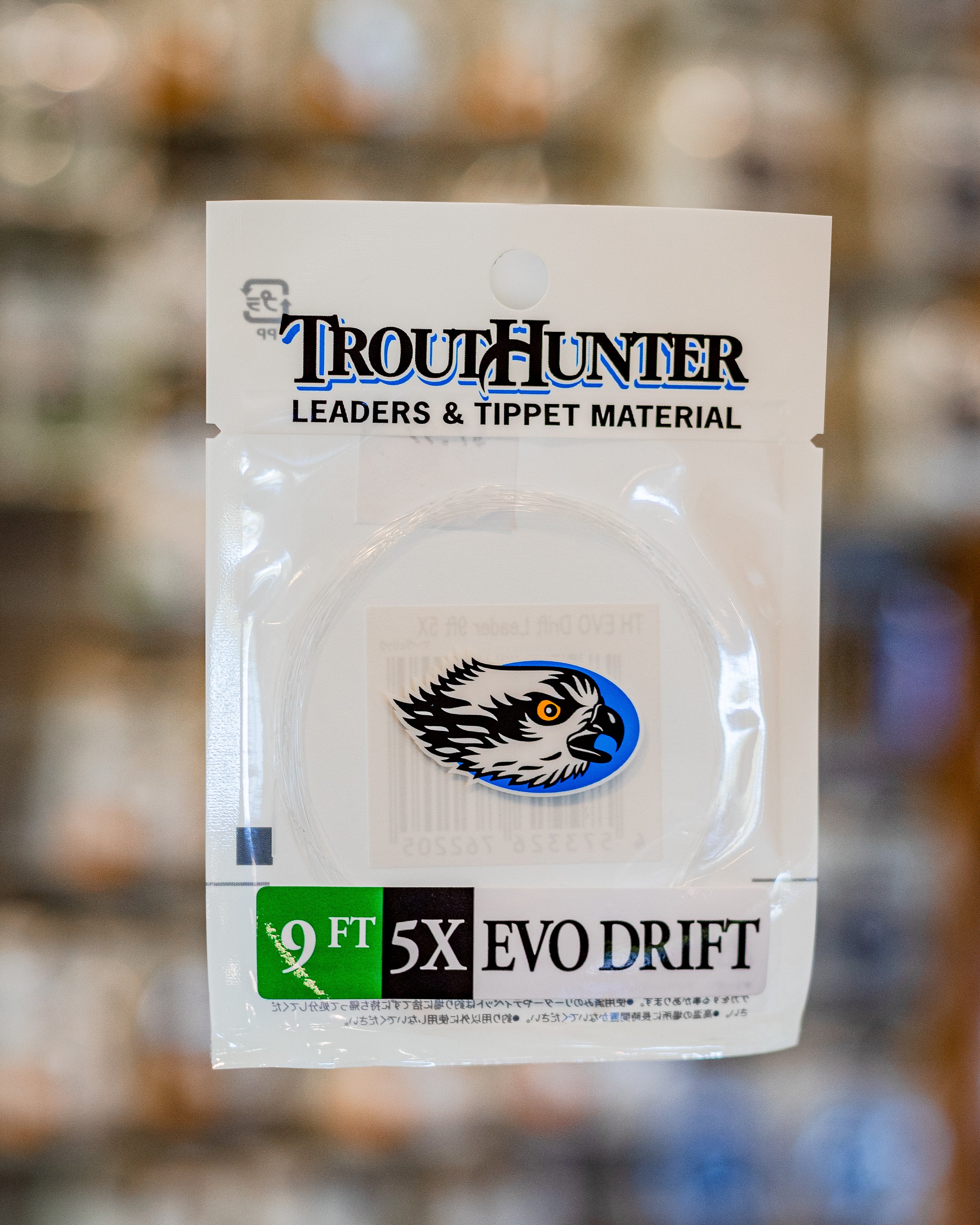
NEW Trouthunter Evo Leaders!
 

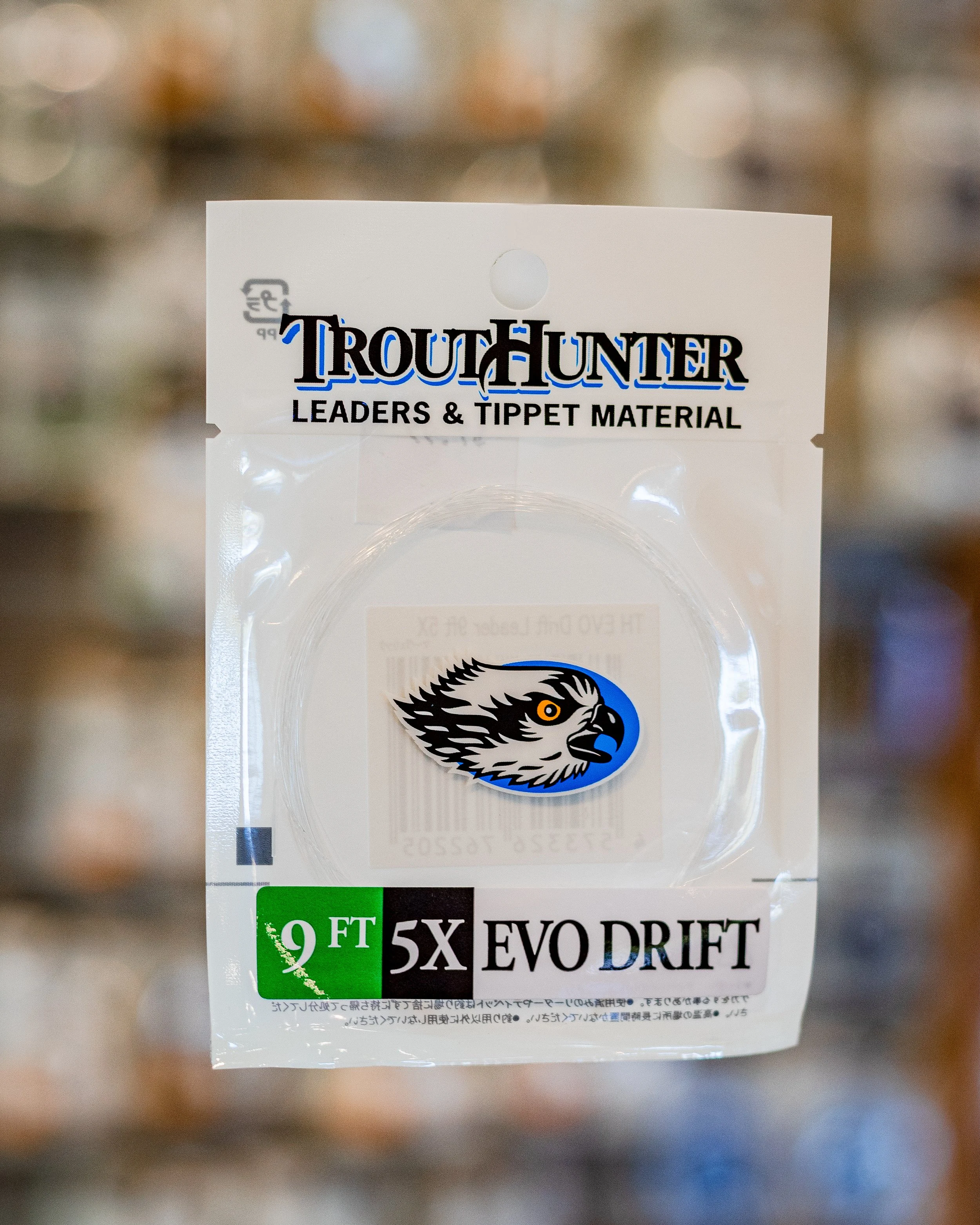
We love Trouthunter leaders and tippet here at our shop. Recently, we added the new “Evo Drift” leaders to our inventory. The “Evo” series has already existed in Trouthunter tippet, now they are bringing the same properties to their nylon leader line-up.

Main Advantages

  • Greatly Improved Knot Strength

  • Higher resistance to abrasion and impact

  • Improved Flotation

  • Longer Life

  • No memory

  • When used properly, drag free drifts

In stock now: 9ft 4-6x, 12ft 4-6x

Application: Dry-Dropper & Chubby Rigs

Trouthunter writes, “The improved performance is achieved through the application of our EVO coating to our leader material. EVO coating results in much stronger knot strengths with no noticeable increase in diameter. EVO also adds a measure of durability in combating abrasion and repels water. Memory is nearly non-existent and the leaders are tapered to provide strong turn over and produce drag free drifts over the most technical fish.

The result is a family of leaders which will excel at dry fly fishing in all situations.”

Our customers agree with us that they are noticing these leaders turn over better than other leaders they have fished. It’s nice to see Trouthunter making improvements on their lineup to offer the best leader and tippet solutions possible.

These leaders retail for $7.95. If you are going to take the time to fish, you might as well fish the best rig possible. 

 
FIVE FLIES FOR OCTOBER
 

If you are fishing the South Holston or Watauga Rivers during this October, these are five flies you want to bring in your box.

1. Micro Olive Bullet Perdigon #20

We’ve been fishing the Micro Olive on the South Holston a ton lately. This specific fly does not have jig hook, the larger versions do. We like those also, but for this month the smaller version has really been fishing well. On the 1300CFS generation on the South Holston over the last few weeks, we have been bottom bouncing this fly. It will also fish well on a standard in-line rig.


2. Mayhem Midge #18-20

The Mayhem Midge does not get the love it deserves. We fish it on both rivers for bottom bounce and in-line rigs. It also fishes great as a dropper under a dry fly on both low and high-water scenarios. It comes in a variety of colors. We prefer the Olive, Yellow, or Black patterns.


3. Purple Frenchie #18

The Purple Frenchie is a well-known pattern on our local tailwaters. It is incredibly versatile and can be fished on any rig. We prefer jig hooks on these flies most of the time and definitely fish the most slender profile available. We carry versions with a thread body and a pheasant tail body at our shop. Some days they prefer one variation over the other.


4. BWO Puffdaddy #18

For our dry fly anglers, we are starting to see some really good Blue-Winged Olive hatches. The Puffdaddy is one of the most popular dry flies on our rivers for good reason. It straight up fishes. Don’t go to the river without some. Make sure to have a proper floatant system to keep it riding high after you catch a few fish.


5. Sulphur CDC Comparadun #16-18

We are still seeing a solid amount of Sulphurs hatching in the afternoons. For that reason, the Sulphur CDC Comparadun is a fly you don’t want to forget. It floats high allowing you to add a dropper if desired and fish will eat it willingly if presented well. Keep your leader long and your tippet light. Enjoy this great time of year to get out and fish!


Forrest Neyman
Chubby Dry-Dropper Rig for the South Holston & Watauga Rivers


chubby Chernobyl dry-dropper Rig

Using a Chubby Chernobyl dry fly as an indicator is a extremely effective way to make casting nymphs easier and maintain the stealth that a yarn indicator provides. It’s also a fun way to illicit more surface eats. While we don’t have many large terrestrials in East Tennessee. There are still fish willing to come up and eat the Chubby.

When is the best time of year to fish this rig?

We have found that May-September is the best time of year to fish this rig.

What leader should I use?

On this rig we prefer to use a 9’ 5x or 8’ 4x. We will use the shorter 8’ 4x when there is more wind or if the individual casting the line is newer. A shorter, stiffer leader casts more easily.

What tippet should I use?

On the South Holston and Watauga, we primarily fish 5-6.5x tippet. When water levels are low and clear, we will move to 6.5x.

How far do we put the flies below it?

Typically we put flies anywhere from 6-18in below the Chubby. This varies greatly depending on the section of river we are targeting.

BENEFITS:

  • Using a Chubby Chernobyl dry fly as an indicator can be more stealthy than using a yarn indicator.

  • A Chubby is also very sensitive to strikes so it’s easy to see when your nymphs get a bite.

  • Ideally fish will eat your Chubby Chernobyl!

  • This rig is also easier to cast than a yarn indicator. Because a yarn indicator is tied on to the middle of the leader, this can change the weight distribution of the cast often being more difficult for individuals with slower line speed in their cast.

DRAWBACKS:

  • The biggest drawback to the Chubby Rig is that in order to change depth of your nymphs, you have to cut tippet off then add more. Using a yarn-indicator, the depth can easily be changed by sliding the yarn up or down the indicator.

  • Using a yarn indicator, you can increase the amount of yarn to carry larger flies. On a Chubby rig, heavy nymphs can sink the dry fly.

 
FLY FISHING MONTANA - TRIP RECAP 2023


For the first travel trip hosted by The Fly Box, Montana was the obvious choice.

Why Montana? Well it’s often referred to as “the mecca of fly fishing”. In Montana, there is a lifetime of quality trout rivers to choose from.

We decided to focus our attention on the Madison and Missouri River (the Mo’) plus O’Dells Spring Creek. These rivers were chosen because our team had been there before, and it lived up to the hype.

SKWALA

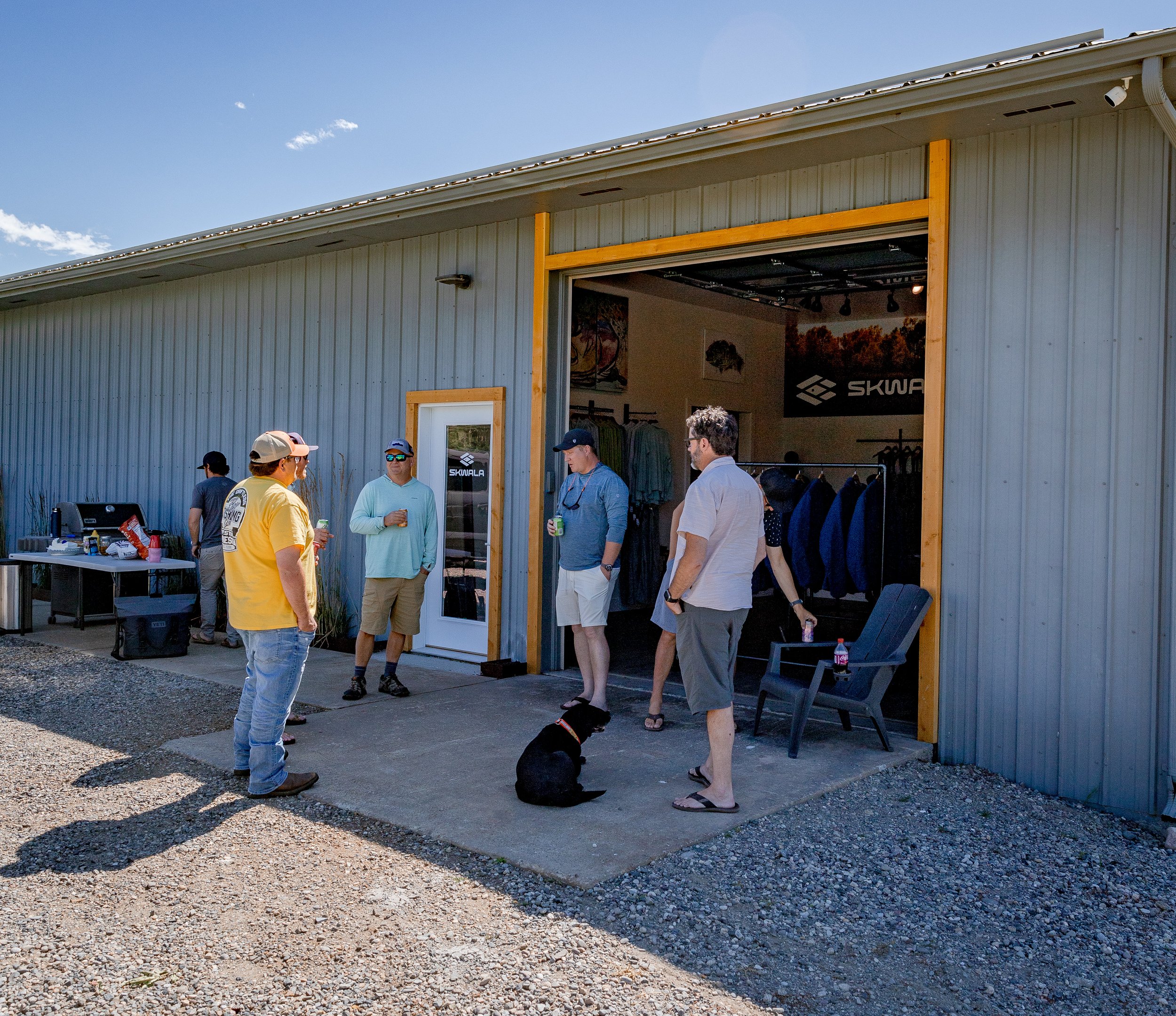
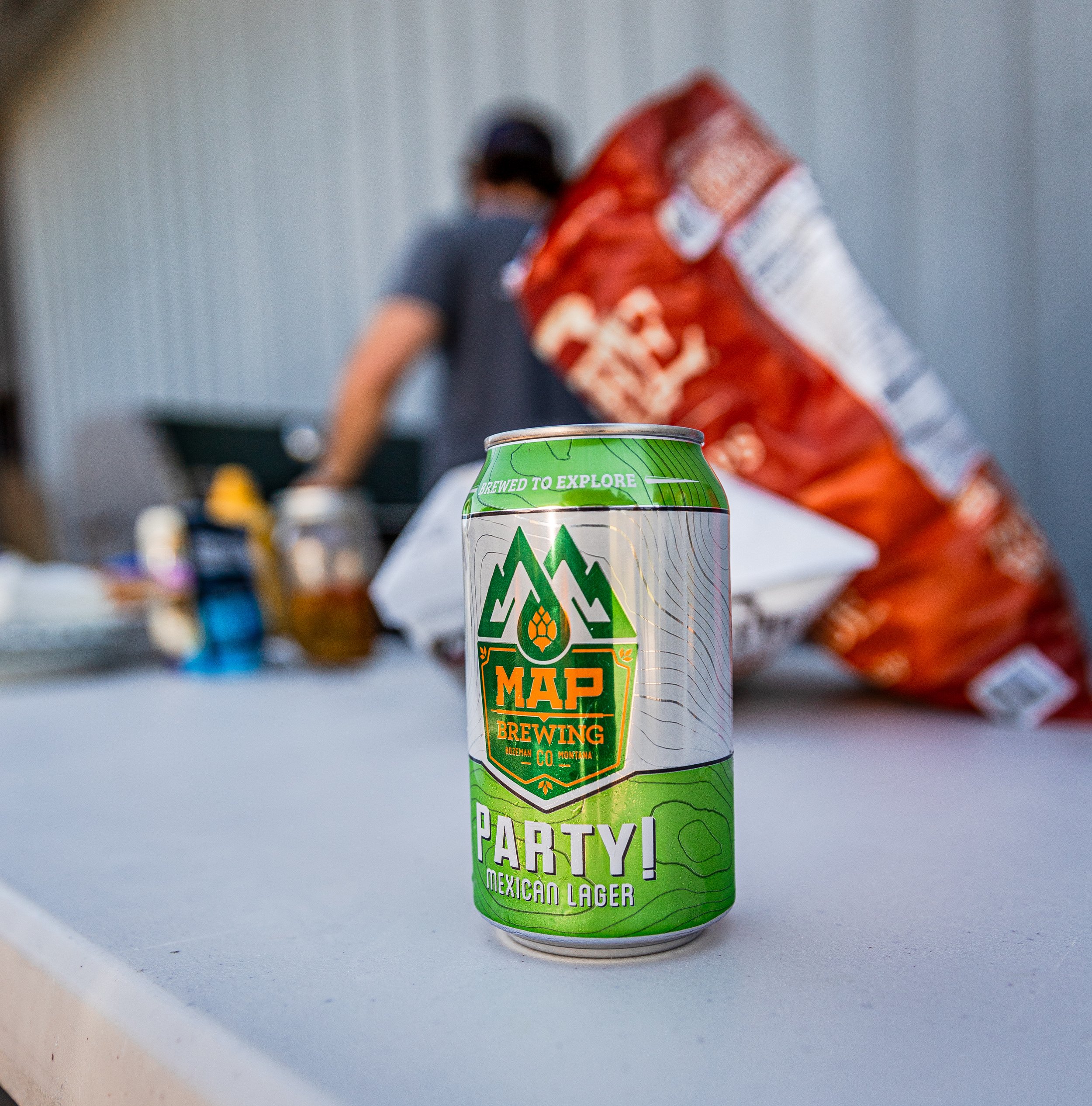
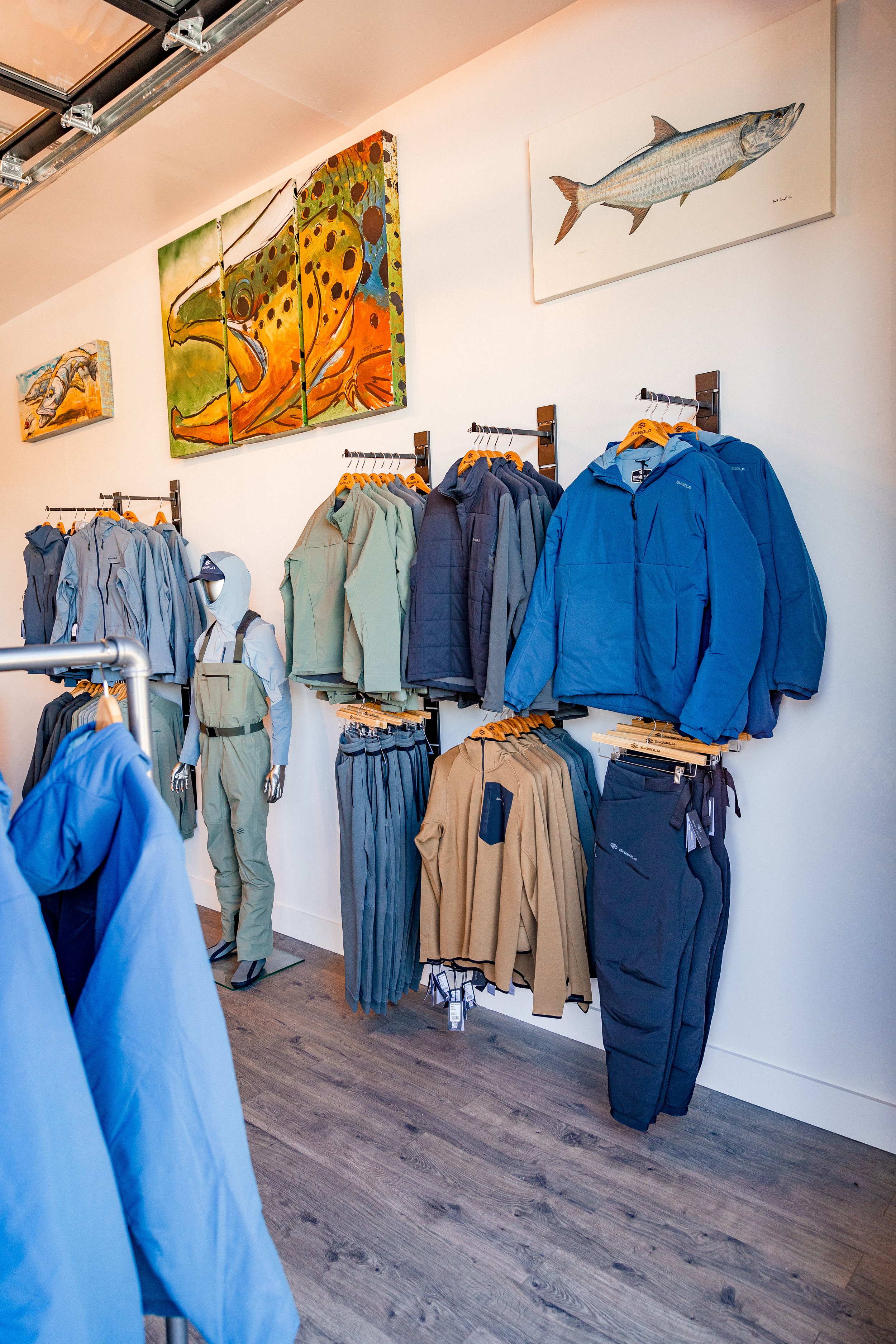
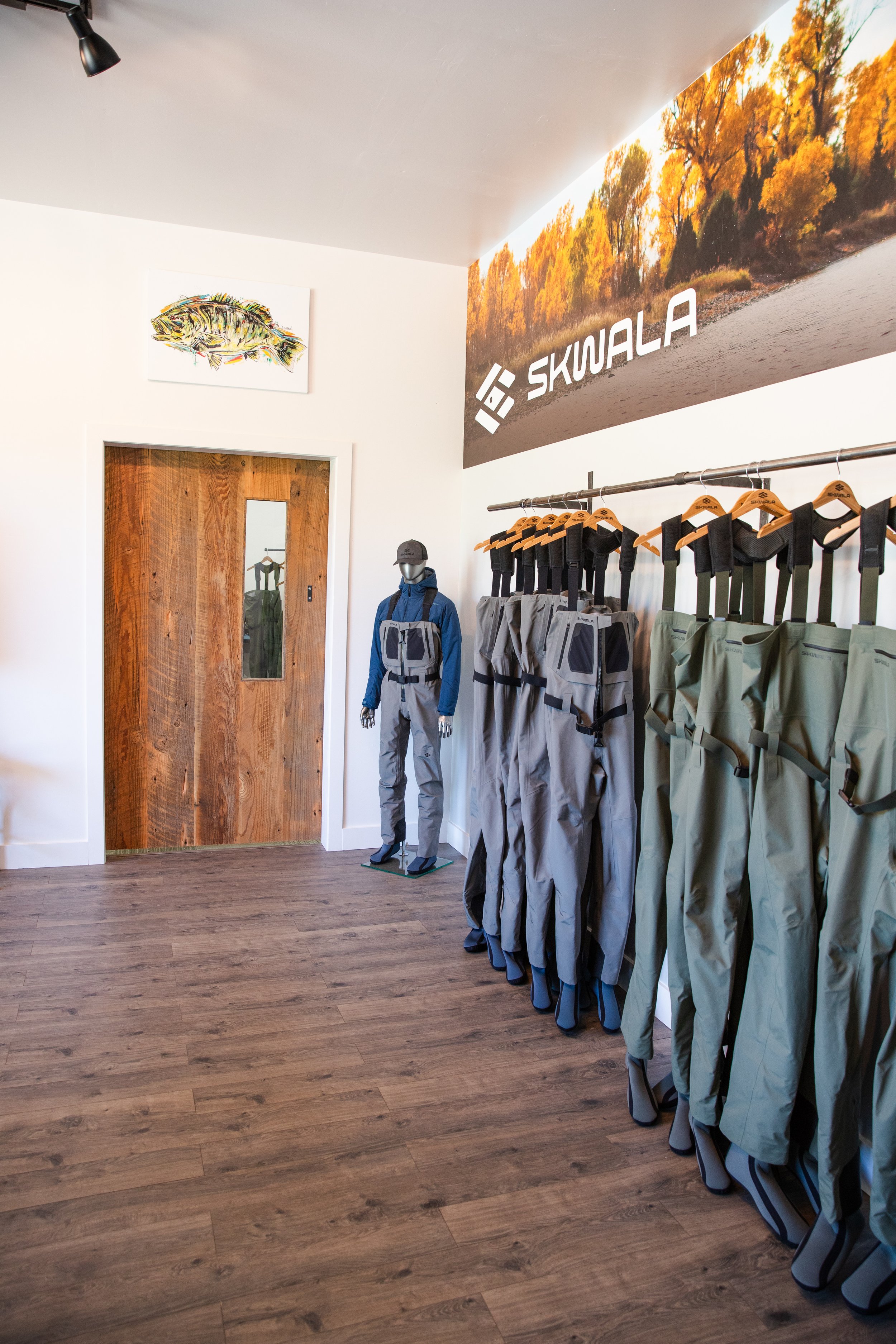
When we arrived in Bozeman, we were greeted by our friends from Skwala Fishing. They had brats and beer waiting for us at their newly opened showroom. If you are in Bozeman, you have to go by and see it. They have their full line of products to try on and get sized.

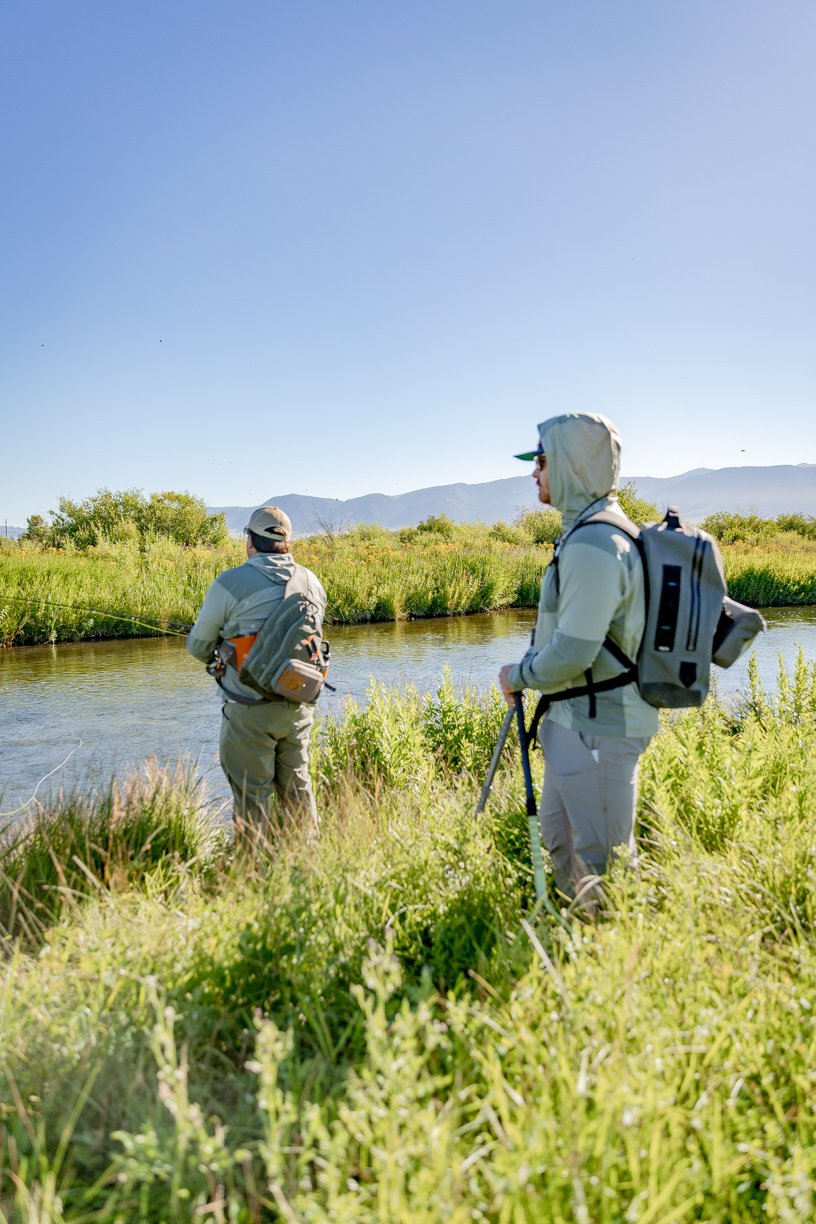
One of our favorite pieces that we wore religiously during our trip was the Sol Tropic Hoody. Boasting a 40+UPF rating, this hoody is the lightest in the Skwala line up. Perfect for when that Montana sun gets high and the temps rise.

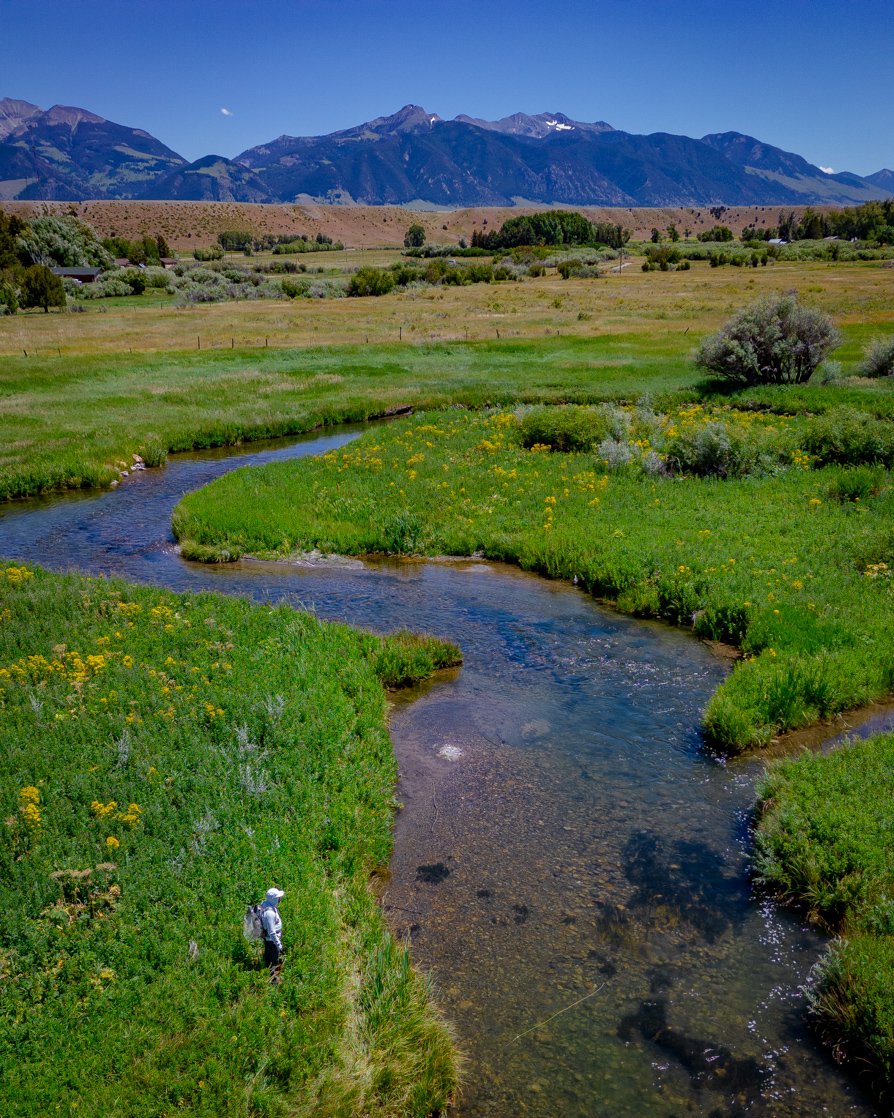
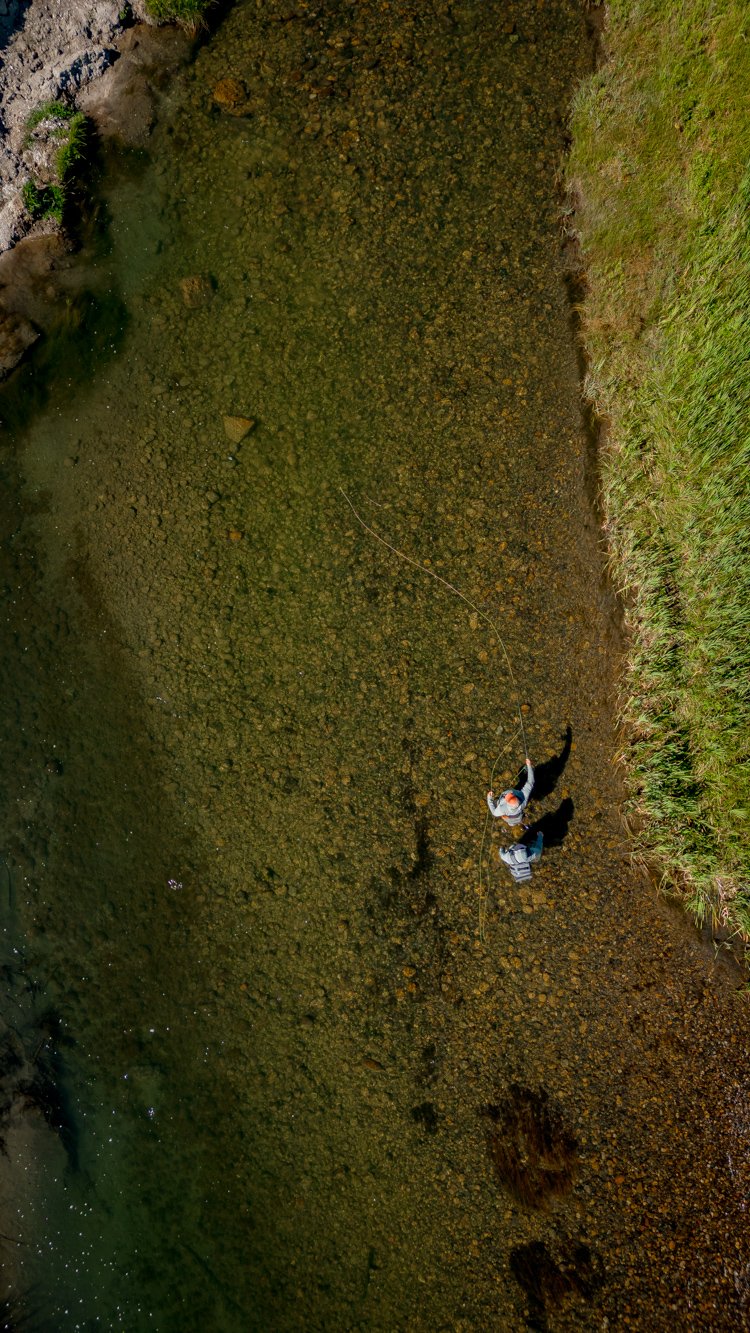
Aerial view of O’Dells Spring Creek, the Madison River, and Ennis.

ENNIS

Our first fishing stop was the town of Ennis which is located an hour southwest of Bozeman. Ennis feels like an old-school western town. With just a couple places to eat, three fly shops, and more bars, we think it’s perfect. TroutStalkers, The Tackle Shop, and Madison River Fishing Company are all great shops that are definitely worth a stop if you are in the area. All of the staff shared good fishing intel with us in exchange for buying a few flies.

A favorite night out on the town was going to Burnt Tree Brewing and Pizza. If you fish near Ennis, this is an absolute must. Great pizza, cold draft beer.

Each day, we’d split up our group. Four of us would go out with guides from Madison River Fishing Company. The rest of the crew would go to O’Dells Spring Creek at Rainbow Valley Lodge or wade fish the Madison.

With MRFC, our group fished nymphs, streamers, and dries. We were able to put a few solid fish to the net, and everyone had a blast. The guides utilized a “no-indicator” nymphing rig on a standard in-line setup. We will definitely be trying this on the SOHO under generation! One of the greatest benefits about traveling to other fisheries is that we get to learn about new techniques and flies then bring those back home.

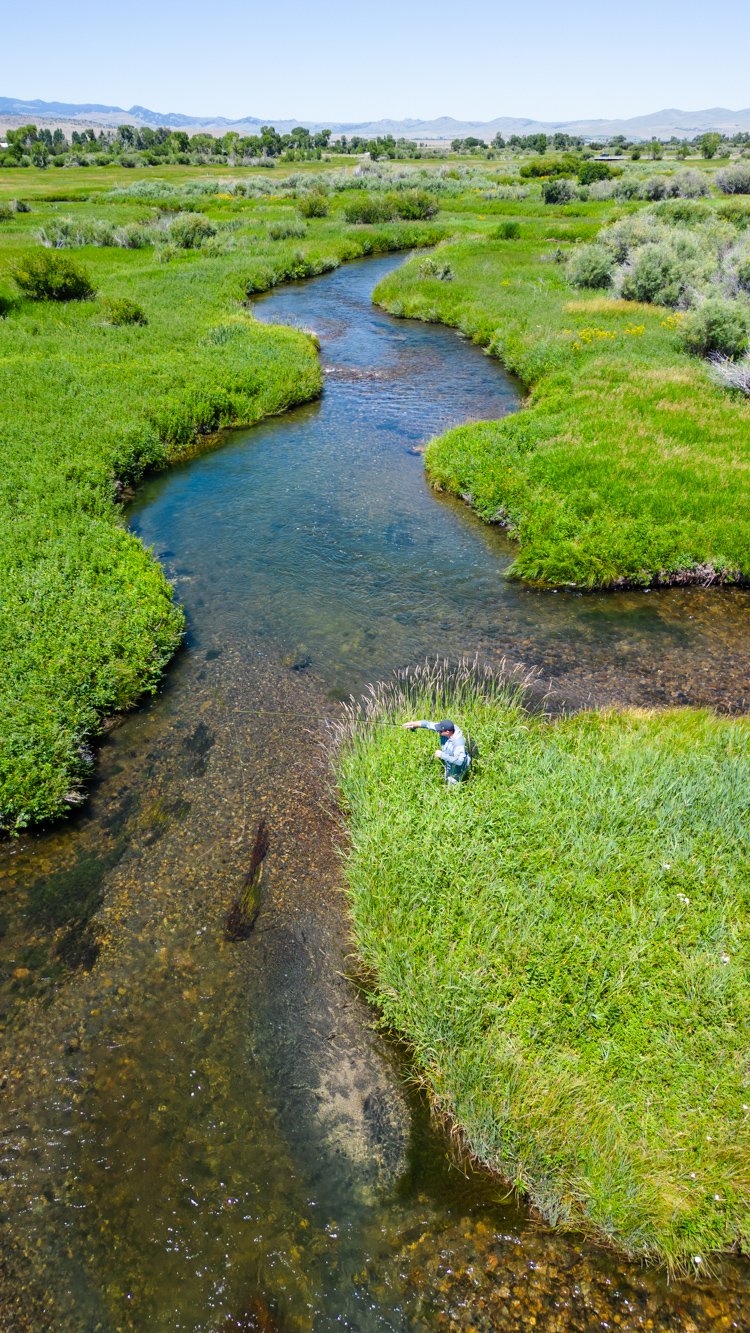
Fishing at O’Dells Spring Creek is technical and exciting. The majority of the fish range from 10-14in, however, there are some absolute giant browns that call this small creek home. July is ideal time for hopper fishing, so our standard set up was a grasshopper pattern with a small perdigon nymph below it, such as the Olive Hot Spot from Fulling Mill. The key to success at O’Dells is accurate casting as the fish sit incredibly tight to the banks. The scenery at O’Dells is truly spectacular as we were surrounded by the Madison Mountain Range in the east and the rolling Gravelly Mountains at our west.

ADIPOSE

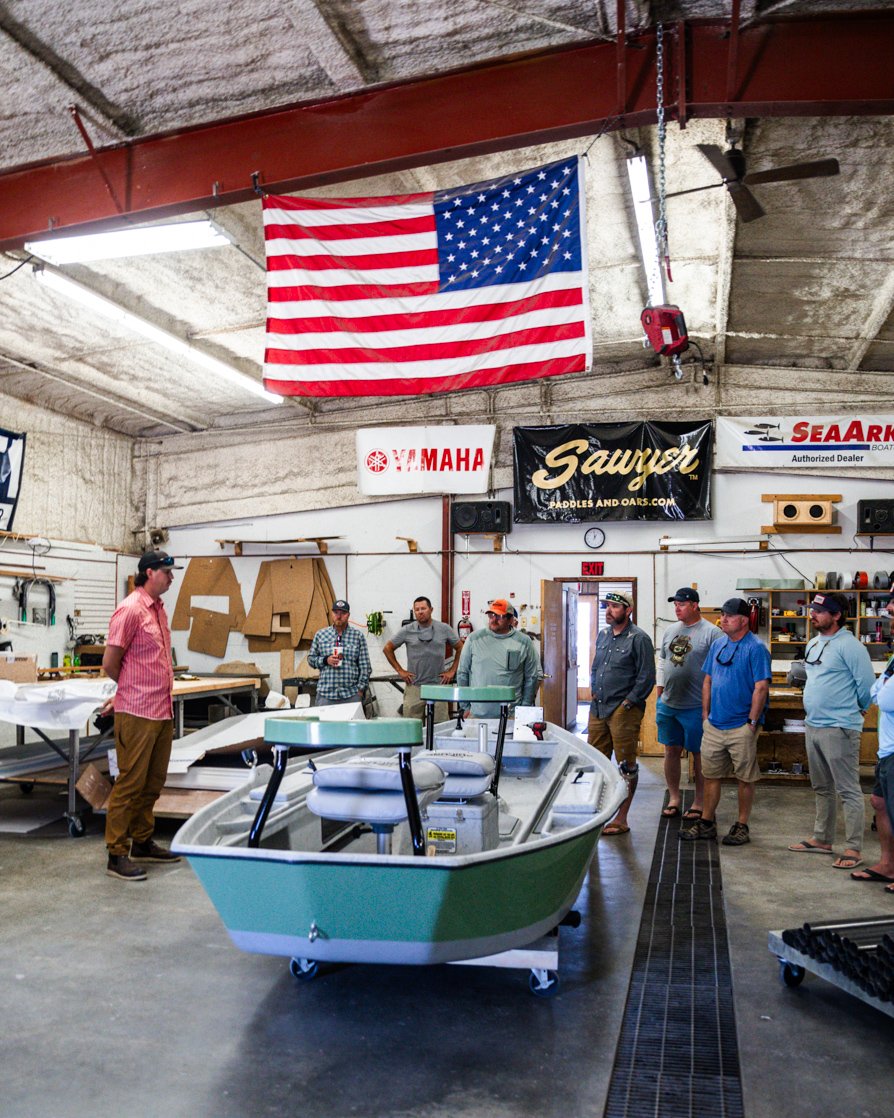
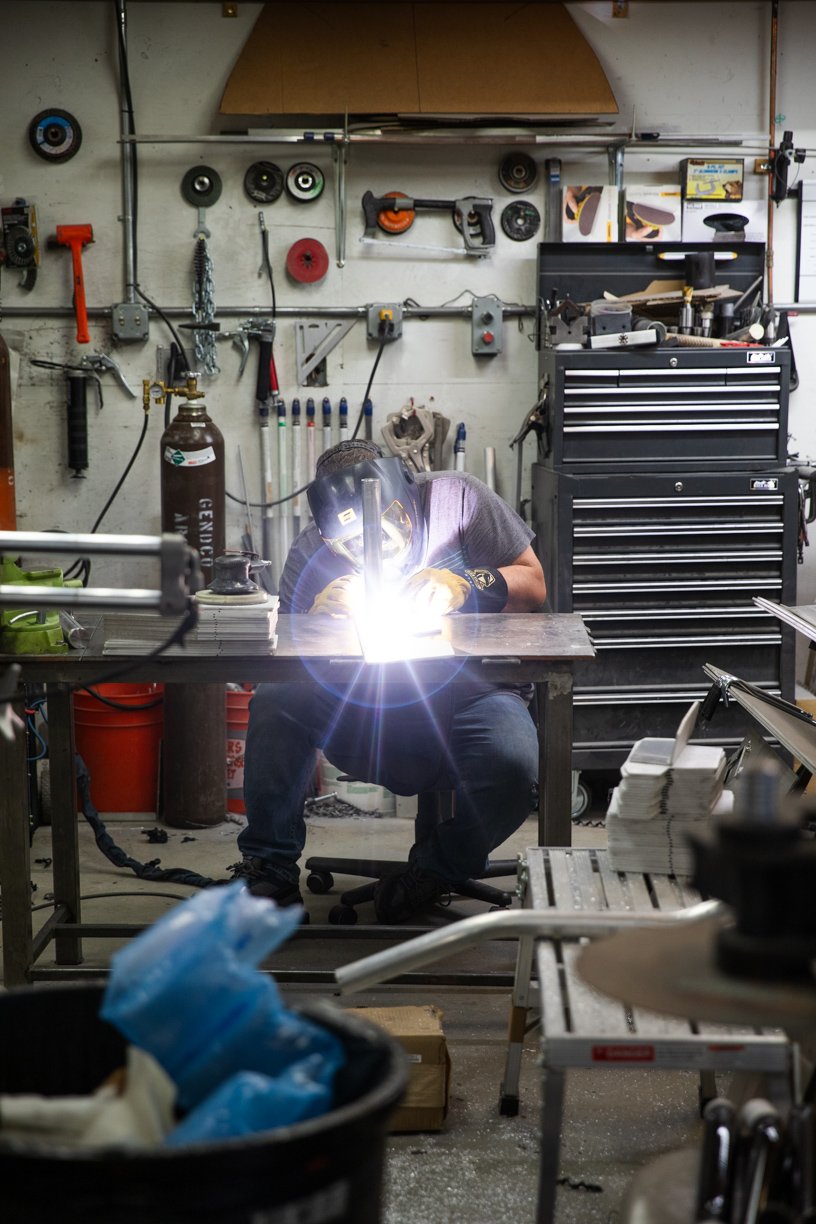
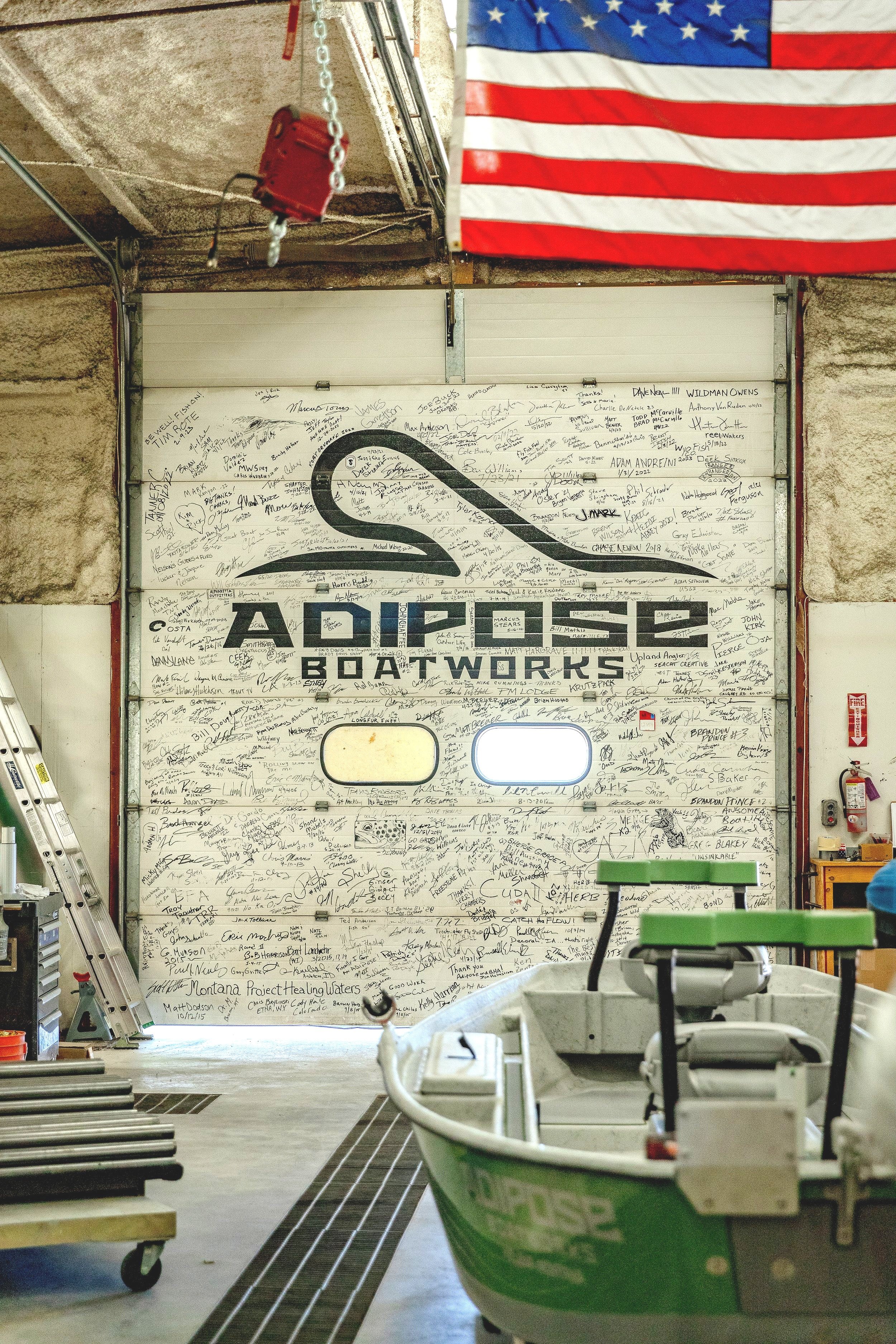
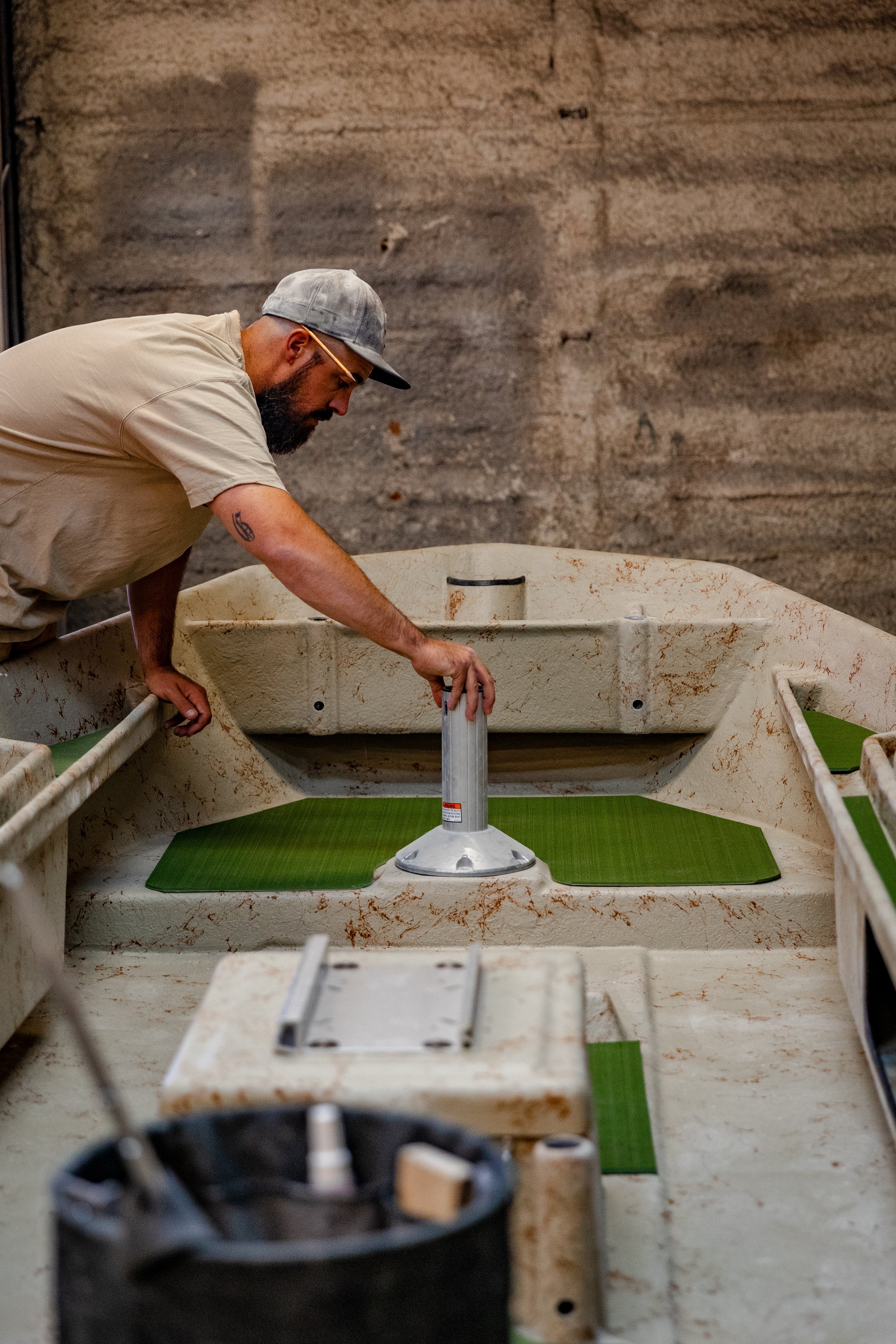
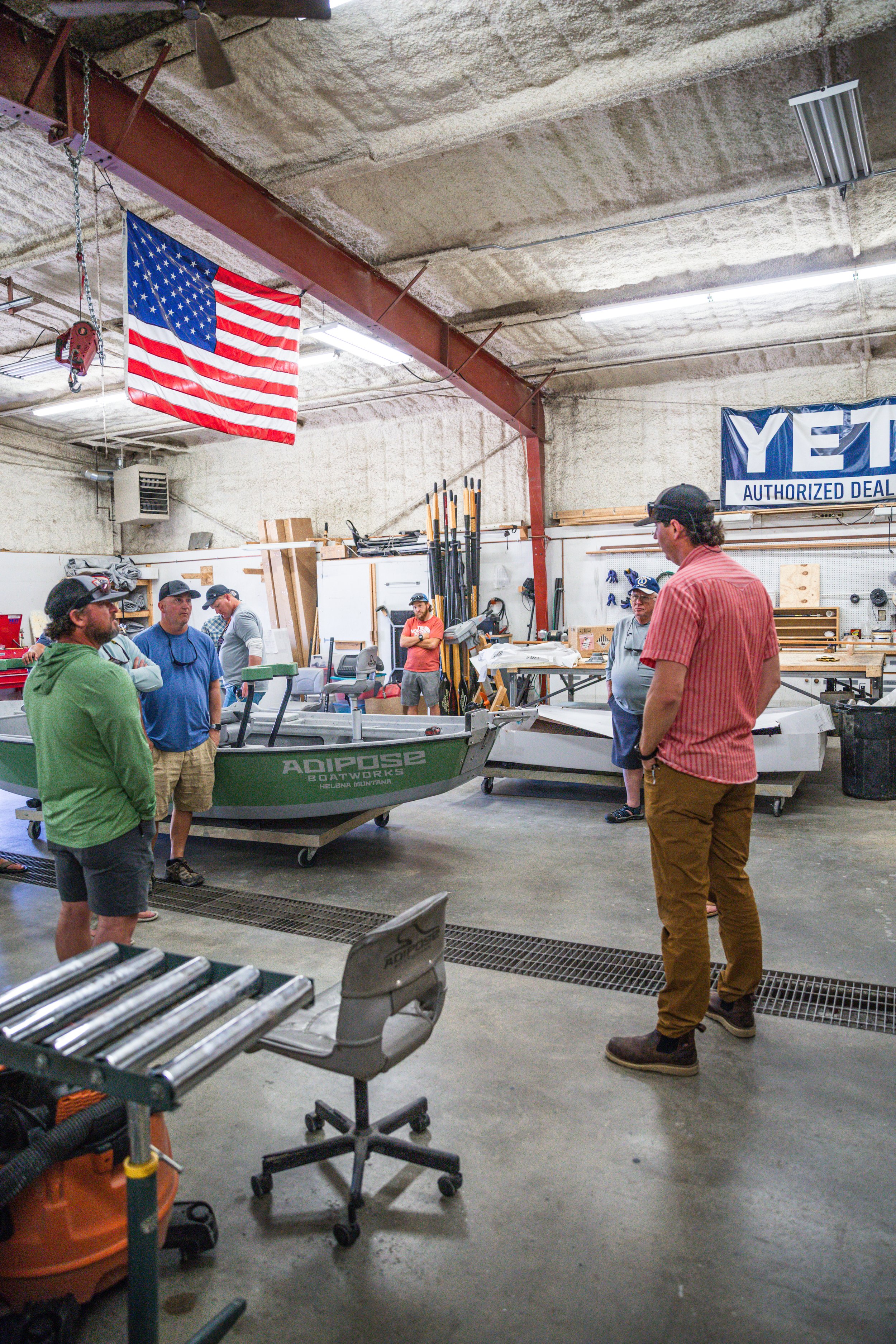
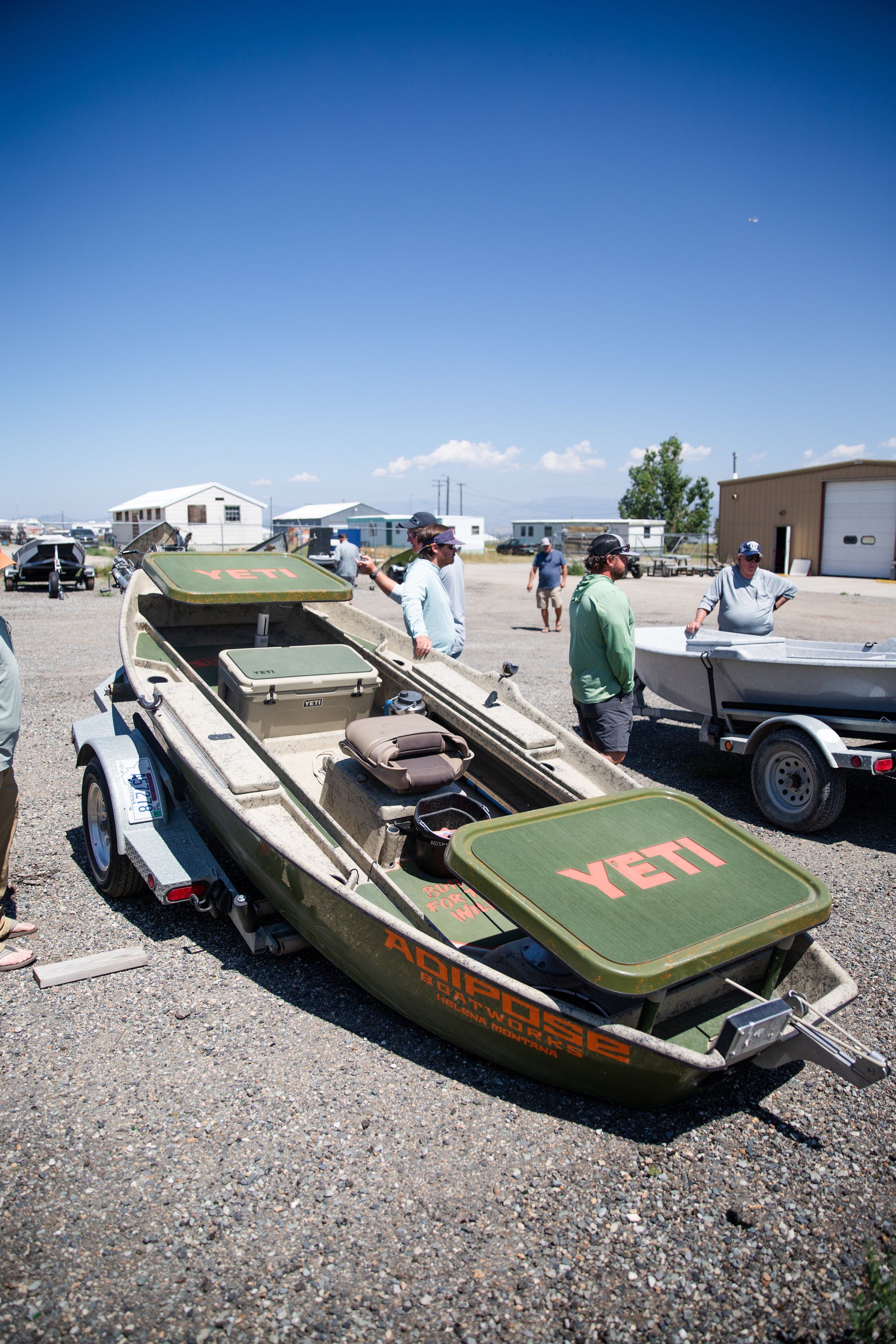
After leaving Ennis heading for Craig, we had the opportunity to stop by Adipose Boatworks to see one of the owners, Justin, and his team. A big talking point throughout the tour was the new vacuum resin infusion that Adipose is incorporating into their boat hulls. This new process is quicker to build, makes the boat noticeably lighter, and provides the same durability that is expected from Adipose.

Not only are Adipose boats beautiful, but they are just as functional. The attention to detail and hyper-focus on product quality is unquestioned. If you are in the market for a new fully-customized drift boat, definitely consider giving Adipose a call. You won’t be disappointed!

Craig, Montana

CRAIG

Craig. Also referred to as “Craiglandia”, is a dry-fly fisherman’s dream. The trout on the Mo’ are certified “western”. They pull hard, jump high, and demand near-perfect casting presentations. The average size of the fish on the Missouri can be a bit mind-boggling coming from the East. During the summer, groups of large rainbows and browns will group together in concentrated pods and feed on Trico spinners. This is technical dry fly fishing at it’s finest. When we weren’t anchored casting to pods of fish, we were casting hoppers on the banks and flats, prospecting for willing eaters. We did a little nymphing in the mornings before the Trico hatch but put those bobbers away as fast as possible.

One of the main gear differences from Tennessee is that we fished big tippet. 3x-4x primarily. For everyone on the trip, this was a welcomed change from the 6x that we become mind-numbingly accustomed to at home.

In Craig, there are three fly shops right next to each other, just like Ennis. Headhunters, CrossCurrents, and The Trout Shop.

Our Fly Box staff rented boats from The Trout Shop for DIY fishing and we had clients fish with guides from Headhunters. Both options have their benefits, but there is no doubt that the Headhunter guide crew put our group on the most and biggest fish. Total professionals. If you are fishing the Mo’, do yourself a favor and book at least one day to see some of Montana’s best guides at work. Huge thank you to the team at Headhunters for the hospitality and getting our group on some great fishing.

The Trout Shop makes “Guide Lunches” similar to The Fly Box. We put our orders in the day before and had great lunches ready for us the next day. If you are looking to DIY the Missouri River, using their rental boats and lunch system is perfect.

When fishing the Missouri, stop by the Craig Taphouse for some cold drinks and dang fine burgers. We frequented the taps and grill more than once during the week. While you are there, be a good neighbor and throw up a dollar bill on the board, and look for ours hanging up as well. Another stop was going to Izaak’s Restaurant in Craig. The Huckleberry Mule goes down easy after a hot, fun day of fishing.

Traveling to fish Montana should no doubt be on the top of every East Coast fly angler’s list. Not only will it be fun and help you become a better angler, it will help you to see how great of a fishery we have in our own backyard of East Tennessee. The fishing was great and Rocky Mountain views can’t be beat, but the best part of the trip was getting to share it with our Fly Box Family. Thank you to all of our customers that came on this trip with us, we had a blast!

Until next time Montana…

Interested in traveling with The Fly Box? We handle the logistics and planning so that you can focus on making the most of your fishing vacation. Give us a call or stop by the shop to see where the next adventure will take us!

 
Forrest Neyman
2023 Montana Fly Fishing Gear List


If you're interested in traveling with us or have any questions about the gear mentioned below, don't hesitate to reach out. Give us a call or visit our shop, and our knowledgeable staff will be more than happy to assist you. We love sharing our expertise and helping fellow anglers prepare for their next adventure out West. Whether you're on the East Coast or anywhere else, we're here to provide guidance and make your fly fishing experience unforgettable. So get in touch with us today and let's plan your dream trip together!

GEAR WALKTHROUGH VIDEO

Planning a fly fishing trip to Montana and not sure what gear to pack? We've got you covered! After years of experience, we've put together a comprehensive list of essential items that strike the perfect balance between having enough gear and avoiding overpacking. So let's dive into the details:

Packs and Luggage

Yeti Flip Cooler: This may seem like overkill, but it's great for storing lunches and drinks while driving between different rivers or when renting a boat without a cooler.

Fishpond Submersible Lumbar Pack: An excellent fishing pack with enough space to store your tools, flies, and terminal tackle.

Fishpond Dakota Carry-On: This luggage can accommodate rods up to 9 feet in length, making it TSA-approved for easy overhead storage. It's ideal for carrying multiple rods and reels on your trip.

Fishpond Grand Teton Rolling Bag: A fantastic bag to organize and store all your clothing, wading boots, and other gear for the week.

Fishing Pack Essentials

Tools: Abel pliers, Loon Mitten Scissor Clamps, scissors for trimming indicators, a Hatch knot tensioning tool, and Hatch nippers.

Indicators and Flies: Carry a Fishpond puck with yarn indicators, Airlocks, Oros, and an assortment of dry flies and small streamers in a Fishpond Pescador and RiverMag.

Weights and Accessories: Pack a selection of Loon River camo weights, rubber bands for Dorsey-style indicators, and a Yakoda Utility Wallet for leaders.

Leaders and Tippet

Leaders: Bring a pack of 9-foot 4X and 3X nylon leaders, along with a 10-foot 4X stealth leader for stealthy presentations to picky fish. For streamer fishing, a spool of 16-pound Hatch fluorocarbon tippet.

Tippet: Carry 3X and 4X nylon tippet, as well as 3X and 4X fluorocarbon tippet.

Floatants and Accessories

High & Dry Liquid Floatant: Use this for applying on yarn indicators and hoppers.

Liquid Spray: Easy to use on PMD-style dry flies.

Powder and Brush: Use high and dry powder with a brush for larger hoppers and dry flies.

Easy Dry: Great for shaking out bigger hoppers and dry flies.

Rods, Reels, and Lines

Rods: Depending on your preferences, consider bringing a few 4, 5, and 7-weight rods like Red Truck Diesel, Scott Centric, or Winston Air 2.

Reels: Pair your rods with appropriate reels, such as Hatch 4+ for the 4 & 5-weights and Nautilus XL for the 7-weight rod and spare spools with floating and intermediate sink lines.

Lines: Scientific Angler MPX is a recommended choice for 4 and 5-weight lines, offering versatility and ease of use in windy conditions. Wolf Triangle Taper lines are also a great option. For the 7-weight we recommend, SA Sonar Titan Int - 3 - 5.

Clothing and Accessories

Waders: No waders only wading boots with a built-in gaiter

Accessories: Pack a few hats, visors, buffs, and sun gloves to protect yourself from the sun and elements.

Belts: Opt for a quick-drying nylon belt for added convenience.

Spare Boot Laces: Yakoda Extra boot laces in various lengths can come in handy in case of emergencies.

Rising Net: Consider a collapsible net like the Rising Net, which fits inside your bag.

Clothing: Skwala sun hoodies, wading pants, fishing shirts, and rain jackets for varying weather conditions.

Bonus Items: Yeti Cups, two pairs of Bajio Sunglasses