
August 2026 River Report - South Holston & Watauga Rivers
AUGUST OVERVIEW
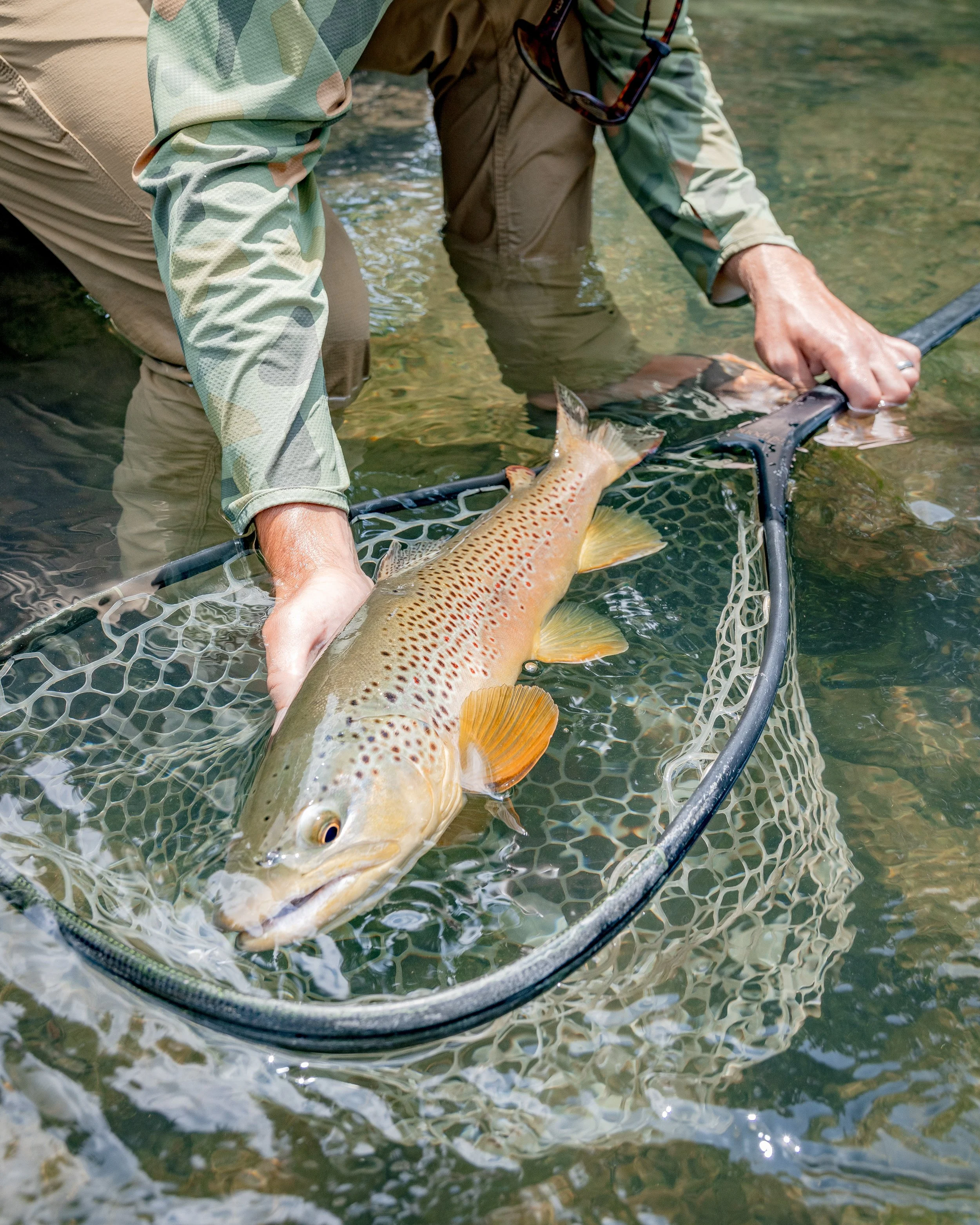
In the month of August, the TVA rainfall gauge at the South Holston Dam read 5.61” of rain, allowing the South Holston and Watauga to have varying flows that gave wade fishermen and boat anglers a variety of fishing options. Consistent generation schedules allowed for continued cool water temperatures throughout both rivers, making nymphing and dry fly fishing productive.
SOUTH HOLSTON RIVER
Drift boat and raft anglers had to get a little creative throughout the early season (April–July) due to the majority of the low-water fishing, but the month of August was a nice change of pace. Varying flows allowed anglers with drift boats or rafts to cover water and fish different sections of the river. With the increased amount of rainfall, we did deal with stained water conditions at times. It was nice, colored water allowed you to throw some bigger “flashy” bugs and fool those larger fish at times.
High-water flows showed lots of bug activity subsurface. Size 16–18 sulphur nymphs, size 16–20 scuds and sow bugs, size 18–20 midges, and, on those dirty-water days, the occasional worm getting mixed in. Deeper in-line nymph rigs and playing with your split-shot weight made for some successful days. Fishing 5.5–6 feet deep, getting the flies down quickly, and making long drifts allowed anglers to cover water and find fish.
The upper ends of the river showed good numbers and average-sized fish, while the lower ends showed fewer numbers but better-quality fish. Anglers were finding fish in deep buckets or tight to the bank. Like mentioned before, adjusting depth and weight was very important for these areas!
August during high water had good days and not-so-good days when it came to dry fly fishing. Most hatches in the beginning of the month were typically later in the day, starting around 2:30–3p.m. and lasting a few hours. When these later hatches started, they started quick, and you needed to be on them quickly. The important part was when you saw the hatches taper off, don’t call it quits. Pull over, crack a beer open, and wait.
On sunny evenings, those hatches on the upper end came in waves. In the middle of August, we had a few mornings and into the middle of the day where we had some cooler air temperatures. With the increased flows from the TVA and warmer flows, we saw our sulphurs starting to come off a little earlier in the day, around 12:45–1p.m.
CDC is typically our go-to for the wing on the sulphur, but the Solitude Deer Hair Comparadun became a shop favorite over the last few weeks in August.
Long leaders were the name of the game. TroutHunter 10–12 foot 5x and 6x Finesse Leaders worked well. Out of a boat, anchoring above the fish and making longer drifts down to the fish made a big difference. Watching the feeding pattern and where the fish are coming from before casting is very important as well. Pick your target versus just blind casting to an area.
WADE FISHING NOTES
Wade anglers found good success on in-line nymph and dry-dropper rigs. Small bugs such as the Weiss Dark/Light 20, midges, split cases, and pheasant tails produced good numbers and a few bigger fish mixed in.
The upper ends of the river showed consistent bug activity with good sulphur hatches on low water. If anglers were able to be out in the later part of the afternoon/evening, they had success finding fish feeding on the surface on #18 sulphur comparaduns, #18 sulphur sparkle duns, and #18 Puff Daddies.
Finding both faster-moving water and deep, slower runs produced lots of fish. These areas allowed anglers to find fish that were much less spooked by casting or fighting fish out of the runs.
Longer leaders and light tippet played a major key for anglers. While guiding, we saw time and time again that it was important to get your flies away from the fly line. Long, untouched drifts and minimal drag gave you a huge advantage.
Click here for the South Holston Dam generation schedule!
Suggested Patterns
Nymphs
Weiss Dark (Silver Bead) #18–20
Weiss Dark (Copper Bead) #18-20
Pheasant Tail (non-weighted) #18-20
Fullingmill CDC PT (Pink Bead)
Stripper Midge #20
Olive Midge (Black Nickel Bead) #18-20
Dry Flies
Birchell’s Hatch Midge #18–20
Sulphur CDC Comparadun #16–18
Sulphur Deer Hair Comparadun #18
Sulphur CDC Puff Daddy #18
WATAUGA RIVER
TVA has dropped Watauga Lake levels down throughout the first part of the year, so wade anglers have had “less” opportunity to fish compared to normal. With windows in between high-water releases, wade anglers fished the upper ends (Lovers boat ramp and up) of the river.
Similar rigs to the South Holston, in-line nymph rigs and dry droppers proved to be successful. Small bugs such as the Weiss Dark/Light 20, Solitude Baetis Nymph, olive and black midges, and pheasant tail Frenchies were in our rotation.
Looking to try something different, swinging some soft hackles in faster, shallow runs brought out some fun, aggressive fish as well.
On low water, wade anglers definitely had good opportunities to fish sulphur hatches on the Watauga as well. Size 18–20 sulphur comparaduns worked well. Dropping a CDC Cased Emerger off the back of the dry fly fooled some of the pickier fish.
Anglers with drift boats and rafts had a wide variety of water conditions to fish. With the increased amount of rain right in the middle of the month, high water did make fishing increasingly difficult due to the unknown of how water conditions were going to be. If there was a break between rainy days, the tributaries would clear back up and give us good high-water clarity.
Nymphing was the most successful way to fish, but dry fly rods were in hand when we would get to the long, slow flats looking for fish rising on sulphurs.
Nymph rigs were pretty straightforward. Heavy in-line rigs fished tight to the banks were the best approach on this water. Shorter leaders (8 feet, 5x) and a little heavier tippet (5x) worked well. Bigger point flies and small bugs above helped get those flies where they needed to be quickly.
Size 12–14 Girdle Bugs and size 16 Frenchies with bigger beads (3.0) used as the point got the flies down to the strike zone quickly. Running some smaller flies above the point fly off tags helped keep the natural movement.
Size 18 jig pheasant tails, Duracell jigs, Weiss Dark/Light 18, quill-body perdigons, and #18 pheasant tail soft hackles worked well for the smaller fly.
Low-water floats were a little more tame on the fishing side. Fast pocket water and deeper, slow runs produced a lot of fish. Due to the increased flow, the lower ends of the river maintained cooler water temperatures for this time of the year, allowing anglers to float the middle and lower ends.
Longer-leader in-line nymph rigs and dry droppers did well. Don’t be afraid, even on low water, to throw some of those bigger flies in appropriate water. You’ll be surprised by the fish looking for a big meal.
Sulphur hatches in the beginning of August were really consistent later in the evenings, and the lower ends of the river showed some bigger fish looking up and eating sulphur duns.
August showed how much the fishing on both the South Holston and Watauga can change with rainfall and TVA generation. Adjusting depth, weight, leader length, and fly selection was important throughout the month, and being willing to change with the water conditions continued to produce fish.
Click here for the Wilbur Dam generation schedule!
Suggested Patterns
Nymphs
Girdle Bug #12-14
PT Frenchie #16
Weiss Dark/Light #16-18
PT Soft Hackle #18
Dry Flies
Chubby Chernobyl #10–12 (Various Colors)
Sulphur Sparkle Dun #18
Sulphur Puff Daddy #18
Shuttle Service Contacts
A solid shuttle driver on the South Holston and Watauga! Tell him we sent you.
Ronnie - 423-737-7767